AI rally lifts cybersecurity names as chip and freight holdings lag
CNBC said the Dow, S&P 500 and Nasdaq rose since mid-June, while gains inside Jim Cramer's portfolio became more concentrated.
By Sarah Jenkins · Chief Macro Economics Correspondent
· 4 min read
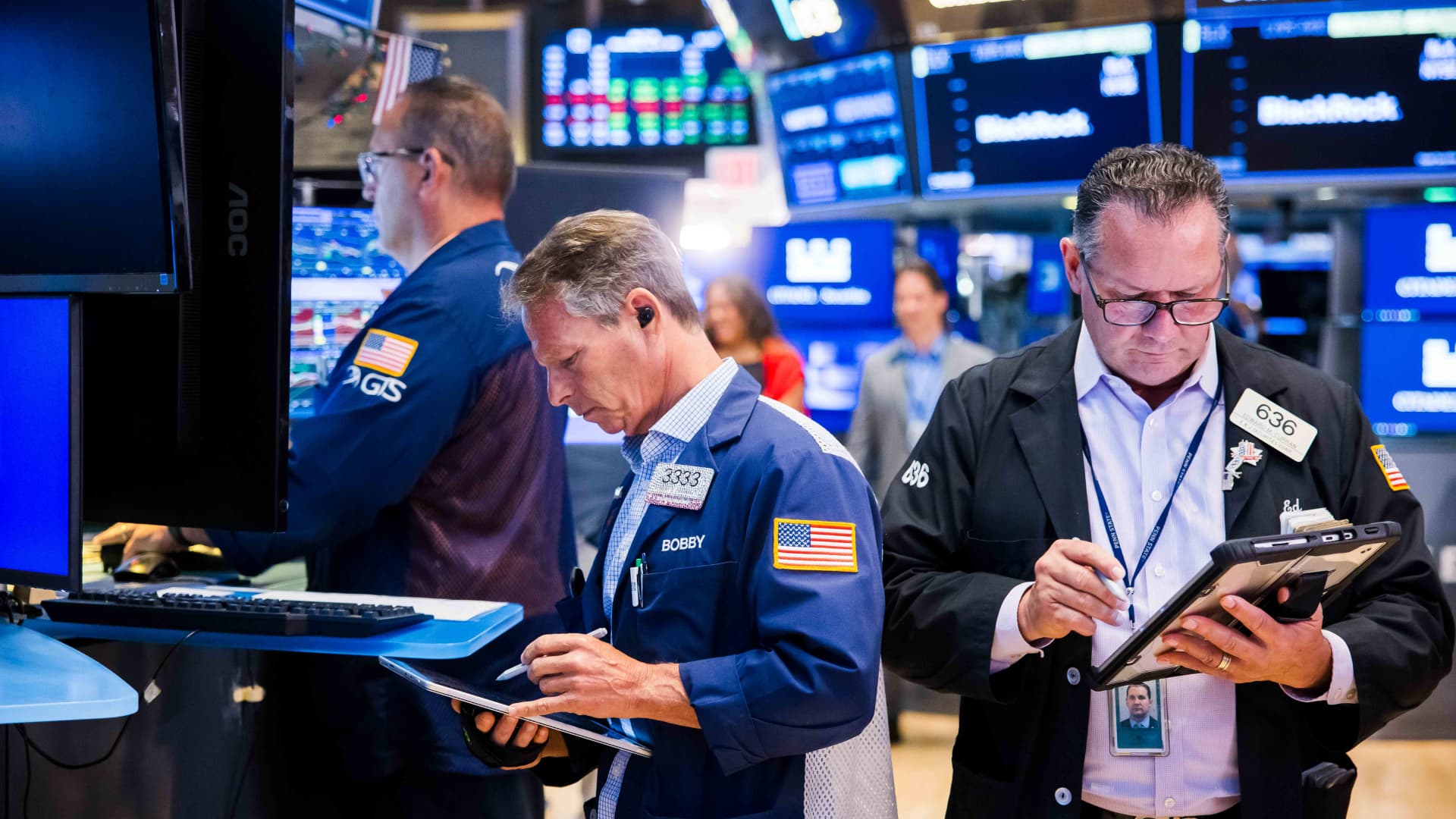
US equities rose between CNBC Investing Club's June 17 monthly meeting and Wednesday's close, with the Dow Jones Industrial Average up 2.3%, the S&P 500 up 2.1% and the Nasdaq Composite up 1%, according to CNBC. Inside Jim Cramer's Charitable Trust portfolio, CNBC said investors favored cybersecurity and companies with clearer artificial intelligence revenue plans, while several semiconductor and freight-related holdings declined.
The Dow reached a record on July 6 before easing in recent sessions, CNBC reported. The review excluded Honeywell Aerospace because it did not become a separate company until June 29.
Cybersecurity leads the gains
Palo Alto Networks rose 25.5% and CrowdStrike gained 21.7% over the period, according to CNBC. Both cybersecurity stocks reached record highs as investors increasingly treated AI as a source of demand for security tools, CNBC said.
The shift followed earlier concern that AI could weaken incumbent cybersecurity providers. CNBC attributed the latest advance in part to a Wall Street Journal report that Chinese AI models were approaching leading US platforms in their ability to find software vulnerabilities. For investors, that report reinforced expectations that companies may need to spend more to protect networks and applications.
IBM also contributed to the sector's momentum, CNBC said. Chief Executive Arvind Krishna, while preannouncing disappointing second-quarter results ahead of the company's scheduled earnings release, identified cybersecurity as one of three areas where businesses were prioritizing IT spending.
CNBC said Cramer's trust trimmed both Palo Alto Networks and CrowdStrike after the gains, while retaining positions. CNBC reported gains of nearly 150% in Palo Alto Networks and 105% in CrowdStrike on the sales.
Meta and Apple benefit from AI confidence
Meta Platforms advanced 20%, reversing its position from one of the portfolio's weaker names before the June meeting to one of the stronger performers before the July review, CNBC said. The move came as the Facebook and Instagram owner outlined more ways to earn revenue from AI investments.
CNBC cited Meta's plan to start a cloud business that would rent unused computing capacity to outside customers, along with new AI products for developers and advertisers. Reuters also reported that Meta plans to begin making a custom AI chip later this year. After that report, Bank of America said the chip effort could produce meaningful savings, with estimated computing-capacity costs potentially closer to $22 billion per gigawatt than a prior estimate of about $45 billion, according to CNBC.
Apple gained 10.7% and closed at a record high Wednesday, CNBC reported. Investor confidence improved after Apple announced a multiyear partnership earlier this year with Alphabet to add Google's Gemini to Apple Intelligence. CNBC said the company's June developer conference also supported the view that Apple could use its roughly 1.5 billion iPhone installed base to distribute AI features.
Apple shares faced pressure in late June after the company raised prices across MacBook and iPad products as memory costs rose, CNBC said. KeyBanc analysts warned that higher prices and lower wireless carrier subsidies could slow upgrades, while Citi analysts said the price increases should largely offset memory costs with limited demand impact, according to CNBC.
Intel, FedEx Freight and Qnity retreat
Intel fell 15% after reaching a record high, as investors sold several semiconductor stocks following earlier gains, CNBC reported. CNBC said Cramer's trust added to its Intel position on Wednesday. The stock remained up more than 170% for the year, according to CNBC.
FedEx Freight declined 12.4% after becoming an independent company in early June. CNBC said selling by shareholders who received the stock in the separation likely weighed on the shares. The company's first standalone earnings report showed revenue and operating income above expectations, while margins were pressured by fuel-surcharge effects also seen at its former parent, according to CNBC.
Qnity Electronics, a DuPont spinoff, fell 10.5% as semiconductor shares pulled back. CNBC said the decline accelerated after Samsung Electronics, Qnity's largest customer, reported results that Cramer described as “superb but not superb enough.” Qnity shares fell roughly 4% in the next session, though the stock remained up about 70% in 2026, CNBC reported.
CNBC disclosed that Jim Cramer's Charitable Trust held positions in Palo Alto Networks, CrowdStrike, Meta, Intel, FedEx Freight and Qnity, among other stocks.
This story draws on original reporting from CNBC.