Apple evaluates PrismML technology to run larger AI models on iPhones
PrismML says its compression can cut memory use up to 15 times, a potential aid to Apple’s push for faster, more private on-device AI.
By Amanda Ross · Deals Correspondent
· 3 min read
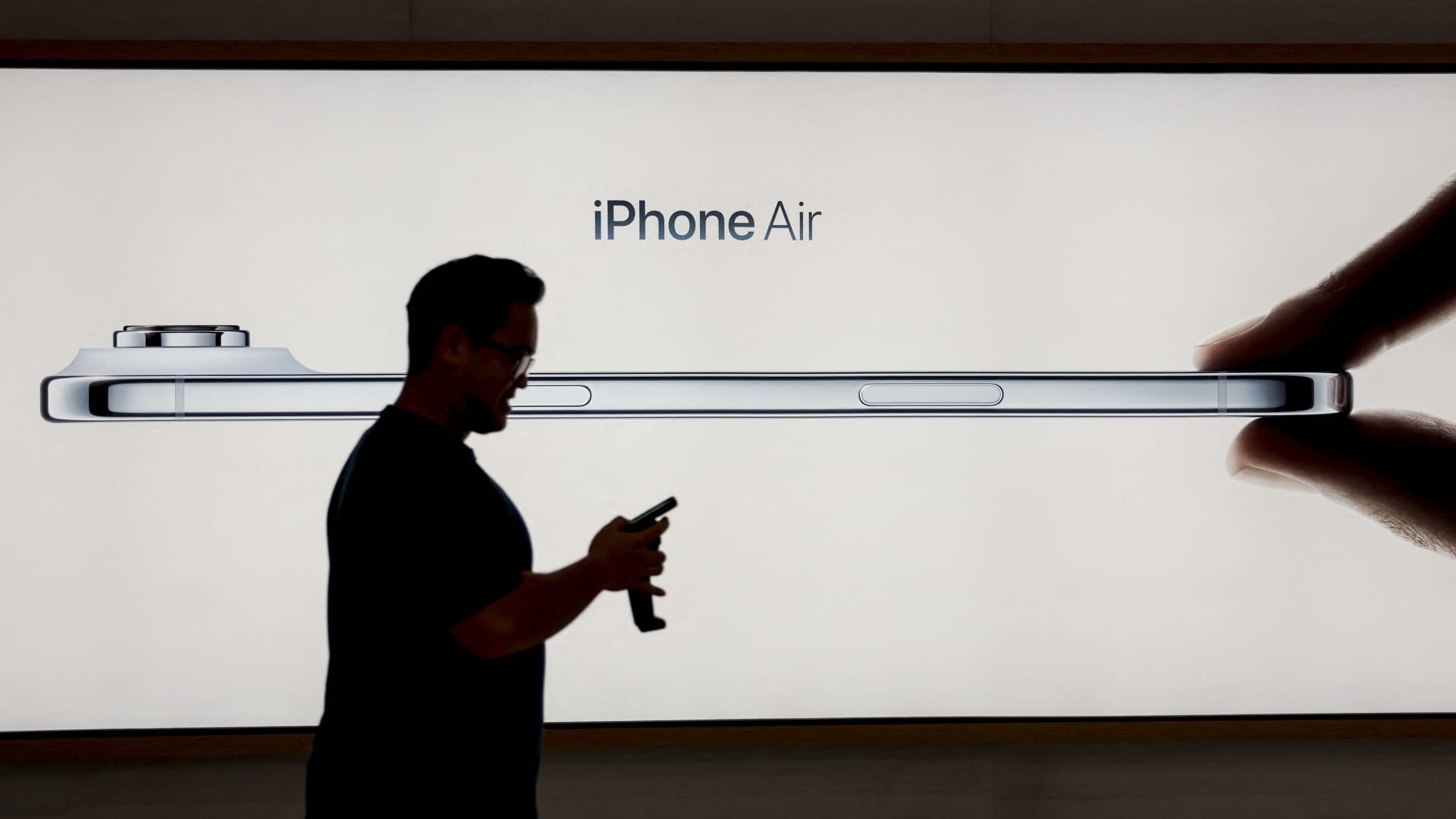
Apple is assessing technology from PrismML, a Silicon Valley startup that says it can compress powerful artificial intelligence models enough to operate directly on recent iPhones while using as much as 15 times less memory. PrismML Chief Executive Babak Hassibi told CNBC that Apple and other companies are testing the startup’s models for speed, energy use and device-level performance.
The talks are at an early stage, Hassibi told CNBC. He said Apple is “evaluating our technology right now,” adding that it is not yet clear what the discussions may produce.
PrismML, a Caltech spinout backed by Khosla Ventures, on Tuesday released compressed versions of Alibaba’s open-source Qwen model. The company said it reduced the model’s size from about 54 gigabytes to under 4 gigabytes, allowing all 27 billion parameters to run on an iPhone 15 or later.
The release arrived a day after Apple opened the public beta for iOS 27, which gives iPhone users broader access to its delayed Siri overhaul. Apple has been working to improve Siri against AI assistants from OpenAI and Anthropic while preserving more processing on the device, a design choice tied to latency, privacy and cloud-computing costs.
How the compression works
Large AI models usually require substantial memory and processing capacity, which limits what can run on a smartphone. PrismML says it reduces that burden by changing how a model’s internal values are stored, cutting them from 16 bits to one or three possible values. That lowers the memory required to store and operate the model.
According to PrismML, its compressed models use 10 to 15 times less memory than conventional versions on existing hardware, generate responses six to eight times faster and consume three to six times less energy. Hassibi told CNBC that the approach involves a trade-off: the models usually lose a few percentage points of overall performance, with factual recall affected before reasoning, math and coding skills.
PrismML is making two compressed models available for free for devices including iPhones, MacBooks and Nvidia-powered PCs. Caltech owns the underlying patents and licenses them exclusively to PrismML. The company raised a $16.25 million seed round in March from Khosla Ventures and other investors.
Hassibi said Google’s open-source Gemma model is next in PrismML’s pipeline, followed by larger models, including systems from frontier AI labs that generally need datacenter hardware today.
Implications for Apple and chips
Apple already runs some AI features locally, including translation, parts of summarization and functions linked to personal data. More complex requests can be sent to Apple’s private cloud infrastructure or outside models. Horace Dediu, founder of Asymco, told CNBC that Apple is likely seeking to keep most common Siri interactions on-device while using the cloud for the most demanding work.
Analysts cautioned that PrismML’s claims still need validation beyond controlled tests. Tarun Pathak, research director at Counterpoint Research, told CNBC that long prompts, battery drain during multitasking and reliability across large numbers of requests will be key measures. Phil Solis, who leads IDC’s client processor research, said power use remains a major question if models run often or in the background.
The technology also feeds into a wider debate over AI infrastructure spending. Morgan Stanley estimates Apple’s average dynamic random access memory cost per bit could rise about 190% year over year in fiscal 2027, while NAND costs could rise about 180%. PrismML says its approach could let a cloud model that typically needs eight GPUs run on one, though D.A. Davidson analyst Gil Luria told CNBC that smaller models would shift some chip demand toward devices rather than remove the need for processors and memory.
This story draws on original reporting from CNBC.


