Deoleo says olive oil market is stabilizing after Spain harvest rebound
The Bertolli owner says Spain’s larger crop has cut raw material prices by 50% and helped bring down supermarket olive oil prices.
By Sarah Jenkins · Chief Macro Economics Correspondent
· 3 min read
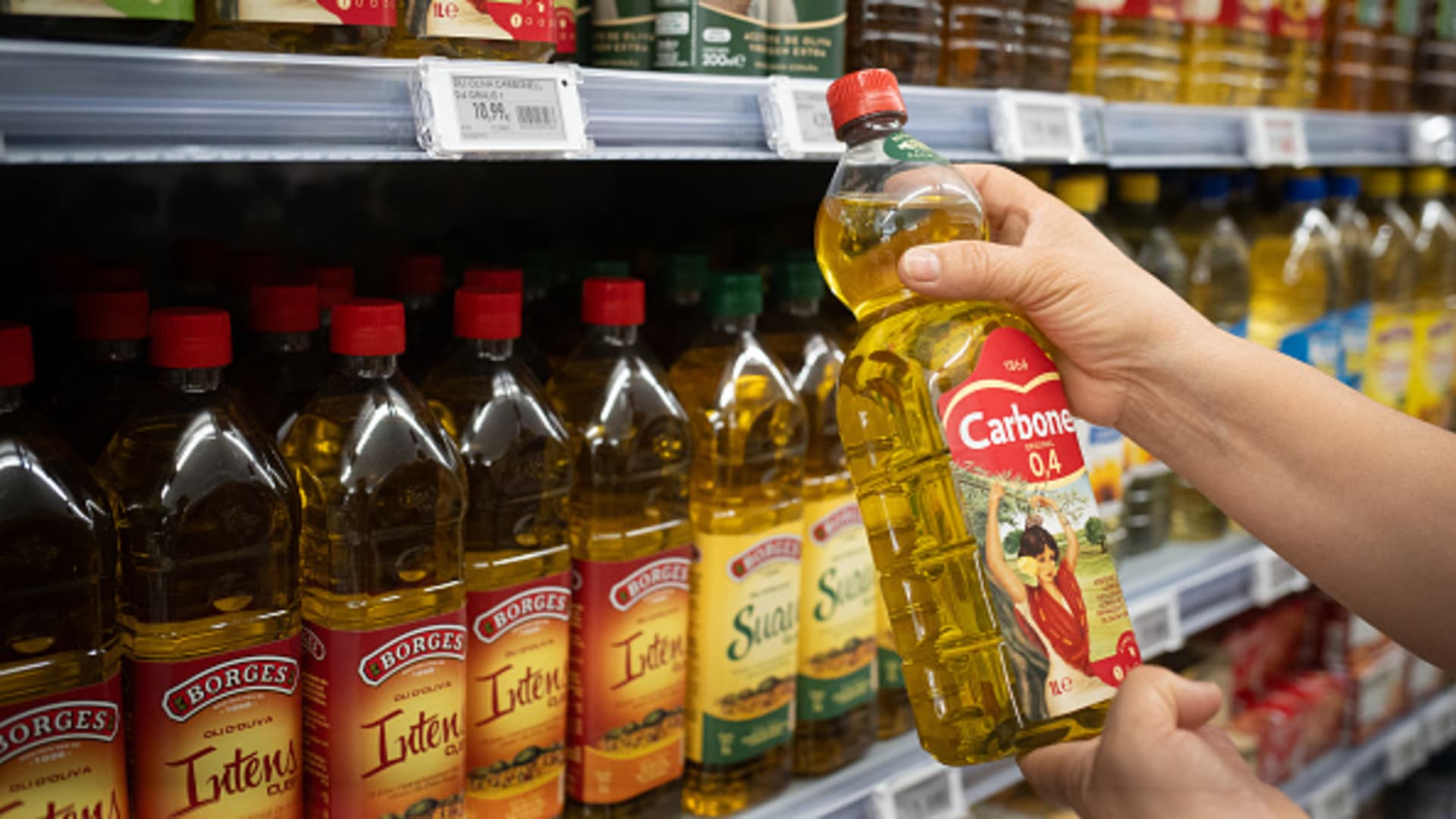
Spain’s Deoleo said the olive oil industry is recovering after two weak crop years drove severe supply stress and high prices across the market. The company’s chief executive, Cristóbal Valdés, told CNBC that a stronger Spanish harvest has cut raw material prices by 50% and is feeding through to lower supermarket prices for extra virgin and virgin olive oils.
Deoleo, owner of Bertolli and Carbonell and described by CNBC as the world’s largest olive oil producer, said it expects raw material costs to remain more contained through the second half of 2025. The improved outlook follows a period in which poor yields, climate change-linked extreme weather, high interest rates and strong inflation pushed olive oil prices sharply higher and weighed on consumption.
Spain’s crop reset the supply picture
Spain’s Ministry of Agriculture, Fisheries and Food said the country produced 1.41 million metric tons of olive oil in the 2024/2025 crop year. That was slightly below forecast, according to Olive Oil Times, but represented a rise of about 65% from 855,600 metric tons a year earlier.
Spain is the European Union’s largest olive oil producer and a key reference point for global prices. Because much of the world’s olive oil supply comes from the Mediterranean, crop swings in Spain, Italy and Greece can have a marked effect on the cost of oil purchased by bottlers and retailers.
The mechanism is direct. A larger harvest increases the volume of oil available at origin, easing competition for raw material. That lowers input costs for producers such as Deoleo, giving them more room to reduce shelf prices while seeking to rebuild demand after a period of consumer pressure.
Valdés told CNBC by email that the sector was undergoing “a major shift” after what he described as “one of the most challenging periods in our history,” marked by limited raw materials, volatile pricing and weaker consumption.
“The significant rebound in the olive oil harvest, particularly in Spain, is already translating into more stable supply conditions, and this is having a direct impact on prices at origin,” Valdés said.
Company raises marketing spend
Valdés said Deoleo’s outlook is “cautiously optimistic,” with the company expecting a more balanced market in which pricing discipline and product value support category growth. “While some volatility may persist, we believe the trend towards normalization will hold,” he told CNBC.
More favorable conditions have also allowed Deoleo to increase spending on advertising and promotion. Valdés said the company had doubled that investment to 10 million euros, equivalent to $11.63 million.
In remarks to CNBC before the United States and European Union agreed to a 15% tariff rate for most EU goods from Aug. 1, Valdés said Deoleo planned to increase communication, marketing and consumer engagement efforts so olive oil would remain a regular household purchase.
The recovery remains tied to agricultural conditions and input prices, both of which can change quickly in commodity markets. Deoleo’s comments signal that, after an industry crisis driven by scarce supply and rising costs, producers now see a more stable operating environment as Spanish output recovers.
This story draws on original reporting from CNBC.