Japan bond yields draw global attention after climb to 1996-era levels
Japanese government bond yields have reached multi-decade highs as Bank of Japan policy normalization changes the case for owning JGBs.
By Sarah Jenkins · Chief Macro Economics Correspondent
· 3 min read
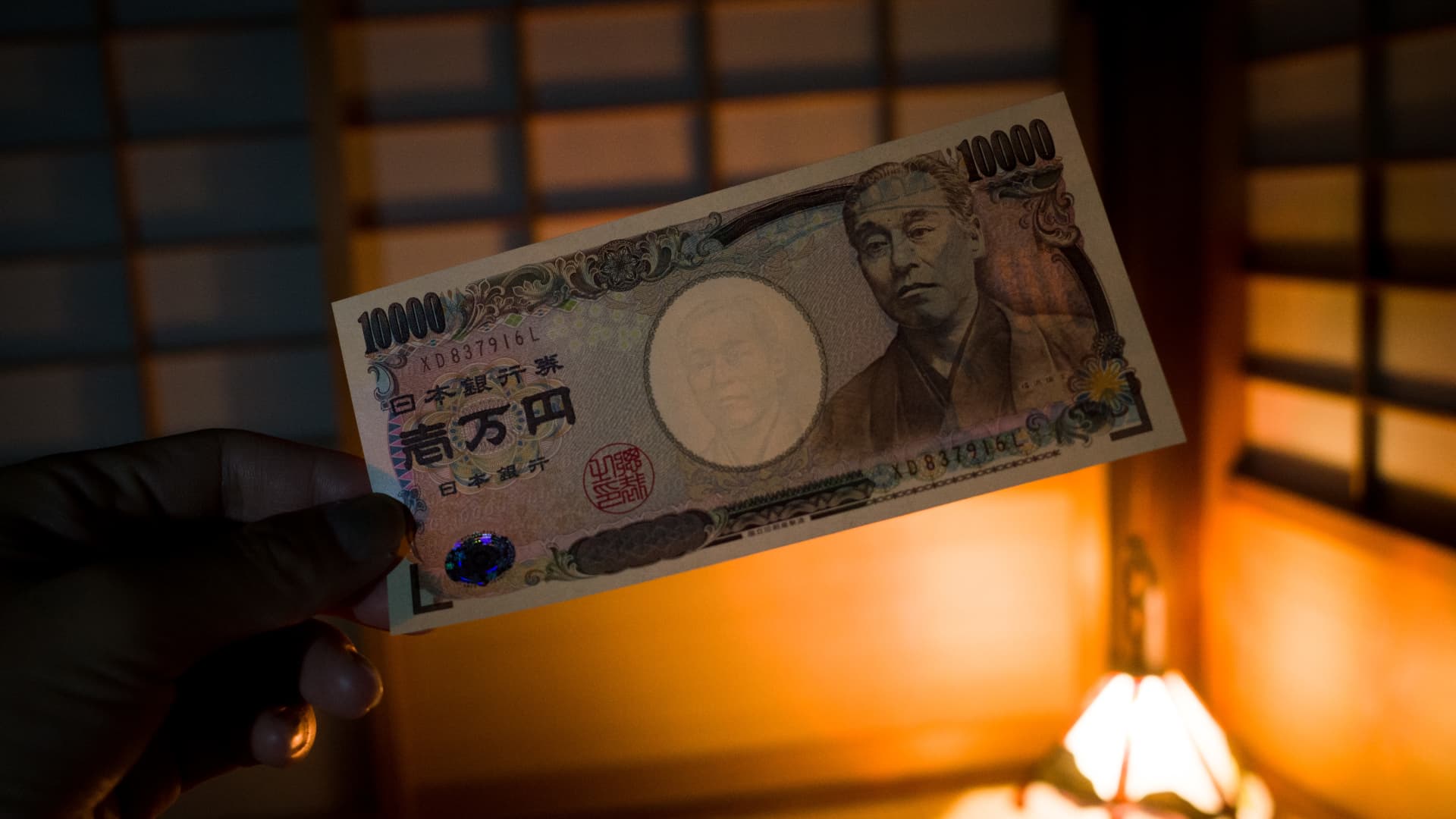
Japanese government bond yields have climbed to multi-decade highs, putting a market long suppressed by central bank policy back into focus for global fixed-income investors. CNBC reported that the benchmark 10-year JGB yield reached 2.901% last Thursday, its highest level since 1996, before trading at 2.781%, more than 70 basis points above its level at the start of the year.
The sell-off has reflected the Bank of Japan’s shift away from ultra-loose policy, as well as concerns over Prime Minister Sanae Takaichi’s spending plans, according to CNBC. The 20-year JGB yield also touched 3.901% last Thursday, underscoring how the repricing has extended beyond the benchmark maturity.
Masahiko Loo, senior fixed income strategist at State Street Investment Management, told CNBC that JGBs are becoming more investable for global bond buyers after years in which returns were constrained. He said higher yields mean investors are again being compensated for holding Japanese government debt.
For years, the Bank of Japan limited moves in the government bond market through yield curve control, a policy that targeted the 10-year yield at about zero as Japan tried to lift inflation and economic activity. When a central bank caps yields, it buys bonds to restrain borrowing costs, which raises prices and limits income for investors. Japan ended yield curve control in March 2024 as part of its monetary policy normalization.
Analysts split over relative value
Charles Gave, co-founder of Hong Kong-based research firm Gavekal, argued in a research note cited by CNBC that Japanese government bond yields were higher than justified. He described long-dated Japanese bonds as especially attractive and said investors without Japan exposure should consider a balanced allocation between Japanese equities and bonds. He also argued that some investors should shift from euro and U.S. bonds, as well as gold, into long-duration JGBs.
Gave said Japanese yields could fall and the yen could rise, particularly if oil prices stay near current levels. That would support long-duration Japanese bonds in yen terms, according to his note.
Other analysts were more cautious. Henning Potstada, global head of multi-asset at DWS, told CNBC that European bonds remained more attractive because the European Central Bank’s policy rate was 2.25%, compared with the Bank of Japan’s 1%. He also pointed to Japan’s public debt burden, with debt above 200% of gross domestic product, compared with 81.7% for the European Union, according to Eurostat.
Repatriation could affect global markets
Lauren Hyslop, investment manager at Mattioli Woods, told CNBC that foreign investors had selectively returned to JGBs as yields rose. She said overseas buyers put a record 9.3 trillion yen into longer-dated Japanese debt in 2025 after yields in the 20- to 30-year segment rose above 3.5%.
Hyslop said the 10-year yield near 2.87% was approaching fair value by the standards of major houses, broadly consistent with Japan’s growth and inflation outlook. She warned, however, that ultra-long maturities carry risk, saying life insurers could become forced sellers if the 30-year yield rises above 4.5%.
Japan’s Government Pension Investment Fund, the world’s largest pension fund, remains a key potential buyer, Hyslop said. Any move to allocate more of its $1.8 trillion pool to domestic bonds would be a stabilizing force, according to her assessment.
Reuters reported that Finance Minister Satsuki Katayama said Tokyo would seek ways to encourage pension funds, including GPIF, to invest substantially more in Japanese financial assets. Reuters also reported that there were no immediate changes planned to GPIF’s medium-term objectives.
Hyslop said rising domestic yields were already prompting Japanese investors to bring capital home, including the sale of $29.6 billion of U.S. debt in the first quarter of 2026. John Sidawi, senior portfolio manager for global fixed income at Federated Hermes, told CNBC that fiscal pressure, views that the BOJ remains behind the curve on rates, and Middle East tensions were still limiting demand for Japanese nominal bonds.
This story draws on original reporting from CNBC.