July Fed hike odds rise as oil shock revives inflation concerns
Futures and prediction markets still lean toward no Fed move in July, but the probability of a quarter-point increase has climbed sharply.
By Marcus V. Thorne · Markets Editor
· 3 min read
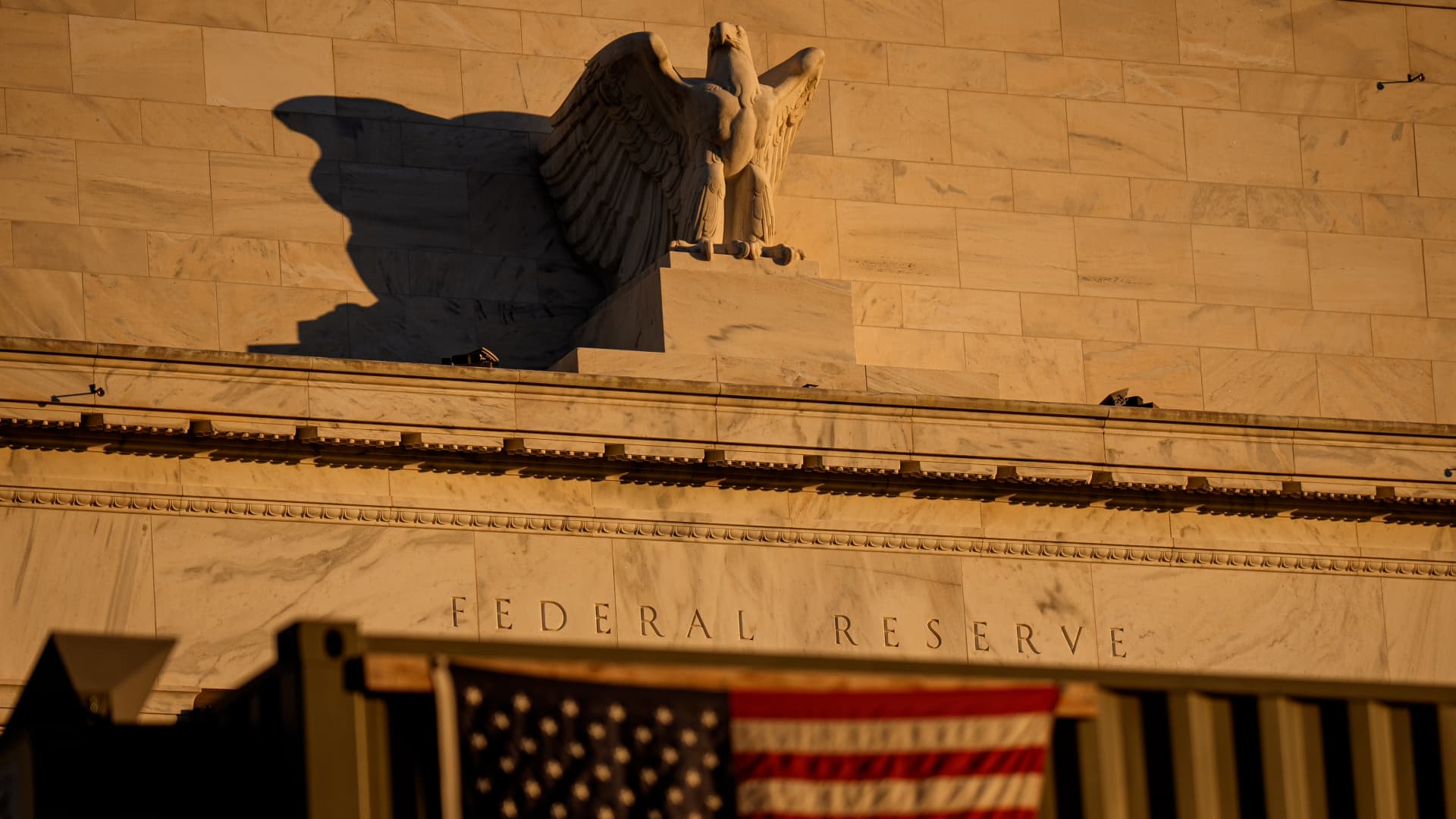
Market pricing for a Federal Reserve rate increase at its July 29 meeting rose sharply after oil prices climbed on renewed tension around the Strait of Hormuz. CME’s FedWatch tool put the probability of a 25-basis-point increase at 46.5%, up from 34% on Sunday, while Kalshi traders priced the chance at 36%, according to CNBC.
Both measures still indicate that investors see an unchanged policy rate as the more likely outcome. The shift, however, narrows the gap between a hold and a hike at a meeting that had been expected to extend the Fed’s pause.
CME’s FedWatch tool derives implied probabilities from federal funds futures, contracts tied to the market’s expectation for the Fed’s target rate. Kalshi’s figures come from event contracts, where traders buy and sell claims linked to defined outcomes, including whether the central bank raises, cuts or leaves rates unchanged.
The repricing followed President Donald Trump’s announcement that he would reinstate a U.S. blockade of Iranian ports near the Strait of Hormuz and impose a 20% toll on cargo moving through the passageway. CNBC reported that U.S. oil prices rose more than 5% and moved above $75 a barrel after the development.
Energy prices feed into inflation through several channels. Higher crude prices can lift gasoline, diesel and jet fuel costs, while also raising transport and production expenses for companies. If firms pass those costs to customers, headline inflation can rise and core inflation can become harder to reduce.
The move in rate expectations also followed comments from Federal Reserve Governor Christopher Waller. CNBC reported that Waller said the Fed should avoid repeating what he described as the errors of 2021 and 2022, when he said policymakers waited too long to raise rates as inflation accelerated. He also cautioned that the central bank should not overcorrect by lifting rates too quickly.
The next major inflation reading is due Tuesday, when the June Consumer Price Index is scheduled for release. Economists surveyed by Dow Jones expect annual inflation of 3.8% for June, down from 4.2% in May, according to CNBC.
Barclays global chairman of research Ajay Rajadhyaksha argued in a Monday note that the inflation risk is not limited to energy. CNBC cited Rajadhyaksha as saying the pass-through from the oil shock has not finished, that demand has not weakened enough to offset elevated energy prices, and that price increases linked to artificial intelligence are also worsening the inflation outlook.
Rajadhyaksha wrote that a data-dependent central bank must consider both reported inflation and expected inflation. “And the prints, for the next few months, are not going to look good,” he wrote, according to CNBC.
The Fed is scheduled to announce its next interest-rate decision on July 29. CNBC disclosed that it has a commercial relationship with Kalshi that includes customer acquisition and a minority investment.
This story draws on original reporting from CNBC.