Lucid denies bankruptcy speculation after shares slide more than 40%
The EV maker said rumors were false after EV reported it had weighed going private or seeking Chapter 11 protection.
By Amanda Ross · Deals Correspondent
· 3 min read
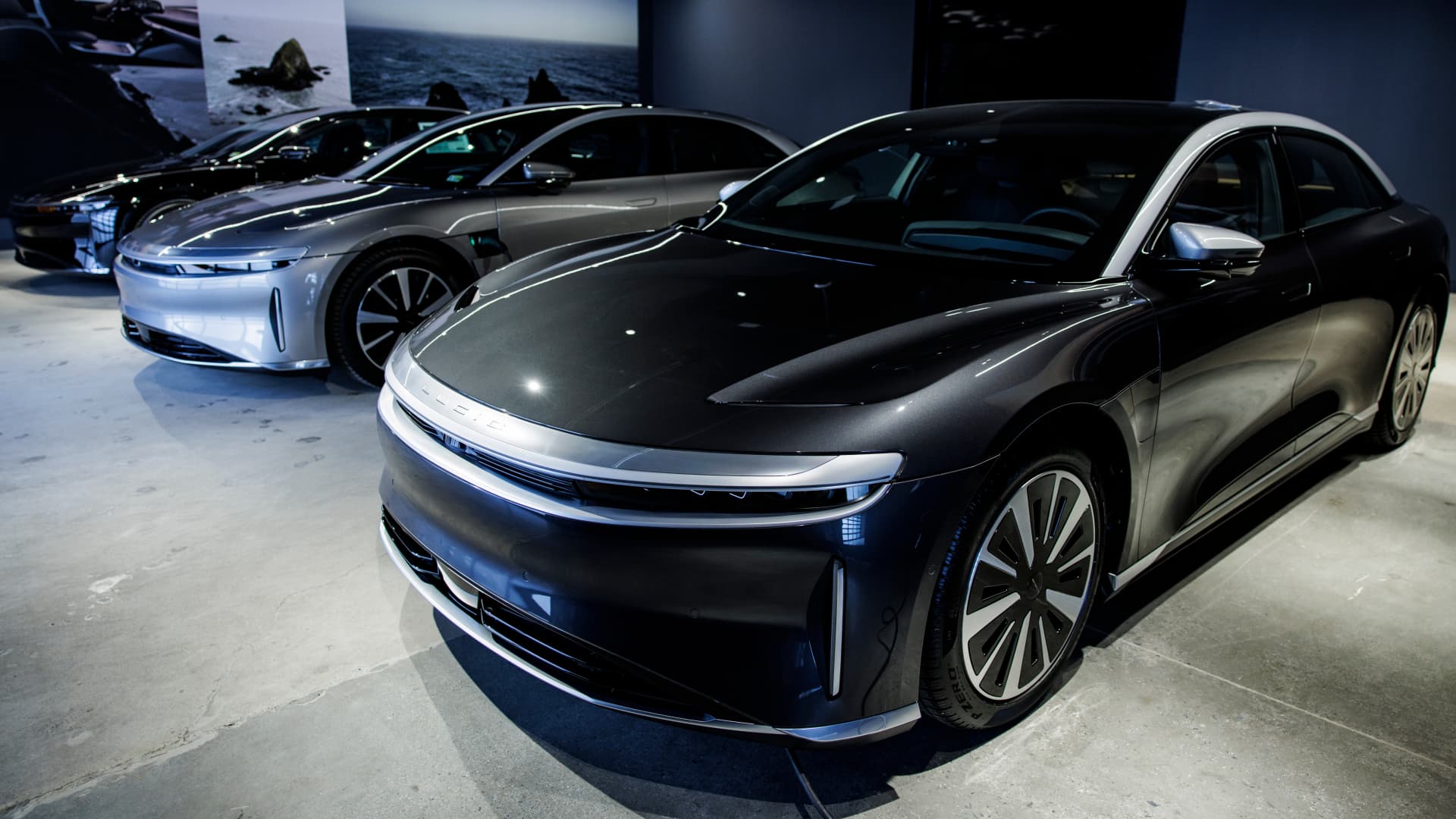
Lucid shares fell more than 40% at one point Tuesday and were stopped several times for volatility after an electric-vehicle news site said the company was examining strategic alternatives that could include a bankruptcy filing. Lucid rejected the account, saying in a statement that the rumors were “completely false.”
EV, a publication focused on electric vehicles, reported Tuesday that Lucid had asked AlixPartners to assess potential paths for the company, including a take-private transaction or a Chapter 11 bankruptcy process, and to present findings to the board before its next meeting. The site also said AlixPartners had advised additional restructuring in the U.S. and Europe and greater emphasis on Lucid’s Gravity SUV.
AlixPartners declined to comment on the EV report. Lucid said it had enough liquidity to fund operations “well into next year,” citing its most recent quarterly filings. The company also said it had not created a special board committee to study the scenarios described by EV.
“Our focus is on improving execution, strengthening operations, and positioning Lucid to realize the full potential of its technology, products, and innovation,” Lucid said in its statement. The company said AlixPartners was assisting with that work “and nothing else” and had not recommended bankruptcy to management or the board.
Market pressure on EV makers
The trading reaction added to pressure on Lucid, which has been dealing with weaker-than-expected electric-vehicle adoption and policy changes under the Trump administration. Those changes include the elimination of a $7,500 federal incentive for EV purchases, according to CNBC.
Chapter 11 bankruptcy protection is a court process used by companies seeking to restructure debts while continuing to operate. A going-private transaction would remove a company’s shares from public trading, typically through a buyout or other corporate transaction. Lucid said it is not pursuing the scenarios described in the EV report.
Lucid is backed heavily by Saudi Arabia’s Public Investment Fund, a key financial supporter for the California-based EV manufacturer. The company has been trying to scale production and sales while competing in a market where several electric-vehicle makers have faced slowing demand, pricing pressure and higher scrutiny over cash use.
Recent operational changes
Last month, Lucid said it would cut 18% of its U.S. workforce as part of a cost-reduction plan. Earlier in July, the company reported second-quarter delivery results that missed Wall Street expectations, according to CNBC.
Silvio Napoli, Lucid’s new chief executive, also announced changes to the company’s leadership team this month. He said the changes were intended to simplify Lucid’s structure.
In May, Lucid suspended its production guidance. At the time, Napoli said he was reviewing the company’s business decisions and said Lucid needed to reduce what he described as elevated vehicle inventory.
The company’s statement Tuesday sought to separate those operational efforts from any bankruptcy speculation. Lucid said AlixPartners’ role was tied to execution and operations, while the outside adviser had not told management or directors to pursue bankruptcy protection.
This story draws on original reporting from CNBC.