Palo Alto chief says AI token costs must fall for enterprise uptake
Nikesh Arora told CNBC that AI token pricing may need to drop as much as 90% as high usage costs strain corporate budgets.
By Marcus V. Thorne · Markets Editor
· 3 min read
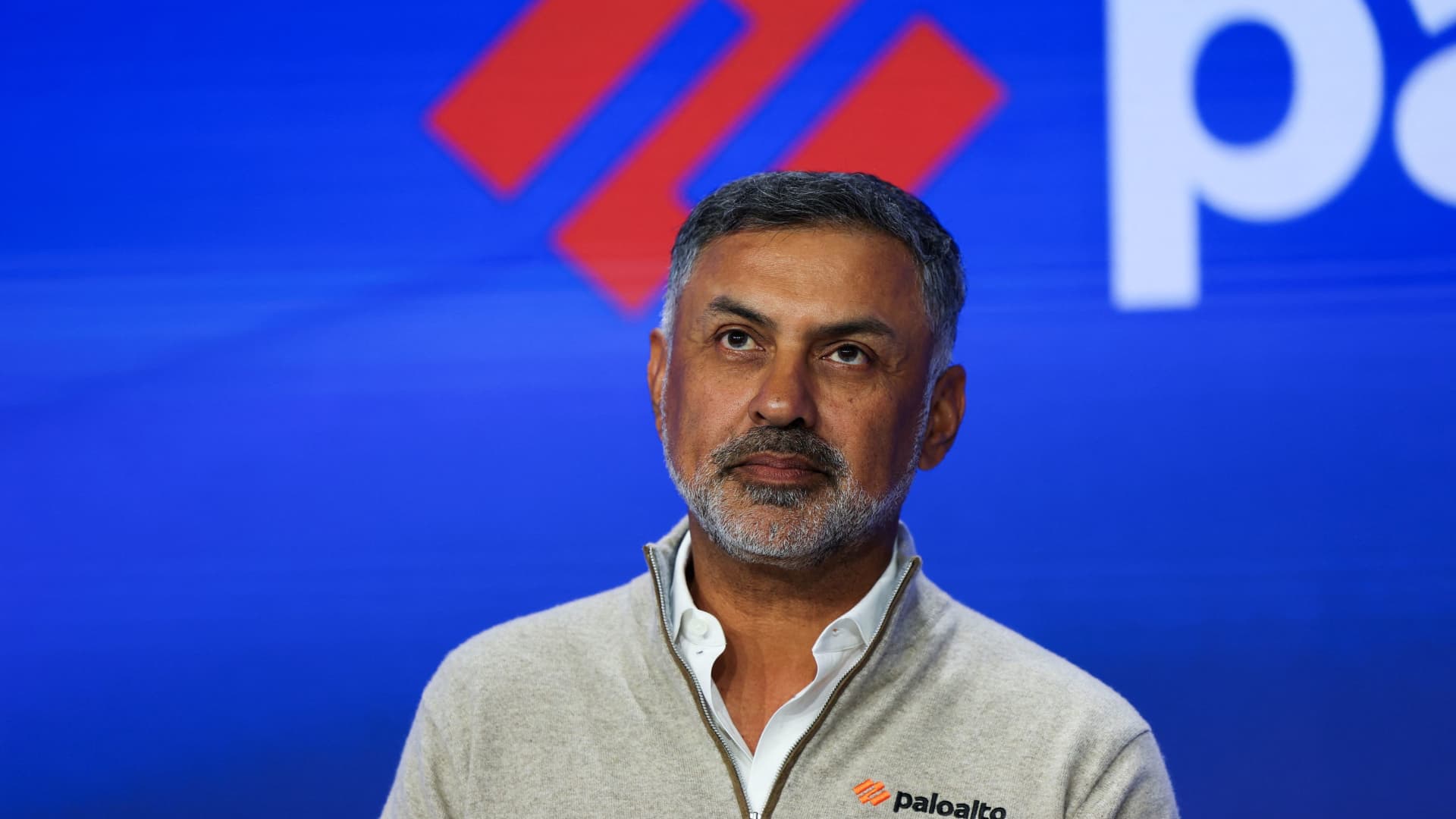
Palo Alto Networks Chief Executive Nikesh Arora said artificial intelligence token costs may need to fall by as much as 90% to support broad enterprise adoption. Speaking Thursday on CNBC’s “Squawk on the Street,” Arora said current pricing is making AI tools harder for companies to deploy at scale, even as demand for the technology continues to rise.
Arora’s comments followed remarks from OpenAI Chief Executive Sam Altman, who told CNBC that the company’s latest model is 54% more token-efficient for agentic coding. Arora described that improvement as a start, while saying the industry would need further reductions.
“I think 54% is a good start,” Arora told CNBC’s Seema Mody. “I think we probably need another turn at it.”
In AI services that charge by tokens, customers pay according to the number of units of text or code processed by a model. As companies move from experimentation to wider use, costs can increase with the number of prompts, responses and automated tasks. Agentic coding, where AI systems perform multi-step software development work, can be especially token-intensive because models may generate, test and revise code across repeated interactions.
Arora said token efficiency needs to improve sharply over the next two years. He told CNBC that costs should fall to as much as 20% of current levels over the next 12 months, and by 90% by the following year.
“We need to see the pricing for AI come down,” Arora said.
The Palo Alto Networks chief is one of several technology executives raising concerns about token-based pricing. CNBC reported that Palantir Chief Executive Alex Karp criticized the token model used by Anthropic and OpenAI last week and pointed to open-weight models as a possible alternative.
“I’m not throwing shade at them, but something has gone completely wrong,” Karp told CNBC’s “Squawk Box.” “The basic view among enterprises in this country is I’m going to chillax and waste my time with tokens.”
CNBC reported that the cost issue is prompting some businesses to use cheaper open-weight tools, including Chinese models that are narrowing the performance gap with U.S. AI labs. Open-weight models make model parameters more accessible than fully closed systems, allowing companies and developers to run or adapt the technology with greater control over infrastructure and cost, depending on the model terms and deployment setup.
The pressure on usage costs comes as the AI industry continues to absorb large infrastructure needs. CNBC reported that technology companies are seeking new funding routes for AI investment, citing SpaceX’s $25 billion bond sale last month and Amazon’s $25 billion debt raise this week.
Arora said the market and corporate buyers will eventually adjust to the level of spending, and that budgets should come down as AI systems become more efficient.
“It’s important to understand the demand continues to be infinite, and as long as you have an infinite demand curve that you’re facing, I think all these things will rationalize over time,” he said.
This story draws on original reporting from CNBC.


