Scott seeks Fed testimony on AI data centers and utility costs
Senate Banking Chair Tim Scott said he wants Kevin Warsh to address AI data centers when the Fed chair appears before his panel Wednesday.
By Amanda Ross · Deals Correspondent
· 3 min read
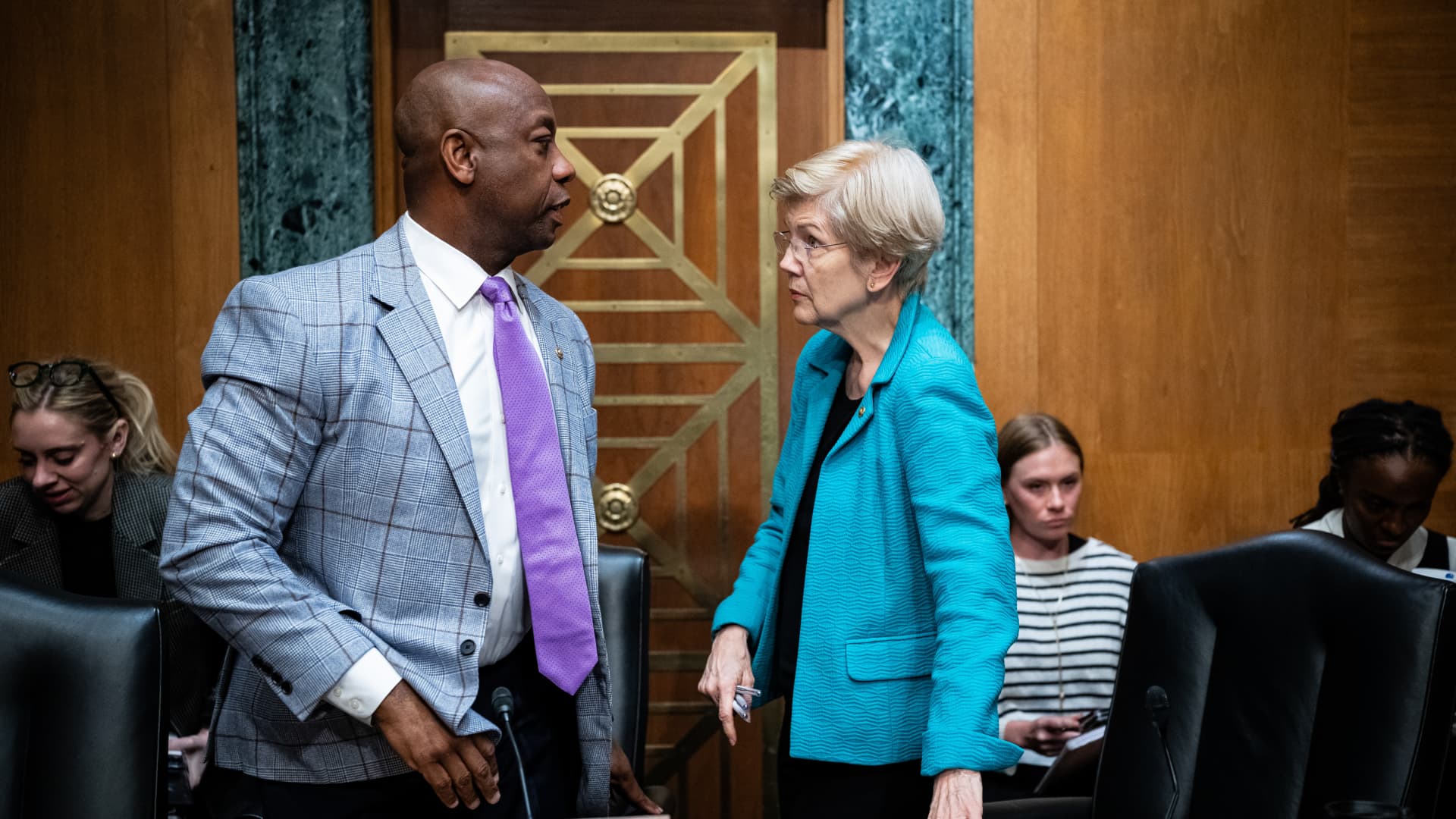
Senate Banking Committee Chair Tim Scott said Tuesday he wants Federal Reserve Chairman Kevin Warsh to discuss artificial intelligence and data centers when Warsh appears before the committee on Wednesday. The hearing is formally for the Fed’s semiannual monetary policy report to Congress, but Scott signaled on CNBC that he expects the session to include questions on the economic strains tied to AI infrastructure.
Warsh is scheduled to appear before Scott’s committee for the first time since becoming Fed chairman, according to CNBC. He is first testifying Tuesday before the House Financial Services Committee.
The semiannual monetary policy report gives lawmakers a regular forum to question the Fed chair on inflation, employment and the central bank’s assessment of economic conditions. Scott, a South Carolina Republican, said the Fed’s dual mandate remains central to the hearing, while arguing that AI-related infrastructure also deserves scrutiny because of its local costs and national economic implications.
“The dual mandate of the Fed is really important: price stability employment, I also think we have to drill into the artificial intelligence conversation in South Carolina,” Scott said on CNBC’s Squawk Box. “The real question we should ask is how do we make sure that these data centers pay their own way as it relates to electricity and water use.”
Data centers enter the policy debate
Data centers have become a visible pressure point in the buildout of artificial intelligence systems because they require substantial power and water resources. Scott said some parties in South Carolina want to ban the facilities that are supporting AI development.
CNBC reported that data center moratoriums are gaining ground across the country as voters push back against higher utility bills. Such restrictions can slow or block new facilities, while local governments and utilities weigh the demand from large computing sites against the effect on households, grids and water systems.
Scott framed the issue as both a domestic infrastructure challenge and an international competition. He said lawmakers must address the costs that communities face while preserving the United States’ position in artificial intelligence.
“When you zoom out, the most important question is who wins the future? Is it China or is it America? Artificial intelligence will be that which threads that needle,” Scott said. “I want to make sure that we are on the right side of history, and frankly we have to solve the problems at home so that we can win the issue as a country.”
The comments suggest Warsh could face questions that extend beyond interest rates and inflation at Wednesday’s Senate Banking hearing. Scott did not say what specific policy response he would seek from the Fed or from Congress on data centers, according to CNBC.
This story draws on original reporting from CNBC.