Shenzhen’s hardware cluster keeps drawing US tech supply chains
CNBC reported that founders and investors still see Shenzhen’s supplier base as a speed and cost advantage despite tariffs and geopolitical risk.
By Marcus V. Thorne · Markets Editor
· 3 min read
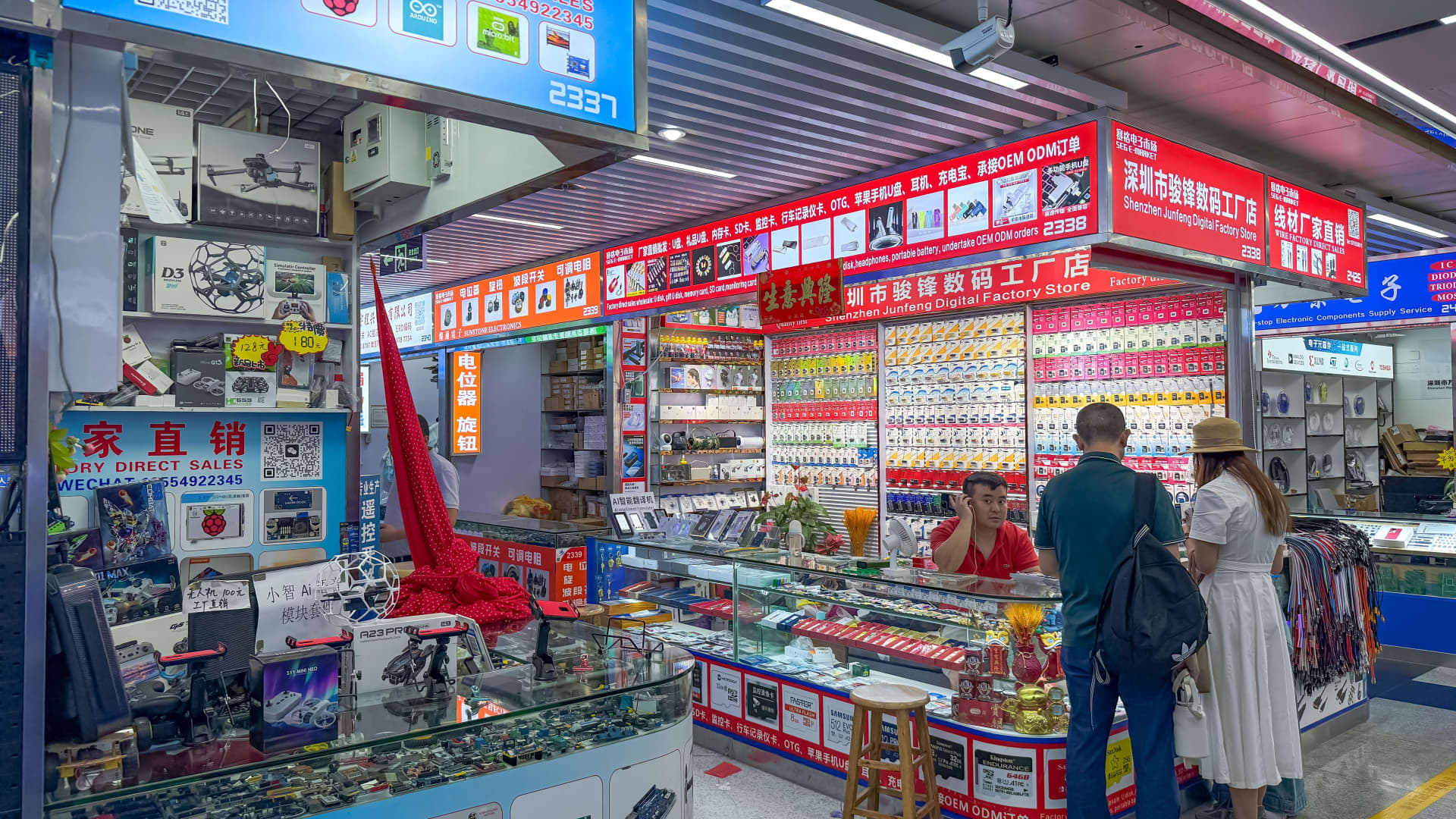
Shenzhen remains a central manufacturing node for global consumer electronics and emerging hardware, with CNBC reporting that founders with Apple experience are choosing the southern Chinese city over Silicon Valley for supply-chain access. The city accounted for nearly 19% of China’s advanced technology exports last year, according to CNBC calculations using official data accessed through Wind Information.
Joshua Woodard, an MIT graduate and former Apple employee, left the US company to run The Sparrows, a supply-chain management business in Shenzhen. He told CNBC that many of the firm’s customers are from the United States and are working on new smartphone designs and ways to use artificial intelligence in devices.
Woodard said he does not expect India or Vietnam to challenge Shenzhen’s manufacturing role soon, outside the political debate around China. He argued that companies seeking to make physical technology products still have few alternatives to China’s industrial base.
Apple’s early reliance on Foxconn helped establish a large manufacturing footprint in Shenzhen more than 20 years ago, according to CNBC. The surrounding region now includes consumer electronics groups such as DJI and Huawei, as well as electric-vehicle maker BYD.
Why proximity still matters
Executives cited by CNBC said Shenzhen’s advantage lies in the concentration of suppliers, tooling specialists and manufacturers within a short distance. Will Wang, chief executive of Even Realties and another former Apple employee, said the local supply chain can be reached within roughly a two-hour drive.
That density matters because hardware development relies on repeated testing of components, materials and assembly methods. A founder can modify a prototype, discuss tolerances with a supplier and return with a revised sample faster when display makers, chip integrators, casing suppliers and contract manufacturers operate nearby. Woodard told CNBC that working in Shenzhen can cut costs by about two-thirds and shorten prototype cycles from weeks to days.
Trade data underline the continued link between China’s manufacturing system and US technology demand. China was California’s largest import source last year, despite a sharp annual decline tied to rising US tariffs, the California Chamber of Commerce said. Taiwan and Mexico ranked next, followed by Vietnam. Computer and electronic products represented about 36% of California’s imports, the chamber said.
Lian Jye Su, chief analyst at Omdia, told CNBC that Chinese suppliers are taking on a greater role in specialized technologies. He said China dominates the hardware supply chain for humanoid robotics, although established robot manufacturers still depend more heavily on components from Japan, Germany, Switzerland, South Korea and the United States.
Diversification pressures remain
Some investors and operators see limits to a China-centered model. Fady Saad, a Boston-based general partner at Cybernetix Ventures, told CNBC that robotics companies should begin with the intended use case and weigh the benefits of being close to end users. He said the firm has advised its portfolio companies to maintain more than one supply-chain plan.
US robotics company Agility told CNBC that 75% of its components come from the United States and 1% from China. Figure and Boston Dynamics did not immediately respond to CNBC requests for comment.
Global technology companies are still engaging with Chinese hardware groups in selected areas. Nvidia said last month that it was working with China’s Unitree as part of its push into physical AI, CNBC reported.
Annabelle Yu Long, founding and managing partner of BAI Capital in Beijing, told CNBC that supply-chain diversification away from China has slowed, with companies relying on China’s efficiency in innovation. Her comments reflect the central tension for hardware businesses: lower cost and faster iteration in Shenzhen set against tariff exposure, geopolitical risk and the strategic case for production closer to customers.
This story draws on original reporting from CNBC.