Texas leads CNBC’s 2026 workforce ranking as skilled labor stays pivotal
CNBC ranked Texas first for workforce strength in 2026, ahead of Florida and North Carolina, as states compete for educated and job-ready workers.
By Sarah Jenkins · Chief Macro Economics Correspondent
· 3 min read
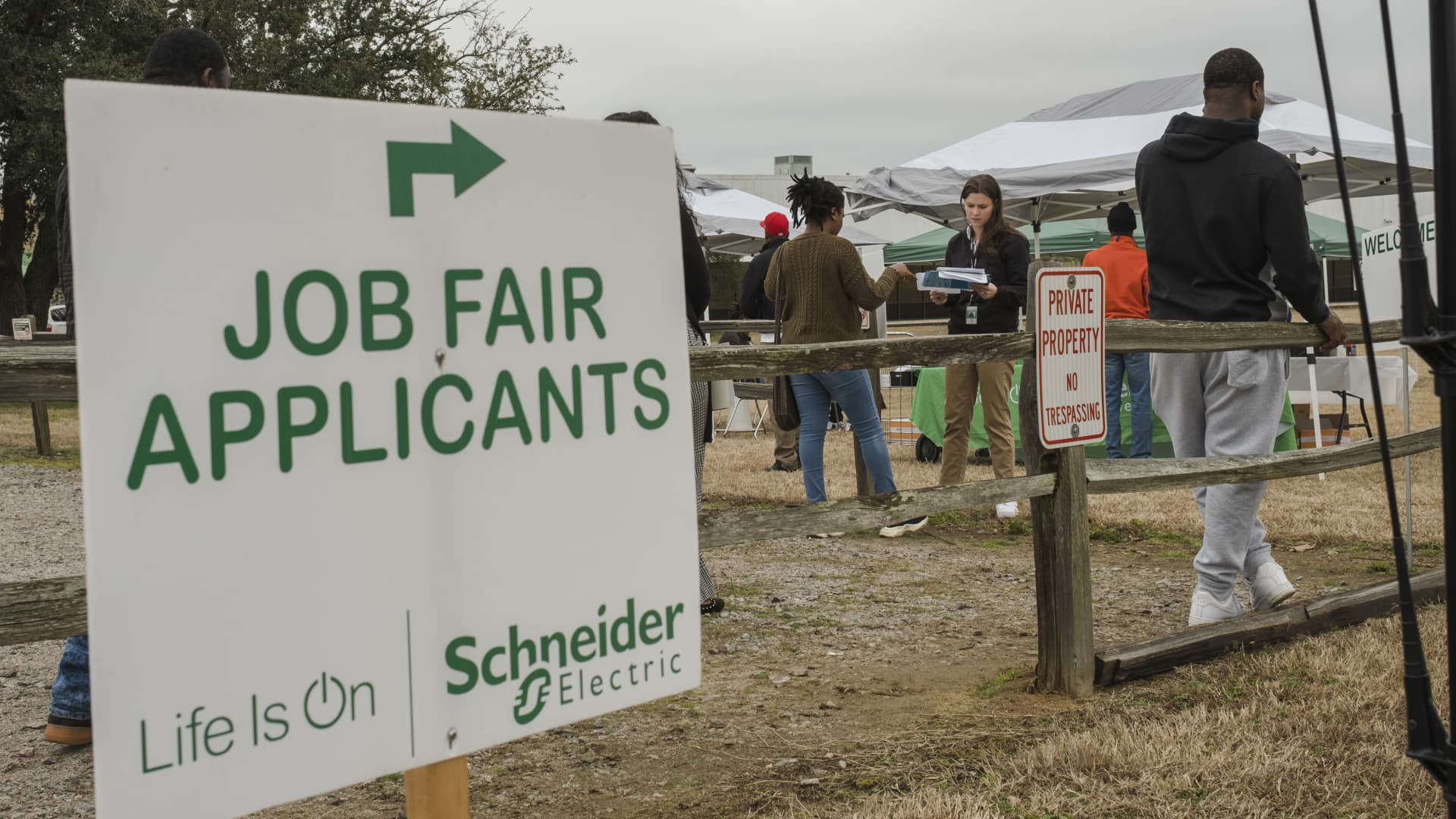
Texas ranked as the strongest U.S. state for workers in CNBC’s 2026 workforce assessment, scoring 276 out of 345 points and earning an A+ grade. Florida placed second with 269 points, followed by North Carolina with 258, underscoring the continuing importance of labor supply in state-level competition for business investment.
The workforce category accounts for 13.8% of a state’s total score in CNBC’s annual America’s Top States for Business study. CNBC said the category weighs worker migration, educational attainment, science and technology employment, career education pipelines, workforce training outcomes, productivity and whether a state has right-to-work rules, under which employees cannot be compelled to join a union.
Labor shortages have moderated from the severe strains seen after the pandemic, according to CNBC, as more people returned to work and productivity tools including artificial intelligence helped employers cover some needs. Larry Gigerich, executive managing director of Ginovus and chairman of the Site Selectors Guild, told CNBC that talent remains the top factor in site selection and that employers still face a mismatch in worker availability and quality.
Top workforce states in 2026
- Texas: 276 points, A+ grade
- Florida: 269 points, A+ grade
- North Carolina: 258 points, A grade
- Arizona: 245 points, A- grade
- Utah: 242 points, B+ grade
- Washington: 235 points, B+ grade
- Tennessee: 225 points, B grade
- South Carolina: 222 points, B grade
- Georgia: 220 points, B grade
- Virginia and Colorado: 218 points each, B- grade
Texas led the category partly because of its large and expanding labor pool. CNBC said the state topped Lightcast’s Talent Attraction Scorecard and had the third-largest net gain of college-educated workers on a percentage basis, behind Florida and Maine. The state had 104 available workers for every 100 job openings, and 21.5% of its workers held at least a bachelor’s degree. Texas also had a 7.1% STEM worker concentration and the country’s largest high school career and vocational pipeline, according to CNBC. Gov. Greg Abbott announced $4.7 million in workforce development grants this month for community colleges, the governor’s office said.
Florida ranked first for net migration of college-educated adults. CNBC cited Census Bureau data showing nearly 268,000 such adults moved to the state in the most recent year measured, while about half that number left. The state produced more than 175,000 associate degree and certificate holders, the third-highest total nationally, and nearly 85% of participants in its workforce training program were employed within six months. Gov. Ron DeSantis has said the state has met his workforce education goal ahead of 2030, including 25,000 active apprenticeship participants.
North Carolina benefited from both migration and training capacity. CNBC said the state ranked fifth on Lightcast’s Talent Attraction Scorecard and produced more than 75,000 workers with associate degrees or industry-recognized certificates in 2023, according to AdvanceCTE. CNBC also ranked North Carolina’s economy first nationally in 2026.
Other states showed narrower strengths. Arizona ranked fifth for net migration of college-educated adults, with nearly 88,000 arrivals and 53,000 departures, though CNBC said only about 20% of adults held a bachelor’s degree. Washington had the highest worker productivity, with each hour worked generating nearly $127 in inflation-adjusted output, according to the U.S. Bureau of Labor Statistics. Colorado had the most educated workforce, with 28.1% holding at least a bachelor’s degree.
Virginia’s ranking reflected a strong technology labor base, including a 9.5% STEM worker concentration, and job-specific training through the Virginia Talent Accelerator Program. South Carolina ranked third for net migration of college-educated workers and reported that more than 79% of state training participants found work within six months, according to data submitted to the U.S. Department of Labor.
This story draws on original reporting from CNBC.


