T. rex fossil sells for record $50.1 million at Sotheby’s
The specimen known as Gus exceeded its presale estimate and surpassed the 2024 auction record set by a Stegosaurus skeleton.
By Sarah Jenkins · Chief Macro Economics Correspondent
· 3 min read
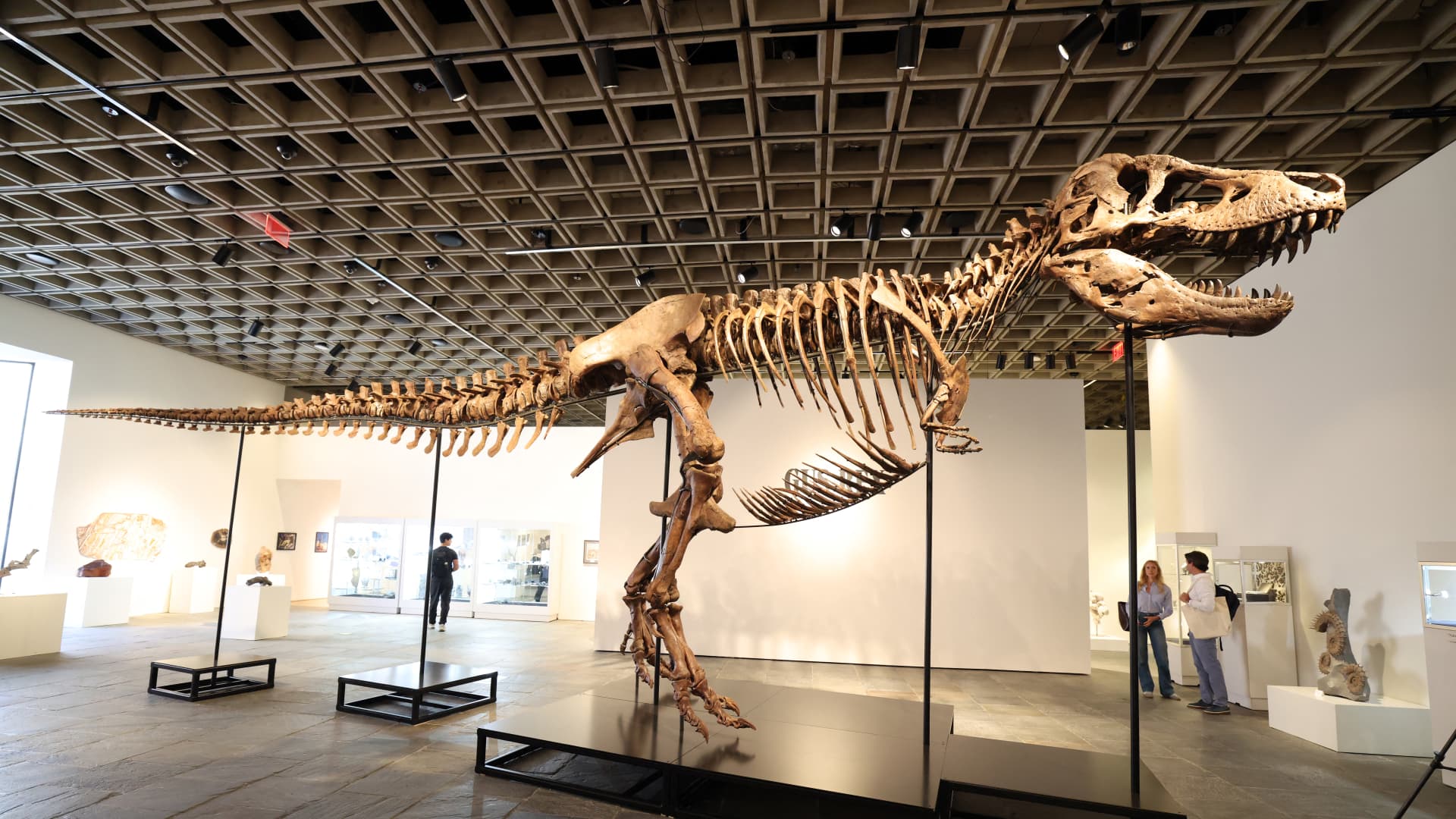
Sotheby’s sold a Tyrannosaurus rex specimen for $50.1 million, setting a new auction record for a dinosaur fossil as demand for rare natural-history objects continues to draw high-net-worth buyers. The price topped the previous benchmark of $44.6 million paid in 2024 for a Stegosaurus skeleton known as Apex, according to Sotheby’s and CNBC.
The T. rex, named Gus, had been expected to fetch $20 million to $30 million. Sotheby’s said the final price followed about 10 minutes of bidding involving seven bidders.
Gus was found on private land in South Dakota and is about 67 million years old, according to Sotheby’s. The auction house described the fossil as one of the most complete dinosaur specimens discovered, with 183 fossil bone elements and about 61% completeness by bone count.
By size, Sotheby’s said the mounted skeleton measures about 38 feet long and 12.5 feet tall, with a skull length of 54 inches. The auction house said those dimensions place it among the largest known T. rex fossils.
The sale extends a run of high prices for dinosaur skeletons at major auction houses. Sotheby’s 2024 sale of Apex, the Stegosaurus skeleton, went to billionaire hedge fund founder Ken Griffin for $44.6 million. In 2020, Christie’s sold another T. rex, named Stan, for $31.8 million.
Why completeness affects value
In fossil sales, completeness is a central factor because many specimens are assembled from a combination of original fossilized bone, casts and restoration work. A higher share of original material can strengthen scientific and collector interest, though condition, preparation history, documentation, species and display quality also influence price.
Sotheby’s said Gus includes evidence of injuries, including fractured and healed bones in several ribs and gastralia, as well as bite marks on several skull bones. Such features can add to scientific interest because they may preserve information about trauma, behavior or the animal’s life history, though Sotheby’s did not provide further interpretation of those marks.
“Gus is not only an exceptional find, but a specimen that’s been excavated, documented, prepared and cared for with real excellence,” Cassandra Hatton, Sotheby’s vice chairman and worldwide head of science and natural history, said in a statement reported by CNBC.
A growing collectibles category
Dinosaur fossils have become a faster-growing part of the collectibles market, CNBC reported, as wealthy buyers seek scarce assets and auction houses broaden sales beyond fine art. The market remains small compared with established collecting categories, but headline prices have increased markedly over the past several years.
The rise of private fossil sales has also drawn scrutiny from paleontologists and other specialists. CNBC reported that experts have warned the industry has limited safeguards for authentication and verification, concerns that become more prominent as prices rise and more material moves through commercial channels.
The buyer of Gus was not identified in the reported auction details. Sotheby’s said the specimen had been displayed at its Breuer building in New York before the sale.
This story draws on original reporting from CNBC.


