Trump urges Senate to advance crypto bill after Graham’s death
The president tied passage of the Clarity Act to the late South Carolina senator as the GOP’s Senate margin narrowed to 52-47.
By Sarah Jenkins · Chief Macro Economics Correspondent
· 3 min read
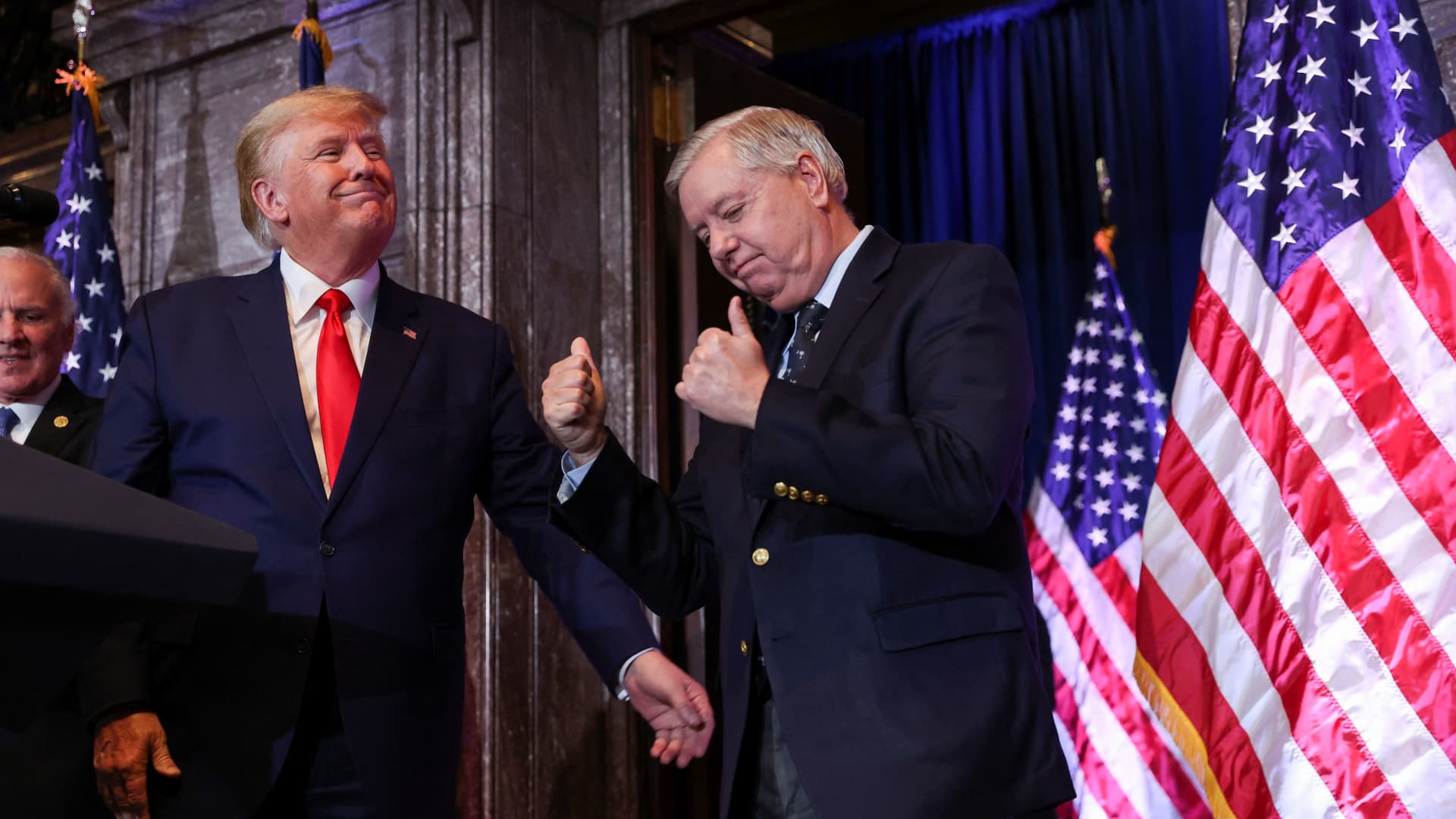
President Donald Trump on Monday urged the Senate to pass the Clarity Act, a cryptocurrency regulation bill backed by the White House and major digital-asset companies, after the death of Sen. Lindsey Graham of South Carolina. Graham’s death at 71 narrows the Republican majority in the chamber to 52-47, reducing the party’s cushion as the measure awaits further action.
In a post on Truth Social, Trump said the Senate should approve the bill “in honor of Senator Lindsey Graham,” whom he described as a supporter. Trump also framed the legislation as part of a broader technology competition with China, saying Beijing and other countries wanted control of crypto and artificial intelligence.
The Clarity Act is among the first major congressional efforts to set rules for cryptocurrency markets. According to CNBC, the proposal has support from the crypto industry and the White House, but has faced resistance in the Senate as Democrats seek stronger ethics provisions for elected officials, including Trump. CNBC has reported that Trump has made billions of dollars from digital currencies.
The bill cleared the Senate Banking Committee in May on a 15-9 vote. Two Democrats joined Republicans to move the measure forward. Graham was not a member of the committee and did not vote on that step.
Industry support and bank opposition
Crypto companies including Coinbase, Circle and Ripple have backed the Clarity Act, according to CNBC. Their support reflects a view within parts of the sector that federal rules could reduce legal uncertainty and make institutional and retail investors more comfortable with digital assets.
Regulation of crypto markets can affect which agencies oversee trading, custody and token issuance, as well as what disclosures issuers and platforms must provide. For companies, statutory clarity can reduce the risk that business models are later challenged under existing securities or commodities laws. For investors and consumers, the practical effect depends on how the final bill defines products, assigns oversight and enforces compliance.
Banks have opposed the legislation, according to CNBC, warning that the bill could let crypto companies provide interest-like payments to stablecoin holders. Stablecoins are digital tokens designed to maintain a steady value, often by reference to a currency such as the U.S. dollar. Banks argue that yield-style features could draw deposits away from the banking system, potentially reducing funds available for lending.
Law enforcement groups and some labor organizations have also opposed the measure, CNBC reported. The specific objections cited in the report were not detailed beyond their opposition.
A narrower path in the Senate
Graham’s death adds a political complication for Republican leaders. A 52-47 majority still gives the party control of the chamber, but it leaves less room for absences, defections or demands for changes to the bill.
The measure has already shown limited bipartisan support at the committee level, with two Democrats voting to advance it. Broader passage would require Senate leaders to address concerns from Democrats seeking ethics restrictions while maintaining backing from Republicans, the White House and the industry groups supporting the bill.
This story draws on original reporting from CNBC.