US NATO envoy says spending rifts are not an alliance crisis
Matthew Whitaker told CNBC that NATO frictions over defense budgets are “growing pains” as allies work toward a 5% of GDP target by 2035.
By Amanda Ross · Deals Correspondent
· 3 min read
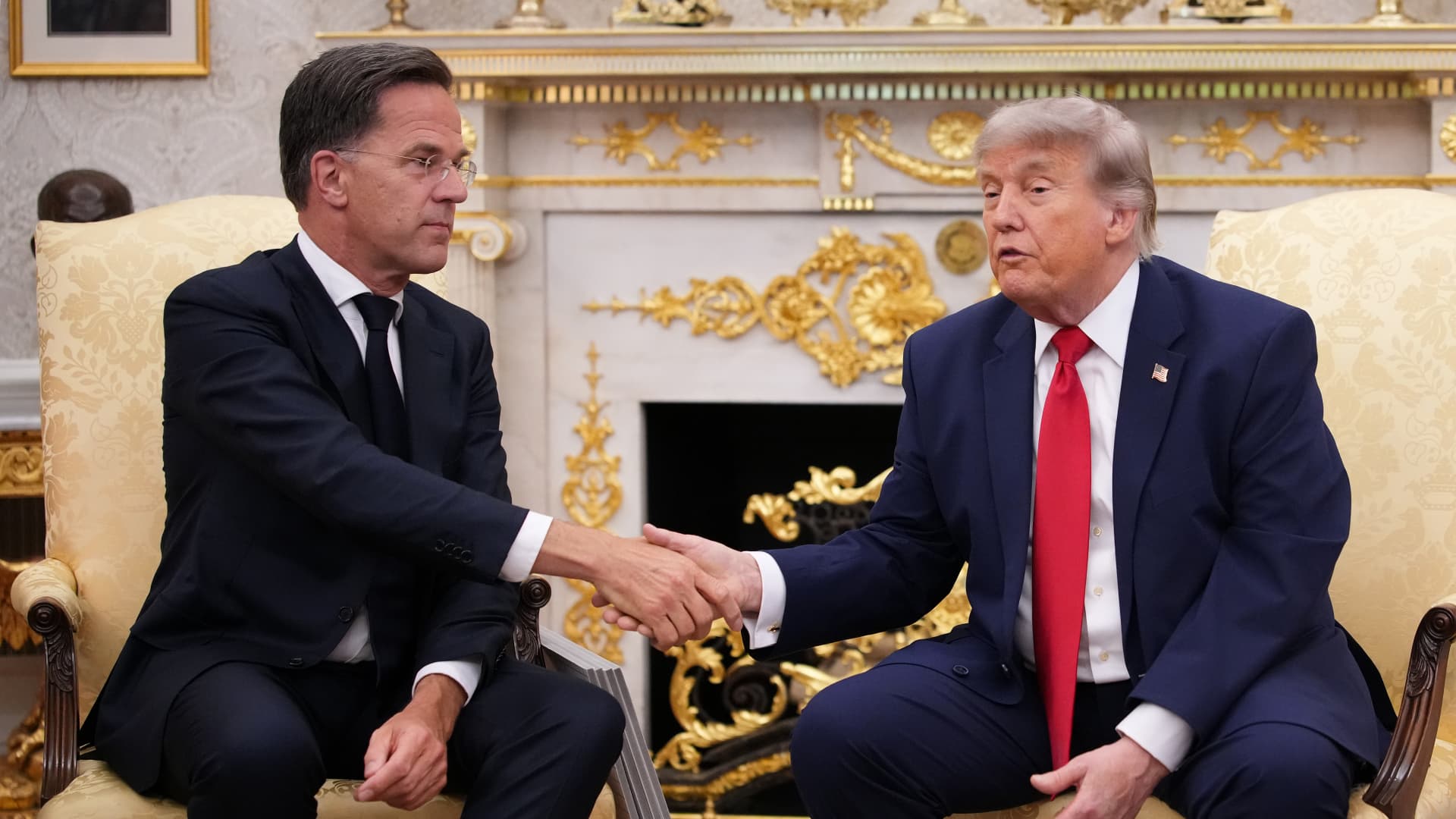
U.S. Ambassador to NATO Matthew Whitaker said internal strains over defense spending do not amount to a crisis, as President Donald Trump presses European allies to assume a larger share of the alliance’s security burden. NATO members are working toward a goal of spending 5% of gross domestic product on defense by 2035, including 3.5% on core military expenditure.
Speaking to CNBC on Monday before a NATO summit in Ankara, Turkey, Whitaker described the current dispute as “growing pains.” He said Washington expects Europe to take greater responsibility for conventional military defense on the continent while the United States reduces its role in some areas.
“The target is that Europe takes over the conventional defense of the European continent,” Whitaker told CNBC. “We’re not going away, we’re just doing less.”
The comments come as leaders prepare to meet in Ankara on Tuesday and Wednesday, with alliance spending commitments high on the agenda. The debate is central to the future balance of obligations inside NATO, where the United States has long pushed European governments to increase defense outlays.
Whitaker told CNBC he regarded the current tensions as part of a familiar process inside the alliance. “I see these as just the challenges that we’ve worked through before,” he said. He also pointed to uneven spending among European members, referring to some as “laggards” that would need to raise budgets over the next decade.
Spending target sets higher bar
NATO allies agreed at last year’s summit in The Hague, Netherlands, to the 5% of GDP defense-spending objective by 2035, according to CNBC. The target includes 3.5% for core defense spending, a narrower category that covers direct military capabilities.
The agreement marked a step up from earlier burden-sharing benchmarks and followed years of pressure from Washington. For governments, the target implies sustained budget choices over several electoral cycles, since defense spending competes with other fiscal priorities including health care, pensions and infrastructure.
In practical terms, a spending target expressed as a share of GDP requires countries to increase nominal defense budgets if their economies grow, and in some cases to make larger fiscal adjustments if current defense outlays sit well below the agreed level. The core-spending component is intended to distinguish military capacity from broader security-related expenditure.
NATO Secretary General Mark Rutte has said the task for the alliance is “to turn Allied commitments into concrete results,” according to NATO remarks cited by CNBC. That framing places the focus on implementation after the political agreement reached in The Hague.
The Ankara meeting will test how far allies have moved from headline commitments toward budget plans that can be measured. Whitaker’s remarks indicate that the U.S. position remains focused on shifting more of Europe’s conventional defense responsibilities to European governments, while keeping the United States inside the alliance structure.
For investors and policymakers, the spending debate carries implications for European public finances, defense procurement and transatlantic strategic planning. The timetable to 2035 gives governments nearly a decade to adjust, but the political pressure from Washington has made the path of defense budgets a recurring issue for NATO members.
This story draws on original reporting from CNBC.