Waymo adds four US cities to driverless ride rollout
Alphabet’s robotaxi unit will begin employee rides in San Diego, Las Vegas, Tampa and Denver before opening service more broadly.
By Sarah Jenkins · Chief Macro Economics Correspondent
· 3 min read
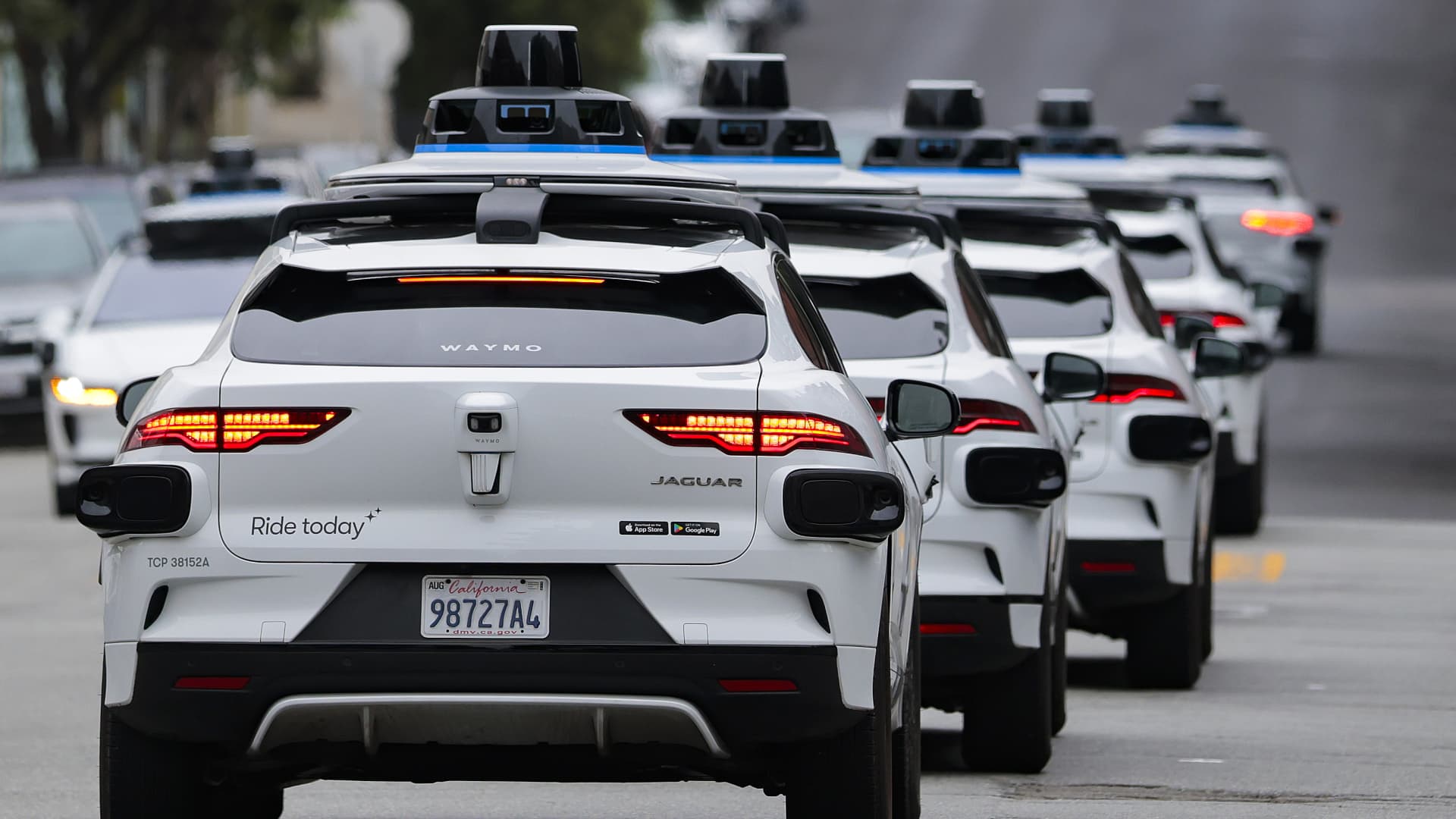
Waymo said it will introduce fully driverless ride service in four additional U.S. markets, extending Alphabet’s robotaxi business into San Diego, Las Vegas, Tampa, Florida, and Denver. The expansion adds to a network that already spans more than 10 cities and reinforces Waymo’s early scale advantage in a U.S. autonomous-ride market where Tesla and Amazon-owned Zoox are still broadening limited deployments.
The company said Wednesday that the new services will begin with rides for Alphabet employees in the coming weeks. Waymo plans to make the services available more widely after that initial phase, though it did not give specific public launch dates for each city.
The staged approach gives the company a controlled period to run vehicles without human drivers while it assesses routing, pickup and drop-off patterns, and local operating conditions. Waymo’s robotaxis use automated driving systems developed by the company rather than a driver behind the wheel, making the safety case and regulatory record central to expansion.
Waymo had previously announced plans to enter the four markets last year. Its latest step comes as competitors are also adding cities, according to CNBC. Zoox is preparing to offer robotaxi service to some members of the public in Austin, Texas, and Miami later this year, while Tesla is expanding beyond Austin into other parts of Texas and Miami.
Waymo remains the largest U.S. operator by disclosed fleet scale. As of May, its domestic fleet included about 4,000 robotaxis fitted with its fifth- and sixth-generation automated driving systems, according to filings with U.S. auto safety regulators.
The company’s growth has brought greater scrutiny of how autonomous fleets behave in unusual road conditions and during high-demand events. CNBC reported that some Waymo vehicles have entered flooded roadways after extreme weather. During Fourth of July celebrations in San Francisco, NBC News reported that several Waymo vehicles were stranded in traffic long enough for their batteries to run down, while another was seen driving into fireworks.
Waymo has raised substantial capital to support the rollout. In February, the company raised $16 billion from Alphabet and other investors, CNBC reported. The funding round came as Waymo prepared to expand beyond the U.S. for the first time, with service in London planned for later this year.
The company has completed more than 20 million autonomous rides overall, according to CNBC. Waymo has set a target of reaching 1 million trips a week by the end of the year, a threshold that would require both geographic expansion and higher utilization in existing markets.
For Alphabet, Waymo’s rollout represents one of the company’s most visible attempts to turn long-running artificial intelligence and automation research into a transportation service at commercial scale. For city officials and regulators, the expansion will add to the practical evidence base on how driverless fleets operate alongside conventional traffic, public transit, pedestrians and emergency services.
This story draws on original reporting from CNBC.