Cheap energy debate sharpens as US power costs test consumer-led growth
Daniel Driscoll says higher energy costs and cheaper renewables are challenging the US consumption model as Trump policy favors fossil fuels.
By Ingrid Halvorsen · Venture Capital Reporter
· 3 min read
US household consumption has supplied roughly 56% of annual GDP growth on average over the past two decades, according to research cited by Daniel Driscoll of the University of Virginia. Driscoll argues in Project Syndicate that rising energy costs and lower renewable power prices are putting pressure on a growth model built around inexpensive energy.
The argument links energy policy to the structure of the US economy. Driscoll says American consumption has been supported by the dollar’s reserve-currency role, which allows the United States to run persistent current-account deficits, and by policies that encourage household borrowing and spending, including housing tax benefits and government support for credit markets.
Energy has been another pillar of that system, he writes. US households tend to consume more energy because homes are larger, driving distances are longer, vehicle purchases are heavier and consumption includes more carbon-intensive goods than in many other economies, according to the research he cites.
Fossil fuel support and power demand
Driscoll says federal policy has also helped hold down fossil fuel costs through tax treatment for oil and gas producers, including rules covering intangible drilling costs. Such provisions reduce the cost of exploration and development by allowing producers to deduct certain expenses, supporting production and, in his account, contributing to lower prices when domestic output exceeds demand.
The Trump administration has treated cheap energy as a fossil fuel question, Driscoll argues. He points to President Donald Trump’s “drill, baby, drill” policy agenda and to the One Big Beautiful Bill Act, which he says expanded support for oil and gas while repealing most of the clean-energy tax credits enacted under President Joe Biden’s Inflation Reduction Act.
Princeton University’s ZERO Lab projected that the One Big Beautiful Bill Act would increase energy costs for US households and businesses by $28 billion by 2030, according to Driscoll. He says that estimate may prove conservative if energy supply strains persist, citing disruption linked to the Iran war and growing electricity demand from artificial intelligence data centers.
Data centers accounted for around half of new US electricity demand last year, according to figures cited by Driscoll. He also cites research indicating that rapid data-center growth could lift consumer electricity bills by as much as 25% in some US regions by 2030.
Renewables and industrial policy
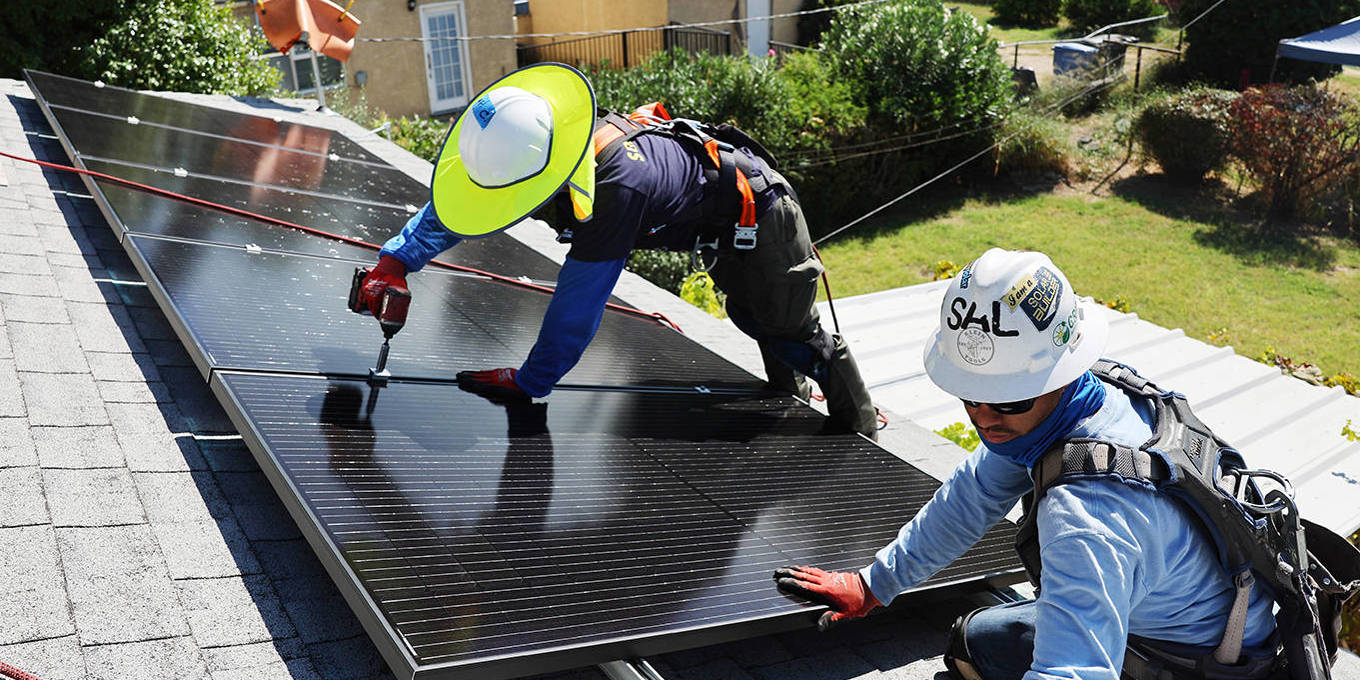
Renewable power costs continue to fall, according to the International Renewable Energy Agency figures cited in the commentary. In 2024, wind power was 53% cheaper than fossil-fuel alternatives and solar power was 41% cheaper, Driscoll writes.
He also says a months-long closure of the Strait of Hormuz, which disrupted global oil and gas flows, has accelerated interest in renewable energy abroad. Much of the green technology being adopted globally is manufactured in China, he notes.
That reliance creates a policy complication. Driscoll cites concerns among US and European Union policymakers about security risks in Chinese clean-energy equipment, including inverters. He notes that the EU has moved to ban high-risk Chinese inverters on cybersecurity grounds.
Driscoll argues that the United States could respond by producing sensitive components such as inverters domestically while continuing to import lower-risk, lower-cost items such as solar panels. That approach, he says, would require industrial policy but would not be outside established practice.
His broader conclusion is that suppressing renewable deployment while fossil fuel prices rise would weaken the consumption-led US growth model. The contention places energy abundance, rather than the source of that energy, at the center of the US economic debate.
This story draws on original reporting from Project Syndicate.