US inflation and housing data lead the economic calendar
Investors will watch December CPI, November retail sales and housing reports in a data-heavy week beginning Jan. 11.
By Ingrid Halvorsen · Venture Capital Reporter
· 4 min read
US inflation, consumer spending and housing data will dominate the economic calendar in the week beginning Jan. 11, with consensus estimates cited by Calculated Risk pointing to a 0.3% monthly rise in December consumer prices and a 0.4% gain in November retail sales. The releases will give investors, operators and policymakers a fresh read on price pressure, household demand and interest-rate-sensitive housing activity at the start of 2026.
Calculated Risk identified December CPI, existing home sales and November retail sales as the week’s central reports. New home sales figures for September and October are also due, adding delayed detail on the new-build market.
Monday, Jan. 12, has no major economic releases scheduled, according to Calculated Risk.
Inflation and housing data arrive Tuesday
The National Federation of Independent Business is scheduled to publish its December Small Business Optimism Index at 6:00 a.m. ET on Tuesday. The index is a survey-based gauge of sentiment among small firms, a sector closely watched for signs of hiring intentions, pricing plans and credit conditions.
At 8:30 a.m. ET, the Bureau of Labor Statistics is due to release the Consumer Price Index for December. Consensus estimates cited by Calculated Risk call for both headline CPI and core CPI to rise 0.3% on the month. On a year-over-year basis, the consensus is for both measures to increase 2.7%.
Core CPI excludes food and energy, categories that can be volatile month to month. Markets often compare the monthly pace with the annual rate to assess whether inflation is moving toward or away from the Federal Reserve’s price-stability objective.
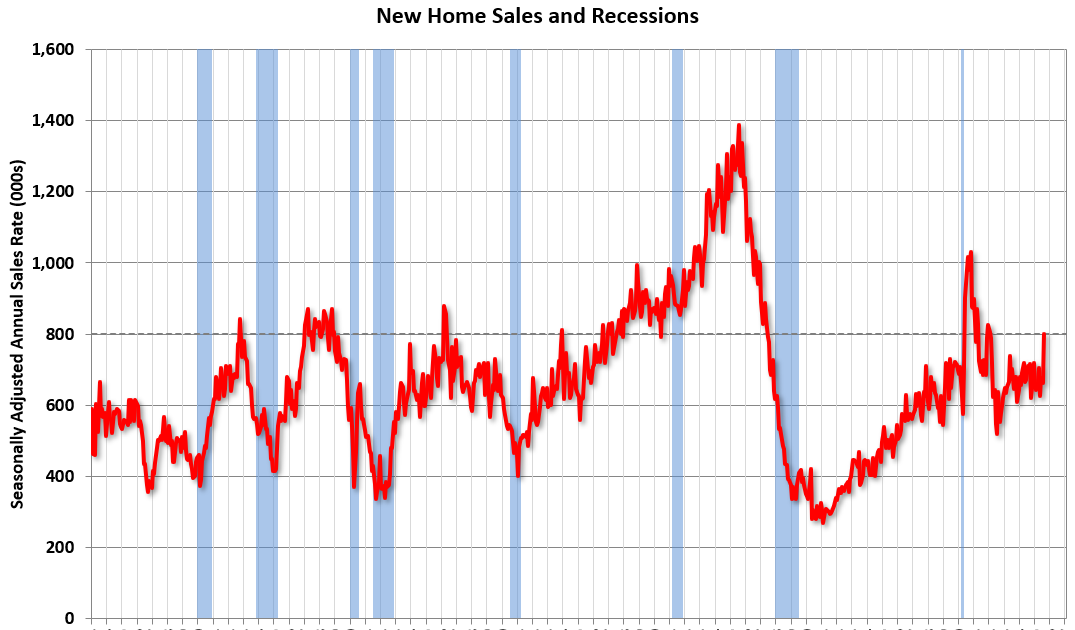
The Census Bureau is scheduled to release new home sales for September and October at 10:00 a.m. ET. Calculated Risk said the consensus estimate for October is 714,000 at a seasonally adjusted annual rate. SAAR converts a month’s pace into an annualized figure after adjusting for regular seasonal patterns, allowing comparisons across months.
Retail sales, producer prices and the Beige Book follow
On Wednesday at 7:00 a.m. ET, the Mortgage Bankers Association is expected to release two weeks of data for its mortgage purchase applications index. The index tracks applications for loans to buy homes and is used as a timely indicator of buyer demand.
The BLS is due to publish the December Producer Price Index at 8:30 a.m. ET. Consensus estimates cited by Calculated Risk call for a 0.3% increase in headline PPI and a 0.2% increase in core PPI. PPI measures prices received by producers and can offer an upstream view of inflation pressure.
November retail sales are also scheduled for 8:30 a.m. ET Wednesday, with the consensus calling for a 0.4% increase, according to Calculated Risk. The December retail sales release has not yet been scheduled, the site said.
At 10:00 a.m. ET, the National Association of Realtors is expected to report December existing home sales. The consensus estimate cited by Calculated Risk is 4.23 million at a seasonally adjusted annual rate, up from 4.13 million.
The Federal Reserve is scheduled to publish its Beige Book at 2:00 p.m. ET. Calculated Risk described the report as an informal review by the regional Federal Reserve Banks of current economic conditions in their districts.
Labor, manufacturing and production round out the week
Thursday’s releases begin at 8:30 a.m. ET with weekly initial unemployment claims. The consensus estimate cited by Calculated Risk is 208,000, unchanged from the prior figure.
Two regional manufacturing surveys are due at the same time. The New York Fed’s Empire State manufacturing survey is expected to post a reading of 1.0, compared with minus 3.9 previously, while the Philadelphia Fed manufacturing survey is expected at minus 5.0, compared with minus 10.2.
On Friday at 9:15 a.m. ET, the Federal Reserve is scheduled to release December industrial production and capacity utilization. Consensus estimates cited by Calculated Risk call for industrial production to rise 0.2%, while capacity utilization is expected to hold at 76.0%.
The January NAHB homebuilder survey is due at 10:00 a.m. ET Friday. The consensus estimate is 40, up from 39, according to Calculated Risk. The site noted that any reading below 50 means more builders view sales conditions as poor than good.
This story draws on original reporting from Calculated Risk.