British Airways reports record Heathrow punctuality after wider operational investment
British Airways said 86% of Heathrow flights left on time in early 2025, while independent data shows progress with limits.
By Rafael Ortiz · Fintech Correspondent
· 3 min read
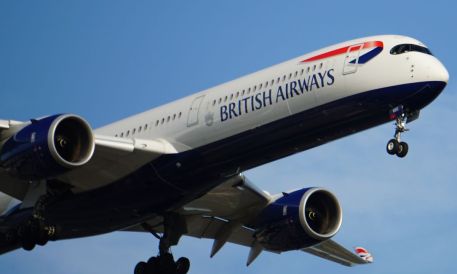
British Airways reported record British Airways Heathrow punctuality in the first quarter of 2025, with 86% of its departures from the London hub leaving on time. The airline attributed the result to a £100 million operational-resilience investment spanning technology, ground-process changes and 600 additional operational roles, while the available evidence does not separate the effect of artificial intelligence from the wider programme.
British Airways said the 86% result was its highest D-15 punctuality performance on record, compared with 46% in 2008. It recorded on-time departures of more than 90% on 38 of the quarter's 89 operational days, according to the airline's May 2025 announcement.
The carrier also said that two-thirds of Heathrow departures left ahead of schedule in April 2025. That was more than twice the proportion in April 2023 and almost 20% higher than a year earlier.
How did British Airways improve Heathrow punctuality?
British Airways said its technology and operational tools give staff faster access to data when making decisions on flights, passengers and crews. The £100 million investment forms part of a £7 billion programme announced in 2023 to improve customer experience and punctuality.
One application assigns aircraft landing at Heathrow to stands using a live assessment of passengers' onward travel plans. British Airways said the tool is intended to reduce missed connections and has saved 160,000 minutes of delays.
A separate real-time weather system reroutes aircraft away from poor conditions and can communicate with European air-traffic-control flow-management centres, the airline said. British Airways credited it with preventing 243,000 minutes of delays. Another predictive tool combines live operational data to identify routes at risk of delay, allowing teams to take additional measures.
The airline's Runway support tool assesses scheduled operations, passengers and crew data to model responses during disruption, including cancellations, arrival delays and aircraft changes. British Airways said it had used the tool to model 163 disruption-event scenarios across 2024 and 2025.
What supports the improvement beyond British Airways' figures?
A Financial Times analysis of UK aviation-regulator data found that British Airways flights from Heathrow were less likely than rival airlines to suffer severe disruption in the 12 months to February. The same analysis found that delays exceeding an hour remained above pre-pandemic levels.
The figures therefore point to improved performance, but do not establish an AI-only turnaround. Alongside AI, forecasting, optimisation and machine learning, British Airways said it has changed Heathrow ground operations, added staff, upgraded systems and moved data centres to the cloud. The airline said the migration was 90% complete, that it employed more than 100 data scientists and that it had rolled out about 830 change projects.
John Strickland, an aviation consultant, cautioned in comments reported by the Financial Times that the quieter first quarter was not the same test as the peak summer season. British Airways said further apps for pilots, cabin crew and dispatch teams were due to be deployed to help accelerate departures.
This story draws on original reporting from PYMNTS.