Amazon direct-to-device satellites plan seeks FCC approval
Amazon asked the FCC to approve up to 5,105 satellites for a phone-to-satellite network partly tied to its planned Globalstar deal.
By Marcus V. Thorne · Markets Editor
· 3 min read
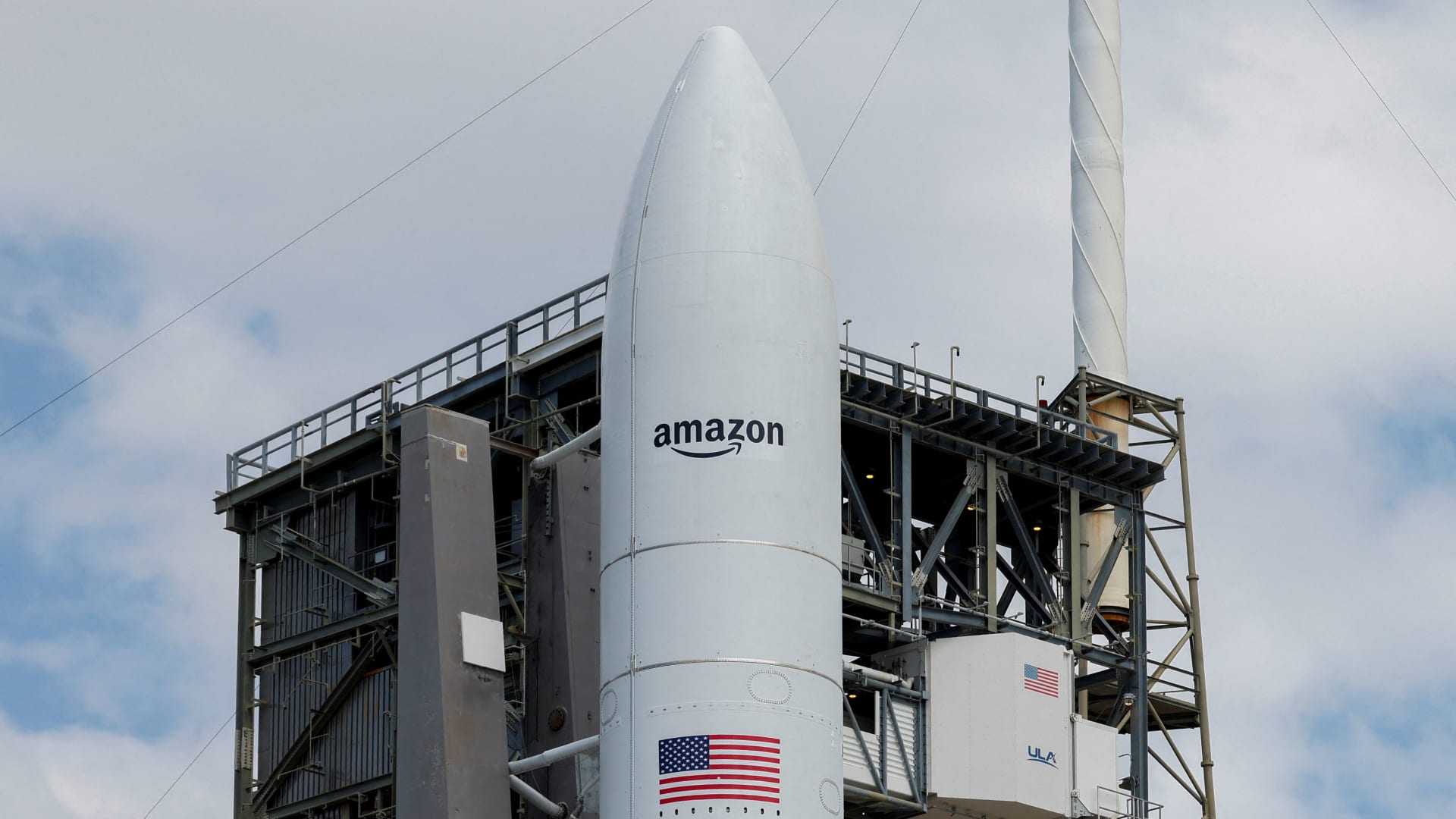
Amazon has asked the Federal Communications Commission to authorize up to 5,105 Amazon direct-to-device satellites, a filing shows, as it seeks to extend its space-based internet push from dedicated terminals to ordinary connected devices. The request would move Amazon more directly into a satellite-to-phone market where SpaceX is already building Starlink Mobile service in the U.S. with T-Mobile.
The company’s Saturday FCC application says the proposed network would use Amazon’s existing infrastructure alongside satellites and spectrum from Globalstar, the satellite operator Amazon said in April it planned to buy for about $11.6 billion. Amazon has said it expects that transaction to close in 2027 and that deployment of the direct-to-device network would begin in 2028.
What is Amazon's direct-to-device satellite network?
A direct-to-device, or D2D, network links satellites directly to smartphones or other devices, reducing dependence on terrestrial cell towers in places where conventional wireless coverage is absent or limited. In its FCC filing, Amazon said the service is intended for people who are not reached, or are poorly reached, by current wireless providers.
Amazon also described public-safety and commercial uses for the network. The filing cited emergency activity such as search and rescue, as well as connectivity for remote worksites, fleets and supply chains that are difficult for ground-based networks to serve.
In the filing, Amazon said it looked forward to providing D2D connectivity to people living, travelling and working beyond the reach of current networks. The company did not say in the filing when commercial service would begin beyond its previously stated expectation that deployment starts in 2028.
How does Globalstar fit into Amazon's plan?
Globalstar is central to the proposed structure because Amazon said the new system would combine its own infrastructure with Globalstar’s satellite assets and spectrum rights. Spectrum is the licensed radio frequency capacity that allows satellite and wireless systems to transmit data without causing harmful interference to other users.
Amazon announced the planned Globalstar acquisition in April. The deal, valued at roughly $11.6 billion, has not yet closed, according to Amazon’s prior timeline. The FCC application connects that acquisition strategy to the company’s broader plan to offer direct links between satellites and consumer or enterprise devices.
How does this relate to Project Kuiper?
Amazon has separately been building its low Earth orbit broadband network, known as Project Kuiper, which is designed to compete with SpaceX’s Starlink service. The company has more than 390 satellites in orbit and recently said that total was sufficient to begin initial service later this year.
The FCC last month granted Amazon a waiver from a requirement to place 1,600 first-generation satellites in orbit by July 30. Amazon remains required to deploy all 3,232 satellites in that planned constellation by July 2029.
SpaceX’s Starlink remains the dominant low Earth orbit internet provider, with more than 10,000 satellites in its constellation. Its Starlink Mobile service has acquired wireless spectrum licenses from EchoStar and offers direct-to-cell connectivity through T-Mobile in the United States.
Amazon’s filing signals that satellite connectivity is becoming a more direct extension of the mobile market, rather than a service limited to specialized terminals. For regulators, the application adds another large constellation request to a field where spectrum rights, orbital capacity and interference management are central constraints.
This story draws on original reporting from CNBC.


