Bradshaw Honey Farms beekeeper fights losses as bee deaths mount
David Bradshaw’s California bee farm grossed about $1.8 million last year but ended in the red after costs and colony losses.
By Marcus V. Thorne · Markets Editor
· 4 min read
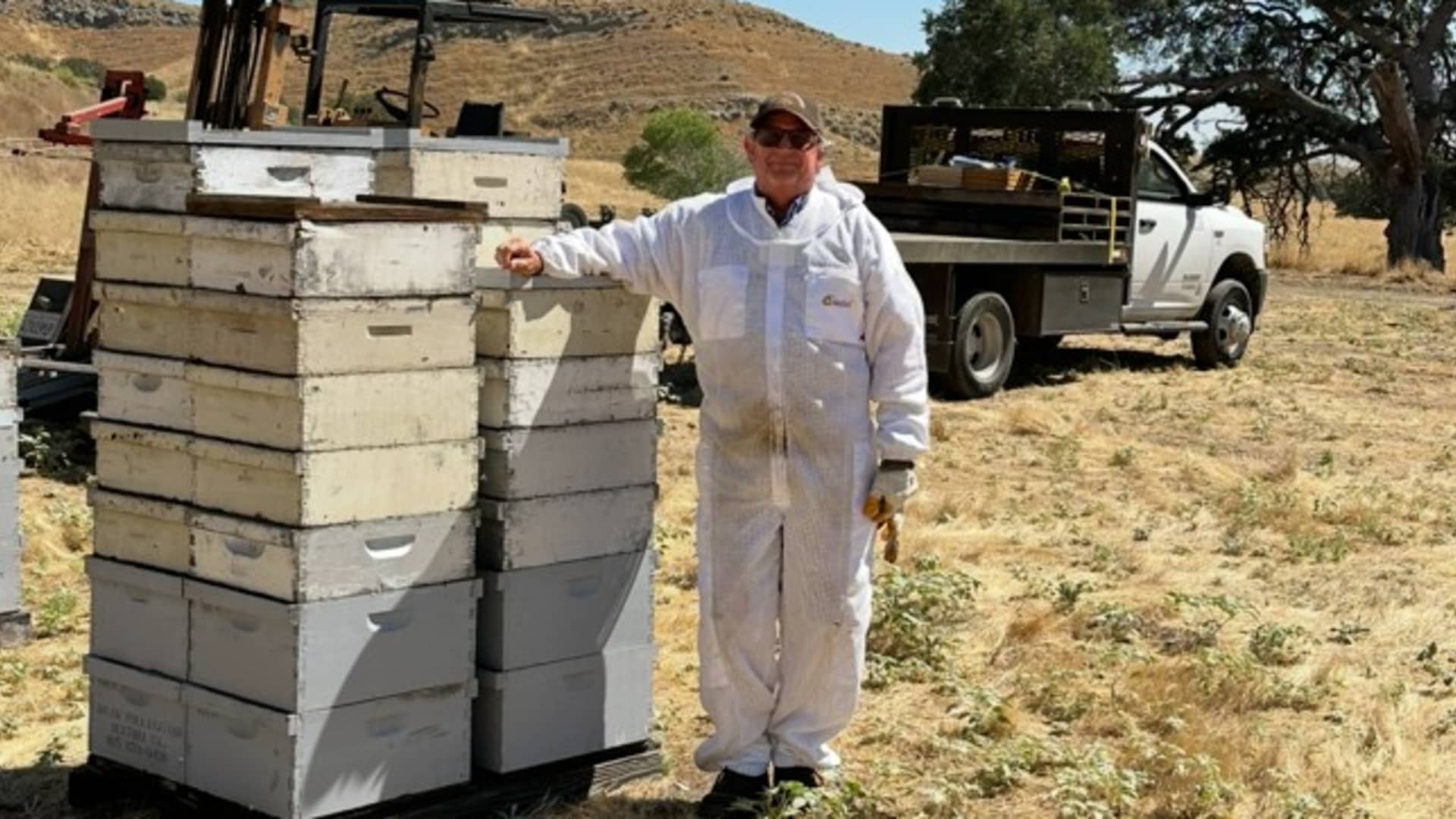
Bradshaw Honey Farms beekeeper David Bradshaw is trying to keep a second-generation California honey and pollination business operating after about $1.8 million in gross income last year still left the farm at a loss, according to documents reviewed by CNBC Make It. The pressure on the Visalia business reflects wider stress in U.S. beekeeping, where a Project Apis m. survey found 62% of commercial honeybee colonies died between June 2024 and February 2025.
Bradshaw, 70, runs Bradshaw Honey Farms from the five-acre property his family moved to in 1970. His father, Howard Bradshaw, founded the operation in 1958 after first keeping bees as a hobby while working as an aircraft mechanic, according to David Bradshaw.
The farm remains a family enterprise. Bradshaw’s daughter works full time managing honey bottling, while his son helps when needed. Bradshaw told CNBC Make It that he views the business as an inherited responsibility and has been putting money back into the operation even as his savings have been depleted.
What does Bradshaw Honey Farms do?
Bradshaw Honey Farms earns most of its revenue by renting bees to farmers for crop pollination, according to documents reviewed by CNBC Make It. In commercial beekeeping, growers pay beekeepers to place hives near flowering crops so bees transfer pollen between plants, a service that supports fruit and nut production while giving colonies access to forage.
Bradshaw’s annual route begins with almond orchards in mid-February. He then moves hives to cherries and prunes, followed by oranges, lemons and grapefruit in late spring. From summer into early fall, he takes bees to the Sierra region so they can gather pollen and make honey from native plants.
The farm still sells small quantities of honey, but Bradshaw said honey is no longer a major revenue line. He also sells custom beekeeping equipment and bee food supplements through the farm’s online store, and extracts honey for other local beekeepers.
Costs and weak honey output squeeze the farm
Bradshaw told CNBC Make It that bees have produced relatively little honey over the past decade. As U.S. honey output has fallen, he said cheaper imported honey products have increased pressure on the domestic market.
Expenses have also risen. Labor is among the farm’s largest costs, with two full-time employees including Bradshaw’s daughter. He cited higher fuel prices and tariffs affecting supplies such as honey bottles as further strains on the business.
The physical work remains demanding. Bradshaw and an employee collect honey supers, the boxes placed above hives to hold surplus honey, load them with a forklift and bring them back to Visalia for extraction. His daughter bottles the honey for sale.
When the bees are not pollinating crops, Bradshaw rents pasture from farmers and ranchers so the colonies can rest, feed and build winter stores. He said many landowners accept honey in exchange for use of their land, and that larger beekeeping operations depend on access to open space and frequent movement of hives.
Why are beekeepers losing colonies?
Weather and disease are central risks for Bradshaw’s operation. He told CNBC Make It that dry conditions reduce plant growth and pollen supplies, while excessive rain can keep bees inside their hives and force beekeepers to provide artificial protein and sugar syrup.
Bradshaw identified parasitic mites as one of his biggest concerns. The pests can weaken honeybees and spread viruses, including deformed wing virus. He said the farm medicates colonies to limit mite damage, but viral infections can overwhelm a hive once established.
Bradshaw estimated he lost about 60% of his bee population in 2025, largely because of mite-linked viral infections. Project Apis m., a nonprofit bee research organization, reported in an April 2025 survey that U.S. beekeepers cited parasites, pathogens, pesticide exposure and inadequate nutrition as the main causes of colony deaths.
Bradshaw said his immediate goal is to get the bees through to the following year. He also told CNBC Make It that some independent beekeepers are selling to larger companies or leaving the business because the operating burden has become too difficult.
Despite the financial strain, Bradshaw said he does not expect to leave beekeeping. He described the work as part of his identity and said a successful honey crop and healthy bees still give him a strong sense of accomplishment.
This story draws on original reporting from CNBC.


