Burnham presses regional power shift with Manchester No. 10 plan
Andy Burnham’s proposed “No. 10 North” puts fiscal centralisation and uneven regional growth at the centre of Britain’s policy debate.
By Marcus V. Thorne · Markets Editor
· 3 min read
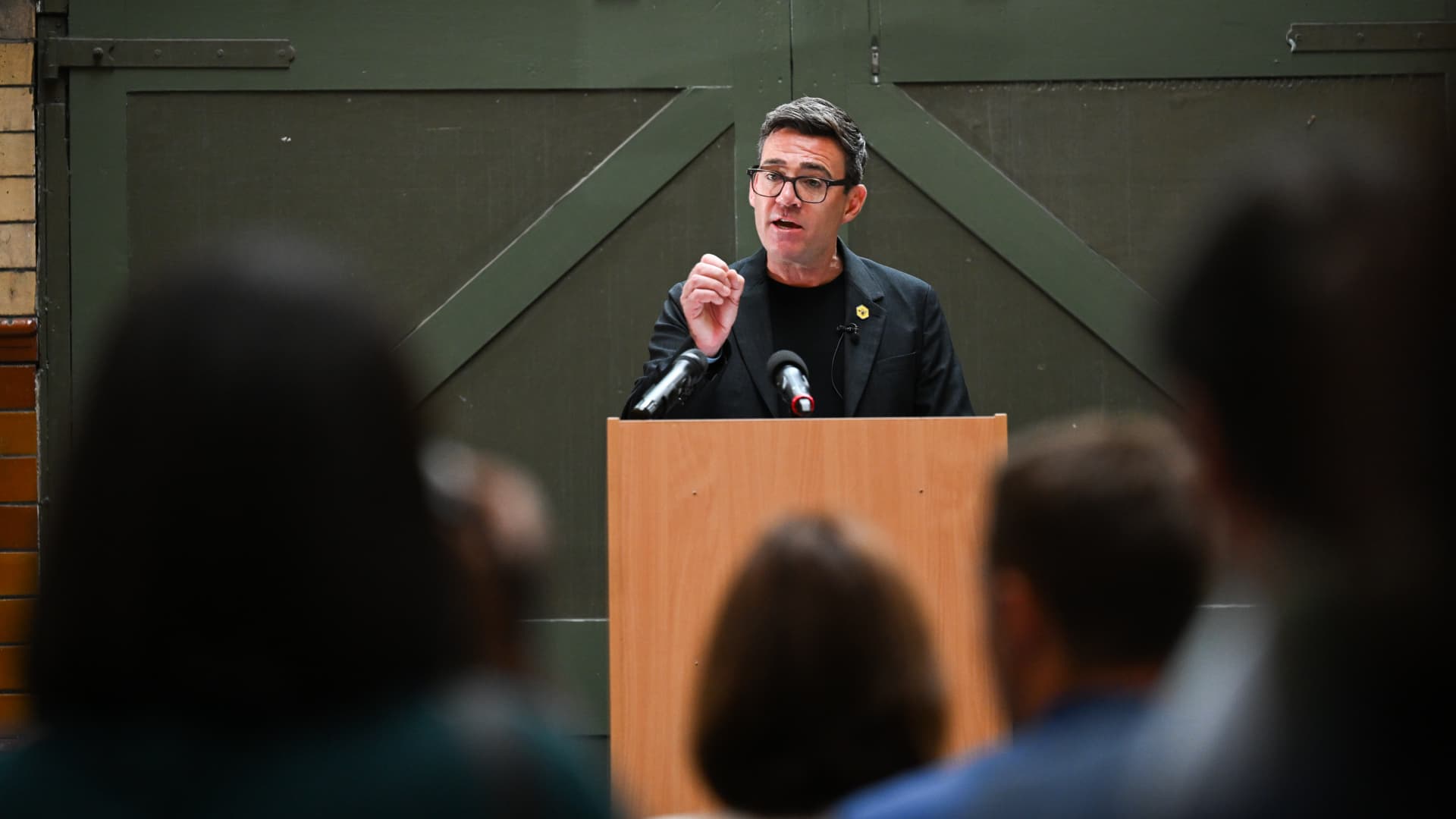
Andy Burnham has put devolution at the centre of his emerging programme with a proposal to move part of the prime minister’s London operation to Manchester. The plan lands in a country where local government collected 5% of tax revenue in 2024, according to OECD data, far below France at 14% and the U.S. at 15%.
CNBC’s UK Exchange newsletter reported that Burnham, described by CNBC as Britain’s incoming prime minister, announced the “No. 10 North” plan in Manchester last week. The proposal would shift some civil servants now based in the prime minister’s Downing Street office to a new base in the north-western English city.
Burnham, who served as mayor of Greater Manchester from 2017, framed the move as part of a wider effort to transfer authority from Whitehall to the regions. “It will be the conduit through which we redistribute power and resources across the U.K.,” Burnham said last week, according to CNBC. He said the office would bring together national and local government to set a long-term economic strategy and help places establish new growth goals.
How the proposal fits into devolution
Devolution changes where public decisions are made and, in some models, who controls revenue. A government can transfer administrative staff, spending powers, tax-setting powers or regulatory authority from a national centre to local or regional bodies. Burnham’s Manchester office would not by itself create a new tax base, but CNBC reported that it is intended as a symbol and instrument of broader decision-making outside London.
The policy addresses a long-running criticism of Britain’s governing model: that decisions on infrastructure, public services and economic development are concentrated in London. Critics of that arrangement argue that centralisation contributes to large regional gaps in economic performance and public-service outcomes.
The idea has already drawn opposition. Guto Harri, an adviser to former Prime Minister Boris Johnson, wrote on LinkedIn that the proposal “sounds strangely analogue” given artificial intelligence and remote working. Harri said changing Britain’s economic model should begin with incentives, innovation and business formation rather than relocating offices.
Andrew Rawnsley, writing in The Observer, reported scepticism among senior Whitehall figures about whether a prime minister could regularly work away from London, citing the demands of the job and transport links between the capital and the north-west. CNBC also reported that former Prime Minister Rishi Sunak is thought to have spent many Fridays working from HM Treasury’s Darlington office, although the arrangement was not publicised for security reasons.
A difficult record for past reforms
Burnham’s argument faces the mixed history of devolution within the U.K. Scotland gained a parliament and Wales gained an assembly in 1999, later renamed the Welsh Parliament. CNBC reported that those reforms have not produced clear political or public-service success.
Education data cited by EduScot show Scotland has fallen in international education rankings since devolution, including in maths. The Institute for Fiscal Studies has said health and education systems in Wales are underperforming compared with England. Both devolved administrations have also faced scandals at different points, according to CNBC.
Voter engagement has been uneven. Turnout in this year’s Scottish Parliament and Welsh Parliament elections was just above 50%, CNBC reported, compared with nearly 60% in the 2024 U.K. parliamentary election. In England, turnout for police and crime commissioner elections has rarely exceeded 25%, and voters in the North East rejected a proposed regional assembly in a 2004 referendum.
CNBC’s Ian King reported that Burnham’s plans are likely to meet resistance from civil servants who do not want to give up influence. He also noted that meaningful devolution would require funding at a time when the U.K. government has limited fiscal room.
This story draws on original reporting from CNBC.