Gates pledge highlights low-cost tools to reduce maternal deaths
A $215 million women’s health commitment comes as WHO data show more than 700 women die daily during and after pregnancy and childbirth.
By David L. Chen · Senior Columnist
· 3 min read
Melinda French Gates has pledged $215 million for women’s health worldwide, including maternal care in Africa, at a time when the World Health Organization says more than 700 women die each day during and after pregnancy and childbirth. Global health physician Ifeanyi M. Nsofor argues that tighter aid budgets should push lower-income countries toward proven, lower-cost interventions against the main causes of maternal mortality.
The burden is concentrated in poorer regions. According to WHO figures cited by Nsofor, about 87% of maternal deaths occur in Southern Asia and Sub-Saharan Africa, with Sub-Saharan Africa accounting for nearly 70% on its own. High-income countries report lower rates, although the U.S. Centers for Disease Control and Prevention says Black women in the United States are more than three times as likely as white women to die from maternity-related causes.
Postpartum bleeding
Nsofor identifies postpartum hemorrhage, hypertensive disorders such as pre-eclampsia, unsafe abortion complications, obstructed labor and sepsis as leading causes of maternal death, citing research published in The Lancet Global Health. He says the policy challenge is less about discovering new tools than financing and delivering those already shown to work in settings with limited resources.
For postpartum hemorrhage, active management of the third stage of labor can cut severe bleeding by about 60% to 70%, according to research cited by Nsofor. The approach involves giving a medicine that helps the uterus contract after delivery, managing the delivery of the placenta and checking uterine tone. Oxytocin is the preferred drug, but Nsofor notes that misoprostol can be used where cold storage is difficult because it is heat-stable and can be taken by mouth.
Measurement also affects survival. A plastic collection drape placed beneath a woman after birth can help health workers quantify blood loss. For women in shock, a non-pneumatic anti-shock garment applies pressure to the legs and abdomen, helping direct blood toward vital organs while a patient awaits surgery or transfusion, according to studies cited by Nsofor.
Blood pressure and emergency care
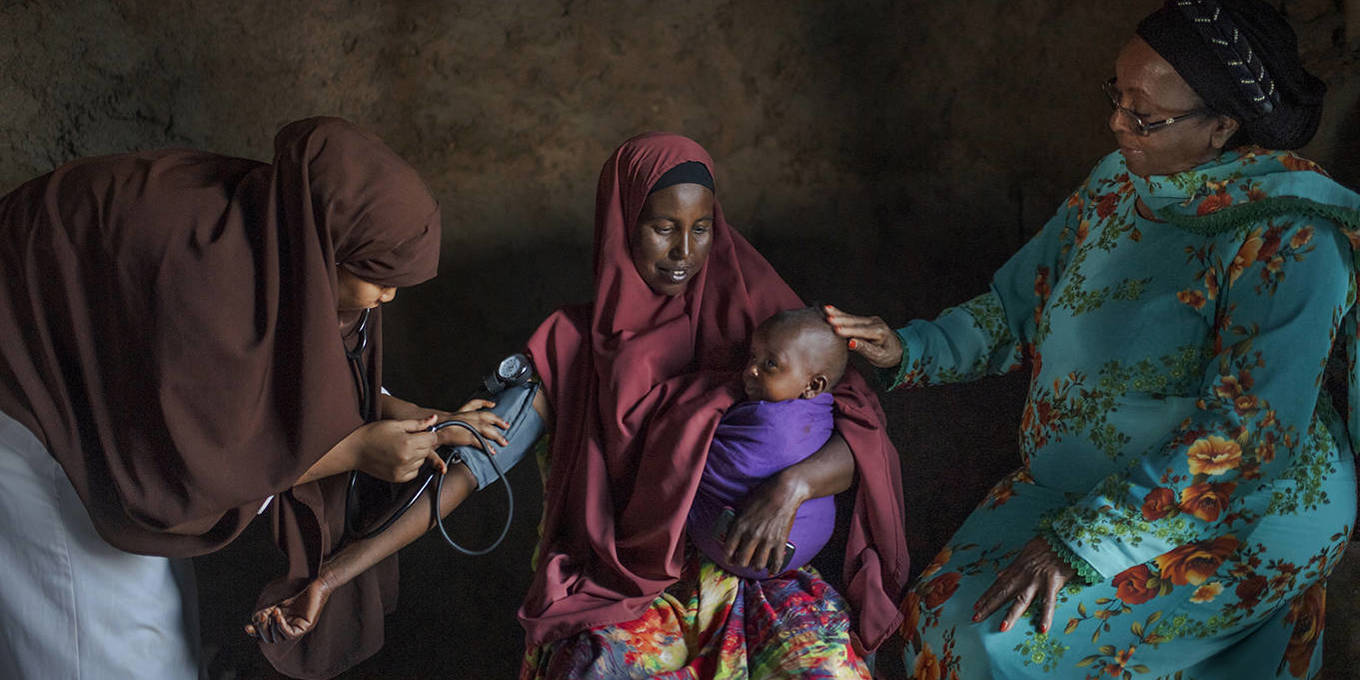
Pre-eclampsia affects 3% to 8% of women giving birth worldwide, according to WHO. If untreated, the condition can lead to seizures and death. Nsofor points to regular blood-pressure checks as a low-cost response, including community monitoring outside hospitals.
Between 2014 and 2017, the Community-Level Interventions for Pre-eclampsia program trained community health workers to visit pregnant women at home, use mobile tools and pictorial guides, and identify warning signs. A randomized controlled trial designed by the University of British Columbia found improved early detection and management in Mozambique, Pakistan and India, with low-risk cases receiving antihypertensives and magnesium sulfate and high-risk patients referred urgently to health facilities.
Unsafe abortion complications account for roughly 8% of maternal deaths globally, according to The Lancet Global Health research cited by Nsofor. Ethiopia changed its abortion law in 2005 and made safe abortion services and follow-up care available in public health facilities. Within 10 years, the share of maternal deaths associated with unsafe abortion fell from 32% to below 10%, according to the study cited by Nsofor.
Obstructed labor accounts for about 2% of maternal deaths worldwide, according to the same research, and can cause severe bleeding, infection, uterine rupture, stillbirth and death. Nsofor cites Bangladesh as an example of faster progress, pointing to expanded emergency obstetric care, more private facilities providing cesarean sections, community-based skilled birth attendants, earlier referral, lower adolescent pregnancy rates and better maternal nutrition.
Nsofor says French Gates’ commitment is timely, but adds that maternal health systems in aid-dependent countries cannot rely on philanthropy alone. His central argument is that public spending should prioritize interventions that are affordable, scalable and already supported by evidence.
This story draws on original reporting from Project Syndicate.