China submarine missile test raises pressure on Pacific defence ties
A PLA Navy launch into Pacific waters drew criticism from Australia, New Zealand and the U.S., as analysts warned it could speed regional security cooperation.
By Marcus V. Thorne · Markets Editor
· 4 min read
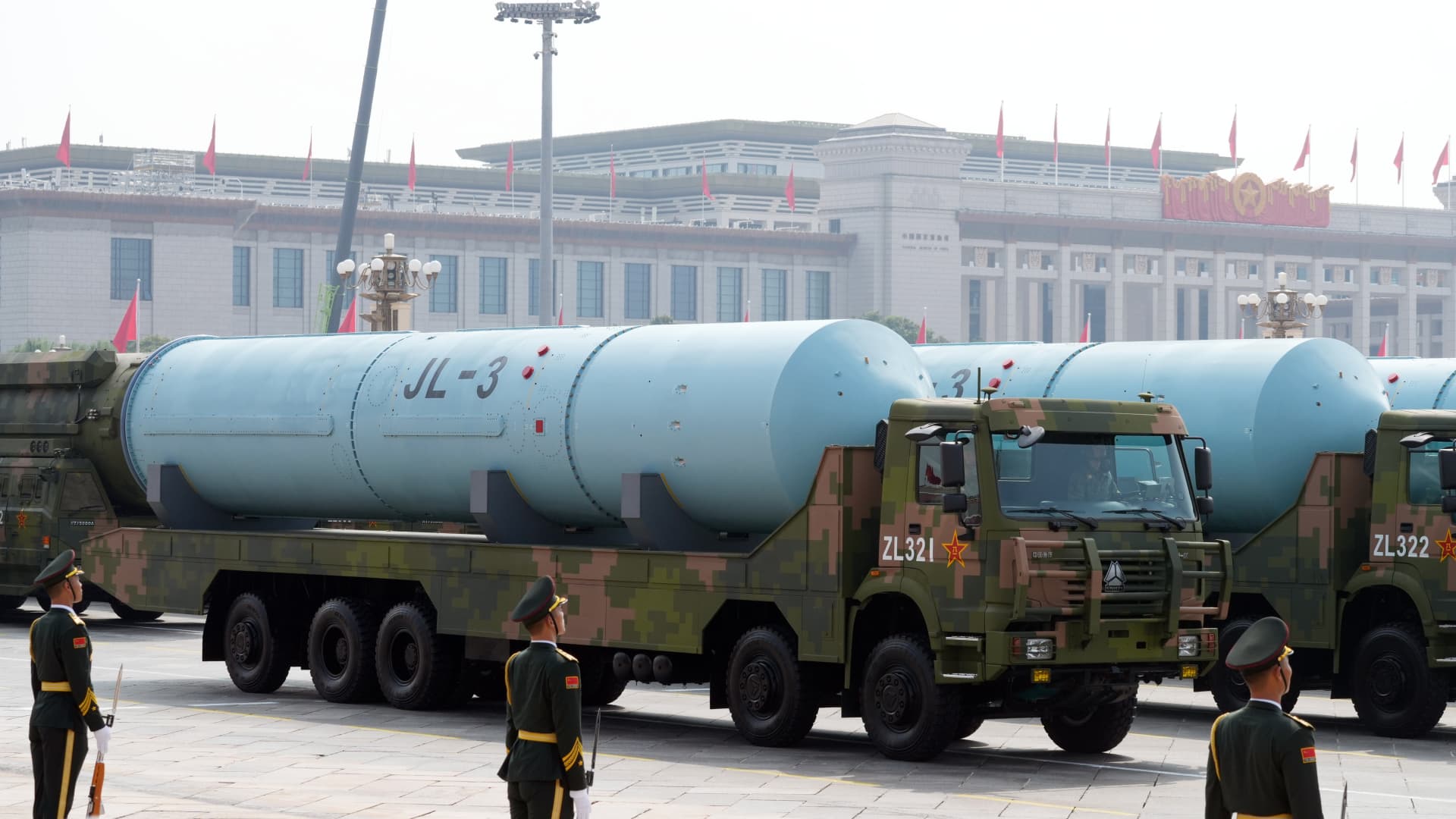
China fired a ballistic missile with a dummy warhead from a nuclear submarine into the Pacific on Monday, a rare test that analysts said is likely to push Asia-Pacific governments toward closer defence cooperation. Xinhua, China’s official news agency, said the People’s Liberation Army Navy launch took place at 12:01 p.m. and that the missile landed in designated international waters.
Beijing described the launch as routine military training and said it was not aimed at any country. Chen Xi, a Chinese defence ministry spokesperson, said late Tuesday that the test “achieved its intended targets,” that neighbouring countries had been notified in advance, and that China would keep its nuclear forces at the minimum level needed for national security.
The test was China’s first strategic missile launch into the region since September 2024, when Beijing fired a nuclear-capable intercontinental ballistic missile into waters near French Polynesia, according to the Global Times. That 2024 launch was its first known ICBM test in the area in four decades.
Analysts see a signal on deterrence
Several defence analysts said the submarine launch showed China’s effort to strengthen the sea-based part of its nuclear force. A nuclear triad gives a state the ability to deliver nuclear weapons from land-based missiles, aircraft and submarines. The submarine leg is central to second-strike capability because vessels at sea can be harder to locate and destroy, preserving the ability to respond after an attack.
Jeremy Chan, senior analyst at Eurasia Group, said China appeared to use the test to demonstrate that second-strike capacity, following the land-based launch in 2024. Chan said the next test could involve an air-based missile, and he expects governments including Australia, New Zealand, Japan and the Philippines to expand joint training, arms purchases and defence spending.
Ely Ratner, a former U.S. assistant secretary of defense for Indo-Pacific security affairs, said Beijing’s action should draw U.S. allies in Asia closer together. He said the launch highlighted the pace of China’s military modernisation, including its nuclear forces.
The missile’s model, launch location and impact point have not been confirmed publicly. The state-run Global Times cited a military expert as saying the weapon was likely the JL-3, China’s most advanced submarine-launched ballistic missile. The U.S. Department of Defense has said the JL-3 can reach the continental United States from waters near China’s coast.
Regional governments object
The launch drew criticism from several Pacific powers. Australian Foreign Minister Penny Wong called it “destabilizing to the region” and linked it to what she described as China’s rapid military build-up. New Zealand Foreign Minister Winston Peters said China informed Wellington only within hours of the test and warned that the launch reflected a recurring pattern. The U.S. State Department said China’s rapid and opaque nuclear weapons expansion was a concern for the region and the wider world.
David Silbey, a military historian and senior lecturer at Cornell University, said the launch fitted a pattern of more assertive Chinese activity in the Pacific, at a time when U.S. allies are watching the Trump administration’s security commitments closely. Lyle Morris, senior fellow at the Asia Society Policy Institute, said Beijing appeared to judge that the deterrent value of demonstrating a fuller nuclear triad outweighed the diplomatic and military backlash.
The test coincided with new security steps in the Pacific. Fiji and Australia signed a mutual defence treaty on Monday requiring consultations on security threats and action against common danger if either country is attacked. Vanuatu last week agreed with Australia to bar foreign military bases from its territory, while the Solomon Islands said last month it would review a security agreement with China as it negotiates a broader treaty with Canberra.
John Blaxland, a professor at the Australian National University, said the launch could strengthen the case for governments such as Fiji to accept Australian offers of security cooperation by underscoring China’s willingness to use military signalling in the region.
This story draws on original reporting from CNBC.