Chinese carmakers gain ground with UK buyers as imports climb
Chinese-built vehicles are rising sharply in the UK, aided by lower prices, EV demand and a tariff gap with the European Union.
By Sarah Jenkins · Chief Macro Economics Correspondent
· 3 min read
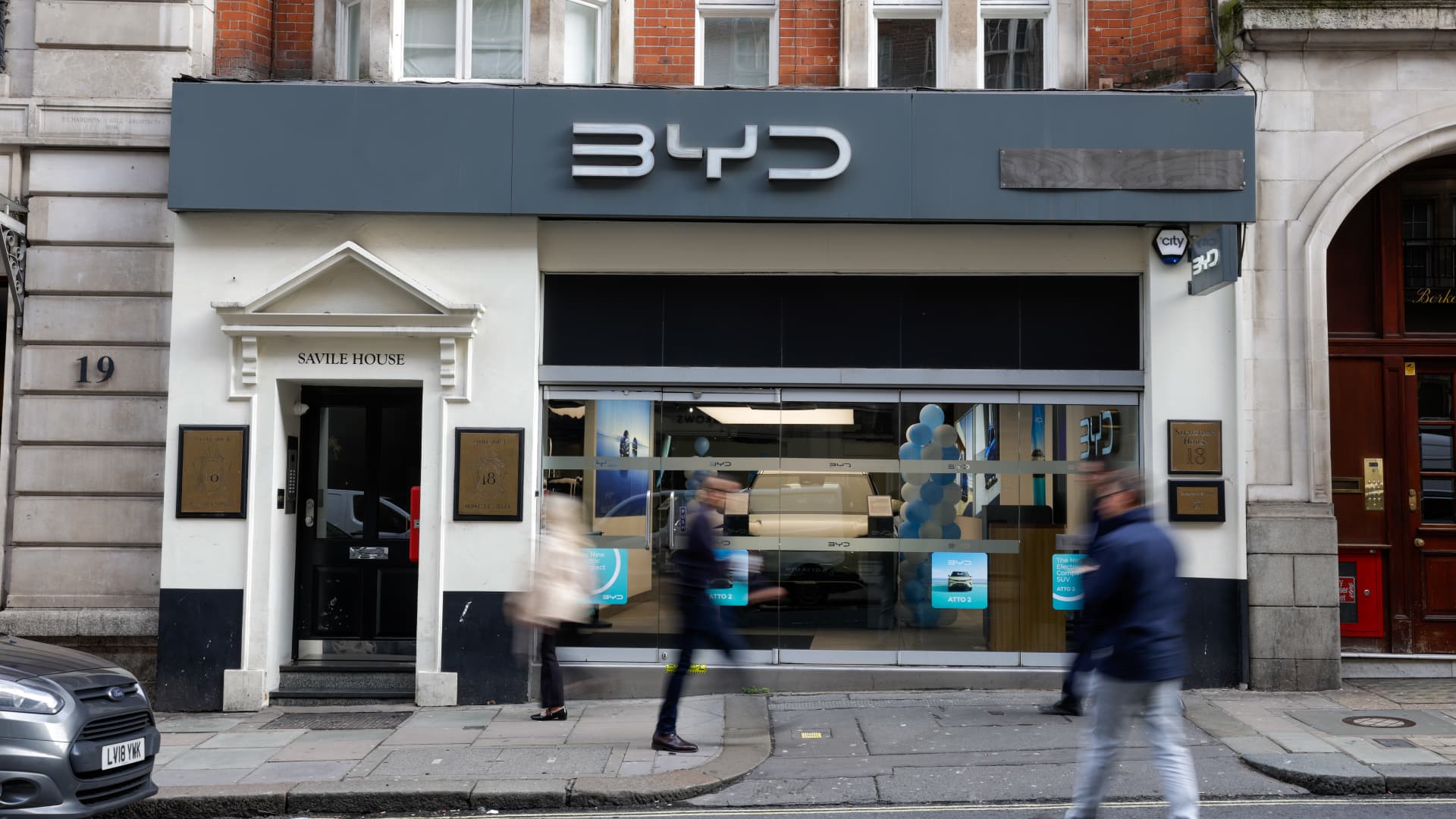
Chinese-built vehicle sales in the United Kingdom have risen from a niche category to a material presence, with imports increasing from 384 units in 2015 to more than 285,000 last year, according to automotive consultancy Mobility Global. The shift is giving Chinese manufacturers a larger foothold in one of Europe’s major auto markets as domestic demand in China weakens and exports accelerate.
The UK market has become a focal point for brands including BYD and Geely, helped by competitive pricing, technology packages and Britain’s approach to tariffs on electrified vehicles. Unlike the European Union, the UK does not impose an additional tariff on plug-in hybrid electric vehicles, creating a more open route for Chinese automakers selling lower-cost models.
At Lipscomb Cars in Maidstone, southeast of London, a Geely dealership that opened within the past year has been drawing buyers despite offering only two models. One recent customer, Izzy Woodrow, told CNBC he was pleased with the comfort, quiet cabin, build quality and in-car technology of his Chinese-made vehicle.
Other buyers cited price and equipment levels. Chris Smith, who visited the dealership with Tracy Smith, told CNBC that Chinese-made models offered strong value compared with higher-priced established brands that may include fewer features.
Will Roberts, an analyst at automotive consultancy Benchmark, told CNBC that Chinese vehicles have moved beyond novelty status in Britain. He said the appearance of BYD cars in London, once unusual, has become more familiar as the brands expand distribution and visibility.
The UK opportunity comes as China’s carmakers look abroad to absorb production. In the first half of 2026, retail auto sales in China fell 26% from a year earlier, while auto exports rose 72%, according to the China Association of Automobile Manufacturers. That divergence has increased pressure on manufacturers to find growth in overseas markets.
Pricing remains a central part of the competitive case. CNBC reported that many Chinese models sell for several thousand pounds less than similar vehicles from legacy manufacturers. A German-built Volkswagen Tiguan plug-in hybrid is priced in the UK at just over £43,000, or about $58,000, while a China-built BYD Seal U costs close to £10,000 less.
The tariff structure helps explain the gap between the UK and the EU. When an additional duty applies, importers must either raise retail prices, absorb the cost in margins, or change product and sourcing plans. Without that extra UK charge on plug-in hybrids, Chinese carmakers have more room to price aggressively while still offering electrified models that meet consumer demand.
Executives at established automakers, including the large US manufacturers, have argued for years that Chinese state support allows Chinese companies to sell vehicles at prices rivals struggle to match in Asia, Europe and the United States. Those complaints have not stopped the expansion of Chinese auto exports.
Jon McNeill, a former General Motors board member, told CNBC that Chinese manufacturers are entering Europe with appealing cars, low prices and technology that many buyers view as stronger than offerings from European manufacturers.
Dealers say price may attract initial interest, but product quality helps close sales. John Panda-Noah of Lipscomb Cars told CNBC that buyers respond strongly once they see the appearance, fit, finish and technology of new Geely models.
This story draws on original reporting from CNBC.