Rubin rules out Fanatics moves into ticketing and sports broadcasting
The Fanatics chief told CNBC the sports group sees room for new lines of business, but not in ticketing or live media rights.
By Marcus V. Thorne · Markets Editor
· 3 min read
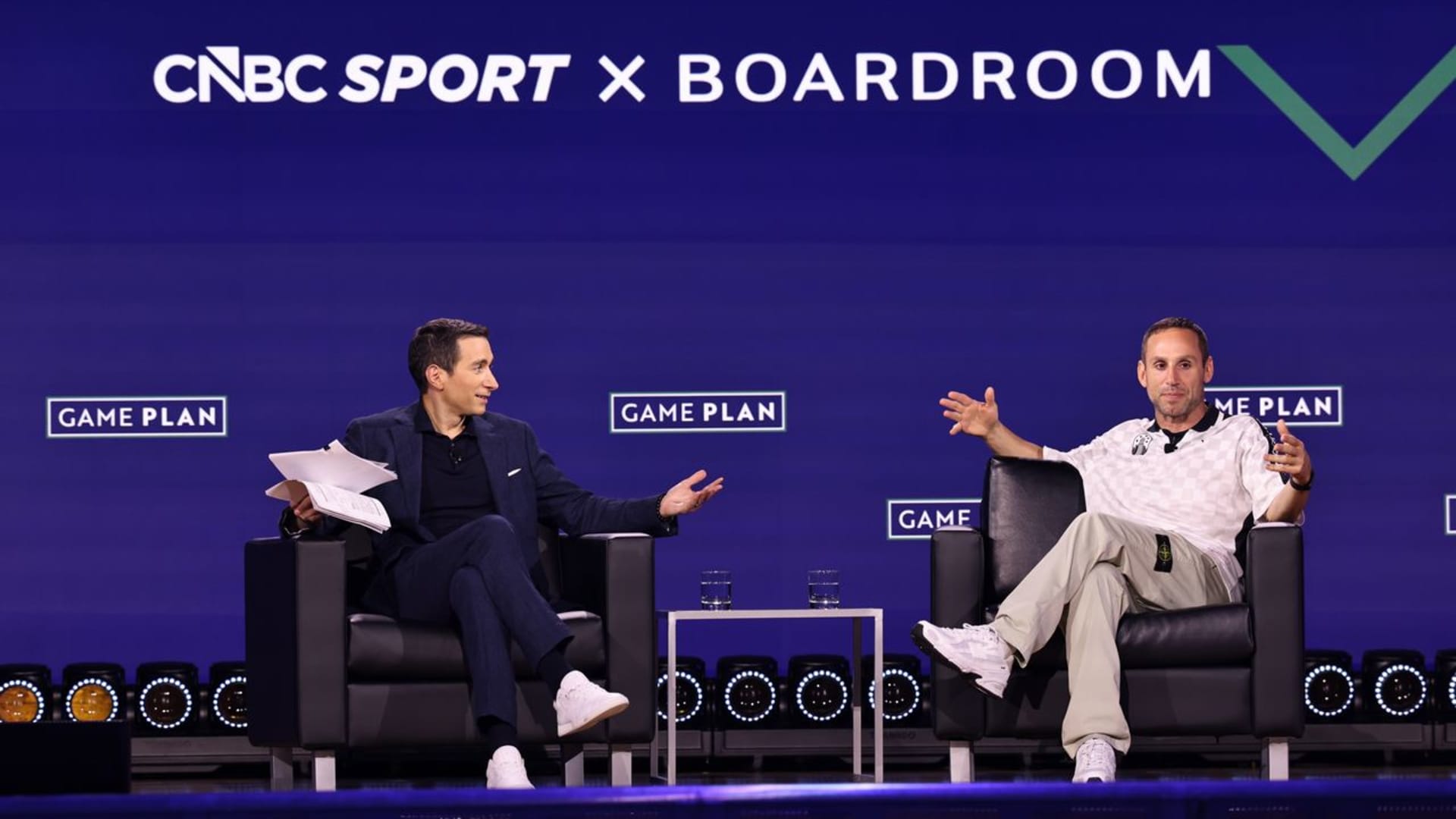
Fanatics chief executive Michael Rubin said the company does not plan to enter ticketing or live sports broadcasting, even as the privately held sports commerce group expands across merchandise, collectibles, betting and gaming. Rubin told CNBC the company is approaching $14 billion in revenue this year, compared with about $8 billion in 2024, according to earlier CNBC reporting.
The comments define the limits of a sports conglomerate that has used league, team and athlete relationships to build a broad consumer platform. Fanatics was valued at $31 billion in its last public funding round in December 2022, when it raised $700 million, according to CNBC.
Speaking with CNBC’s Andrew Ross Sorkin at the CNBC Sport x Boardroom Game Plan Summit in New York, Rubin said Fanatics has more than 150 million customers across its businesses. Those customers include people buying team apparel, trading cards or placing sports wagers through the company’s platform.
Rubin, who founded Fanatics in 2011, described the company as a platform for digital sports fans rather than a single-category retailer. He said its three current revenue pillars are merchandise, collectibles, and betting and gaming. Fanatics has also expanded into prediction markets and plans to launch a branded credit card this year, according to CNBC.
Why ticketing and broadcasting are off the table
Rubin told CNBC that Fanatics sees additional businesses it could build by using its existing links with fans, sports properties and athletes. He declined to identify those areas, but said he expects that in 10 years Fanatics could have several businesses as material as its current three.
Ticketing, however, is not one of them. Rubin called it a difficult and crowded sector, and said teams, artists and other content owners retain the economics of the tickets they sell. “That’s a business we’re never going to get into,” he told CNBC.
The ticketing business generally acts as an intermediary between rights holders and consumers. Platforms sell access to events, process payments and often manage resale or distribution, while teams, venues, artists and promoters control much of the underlying supply. Rubin’s remarks indicate Fanatics does not view that role as aligned with its preferred consumer relationship.
Rubin also ruled out building a live sports broadcasting platform. He said large companies are already fighting for that business, and described it as an area Fanatics would rather watch than join. Sports broadcasting requires capital for media rights, distribution and production, and the economics depend on league contracts, advertising, subscriptions or affiliate fees.
Jersey disputes shaped the strategy
Rubin linked the company’s caution to recent criticism of its apparel operations. He said Fanatics faced vocal resistance from hockey fans after it announced it would make on-ice NHL jerseys beginning with the 2024-25 season.
The company also faced scrutiny in 2024 after producing a new Major League Baseball jersey template with Nike. Fans and players criticized the appearance and quality of the uniforms after Nike’s redesign, and the jerseys were later substantially changed, according to CNBC.
Rubin said those episodes prompted Fanatics to focus more tightly on the customer experience. He told CNBC the company’s purpose became to “relentlessly enhance the fan experience,” adding that Fanatics would now decline revenue opportunities that do not meet that standard.
Fanatics Fest, the company’s sports fan event held alongside the summit in New York, reflects that consumer strategy. Rubin said the four-day event was expected to draw more than 200,000 attendees in its third year.
Fanatics has been the subject of public listing speculation in recent years. Rubin told CNBC last year there was “no rush” for the company to go public.
This story draws on original reporting from CNBC.


