Deoleo says olive oil market has moved into steadier supply phase
The Bertolli owner says better rainfall and lower prices are helping restore demand after the drought-driven shock of 2022 to 2024.
By Amanda Ross · Deals Correspondent
· 3 min read
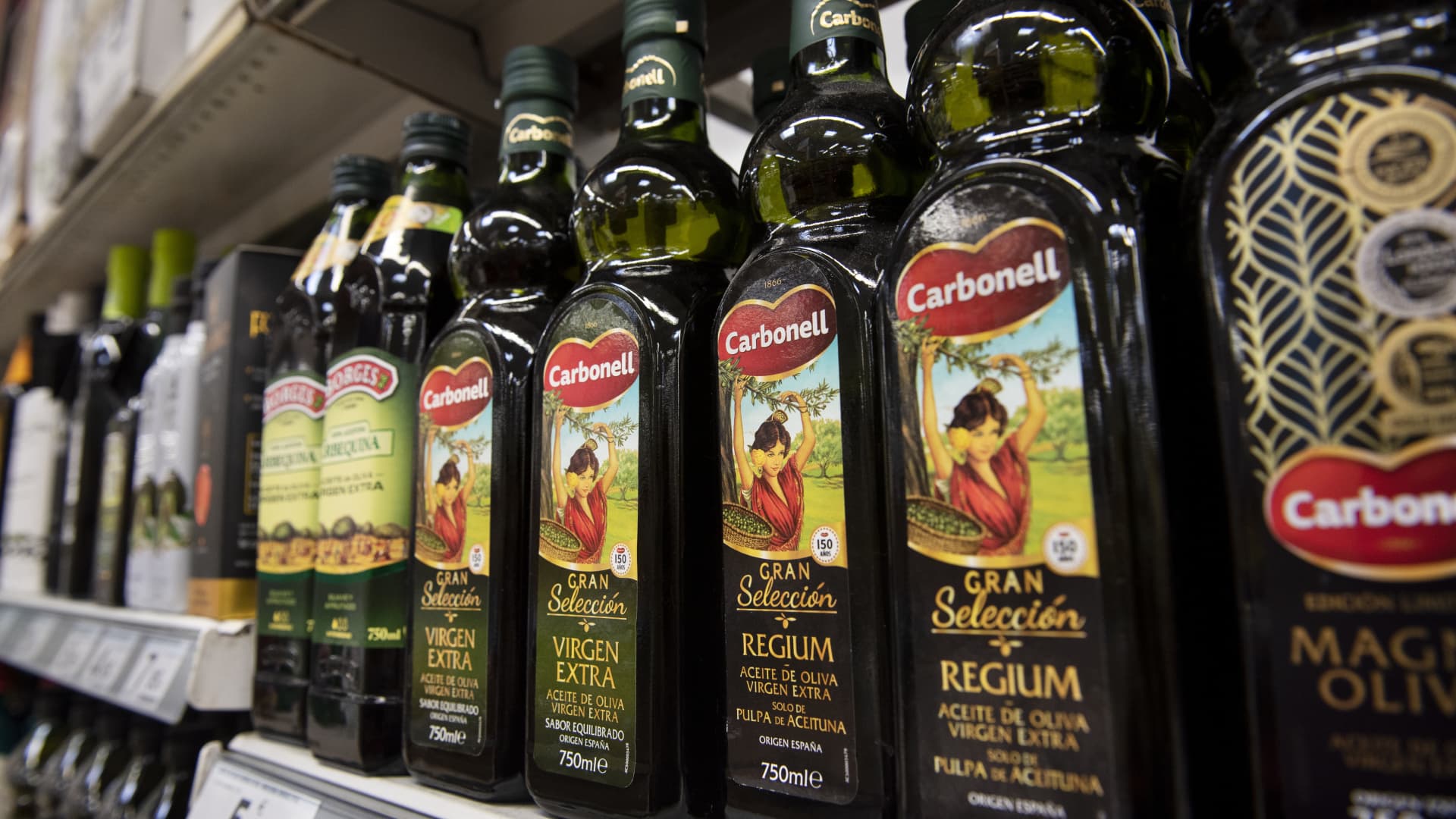
Spain’s Deoleo said the global olive oil market has moved into more stable conditions after a severe supply and price shock between 2022 and 2024. Chief executive Cristóbal Valdés told CNBC that improved rainfall in major producing countries, including Spain, should support a solid global harvest and a more balanced supply position.
The shift matters for food retailers, packaged-goods companies and consumers because olive oil prices have retreated from record levels. European Commission weekly data put Spanish extra virgin olive oil at about 3.9 euros, or $4.47, per kilogram, down from a record 9.3 euros per kilogram in January 2024.
Deoleo, which owns brands including Bertolli and Carbonell, is described as the world’s largest olive oil company. Valdés told CNBC by email that the difficult market cycle that affected the industry from 2022 to 2024 is now behind it.
Supply recovery follows drought shock
The earlier disruption was driven by drought and extreme heat across large parts of southern Europe, which damaged harvests and pushed wholesale prices sharply higher. Deoleo had previously described that three-year period as one of the hardest in the sector’s history.
Olive oil supply is especially sensitive to weather because production depends heavily on the size and quality of each annual olive crop. When drought reduces yields in major producing regions, processors and retailers face tighter availability and higher input costs. When rainfall improves and harvest prospects recover, buyers can plan with more confidence and prices tend to ease, although local conditions still matter.
Valdés said the recent improvement in rainfall across producing countries had strengthened expectations for the coming harvest. He told CNBC that supply stabilization gives the industry more visibility across the value chain and supports a steadier pricing environment, which in turn is helping household demand recover globally.
Analysts have continued to flag the risk of sharp supply changes from one season to another, CNBC reported, as climate change, water scarcity, pests and disease remain pressures for the sector. Spain, along with Italy and Greece, is one of the key global producers and serves as an important price reference point for the market.
U.S. sales helped by lower prices and packaging
Deoleo said sales volume growth has improved across important markets. In the United States, Valdés said the number of households buying olive oil has risen across all income brackets as lower prices make the product more accessible after the recent spike.
The company also pointed to packaging changes as a contributor to U.S. sales growth. Valdés told CNBC that innovation aimed at current cooking habits, particularly among younger consumers and new olive oil buyers, is becoming a primary driver of the market.
He cited squeeze-bottle formats as an example, saying they are already responsible for 40% of category growth in the U.S. The comment referred to Deoleo’s Bertolli “Dress and Drizz” bottle, which is designed for easier use in everyday cooking and finishing dishes.
For producers, the recovery reduces some of the pressure created by the recent price surge. For consumers, the retreat in wholesale prices may ease the cost of a product that had become notably more expensive during the drought years, although retail prices can reflect additional factors including packaging, transport, retailer margins and currency movements.
This story draws on original reporting from CNBC.