Fed minutes show split over next move on US interest rates
Federal Reserve officials kept rates at 3.5% to 3.75% in June while debating both cuts and increases later this year.
By Marcus V. Thorne · Markets Editor
· 3 min read
Federal Reserve officials left the benchmark federal funds rate at 3.5% to 3.75% in June, while minutes released Wednesday showed no consensus on whether the next move should be higher or lower. The division matters for investors, banks and borrowers because the fed funds rate anchors short-term dollar funding costs and influences pricing across mortgages, corporate credit and global money markets.
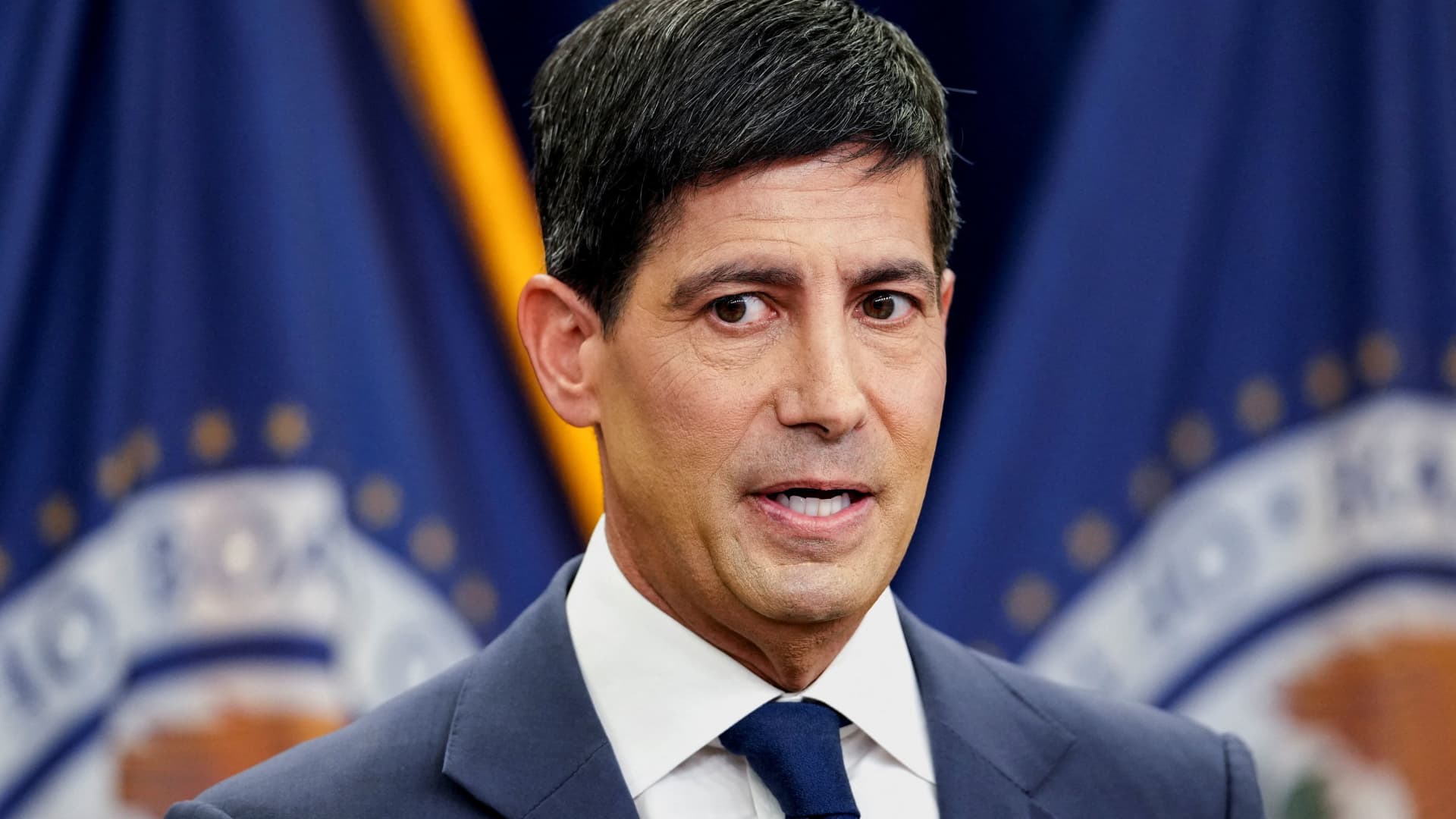
The June 16-17 meeting was Kevin Warsh’s first as chairman of the Federal Open Market Committee. After the meeting, Warsh described the internal debate as a “family fight,” though the committee voted unanimously to keep rates unchanged, where they have remained throughout 2026.
The minutes said officials considered competing paths for inflation and policy. Some participants saw room for inflation to moderate enough to justify easier policy. Others judged that price pressures could remain elevated, requiring a higher policy rate.
Asked for their most likely assessment, “many participants” said the federal funds rate would be appropriate at or a little below the current range by year-end, according to the minutes. “Many other participants,” however, said the rate should be above the current range at the end of 2026, the account said.
The minutes said officials stressed that future decisions would depend on incoming data. In practice, the Fed adjusts the target range for the federal funds rate to tighten or loosen financial conditions: a higher target tends to raise the cost of overnight reserves and other short-term borrowing, while a lower target tends to ease those costs.
Dot plot leaned slightly toward a 2026 increase
The Fed’s quarterly projection grid showed a narrow tilt toward one rate increase this year, followed by one cut in each of the next two years. Warsh did not submit a projection to that grid, commonly known as the dot plot, according to the meeting account.
The minutes did not give a detailed account of the disagreements described by Warsh after the meeting. They instead presented a broad division among officials and did not indicate a clear policy bias for the committee as a whole.
The FOMC statement issued after the meeting said the central bank was keeping rates steady and remained committed to restoring “price stability” in the US economy. The committee also removed language that had pointed to an earlier preference for easing policy, with most participants saying they did not want to repeat that wording, according to the minutes.
Warsh pushes shorter Fed communication
The June statement was far shorter than recent Fed communications, at about one-third of the usual length, according to CNBC. The minutes themselves ran 14 pages, somewhat shorter than a typical release.
That shift aligned with Warsh’s stated preference for the Fed to say less about its future intentions. A number of officials said the committee should consider significant changes to its post-meeting statement, and a majority saw benefits in making it shorter, the minutes said.
The statement also dropped standard language describing current economic conditions and the Fed’s approach to its dual mandate of stable prices and maximum employment.
Warsh, nominated by President Donald Trump, has been in the chairmanship for less than two months. Trump had for years criticized Warsh’s predecessor, Jerome Powell, for not lowering rates more aggressively.
At his June news conference, Warsh said five task forces would review parts of the Fed’s operations, including communications. The minutes said only that some participants welcomed a review of the committee’s communication tools and practices.
Since the June meeting, Warsh has made one public appearance, at a European Central Bank forum in Portugal. There, he gave limited indication of his preferred policy path, consistent with his skepticism toward forward guidance on future monetary policy.
This story draws on original reporting from CNBC.


