Gulf pipeline plans expand as Iran threat shifts beyond Hormuz
Goldman Sachs says planned routes could lift bypass capacity above 14 million bpd by end-2028, but analysts warn fixed assets remain exposed.
By Amanda Ross · Deals Correspondent
· 3 min read
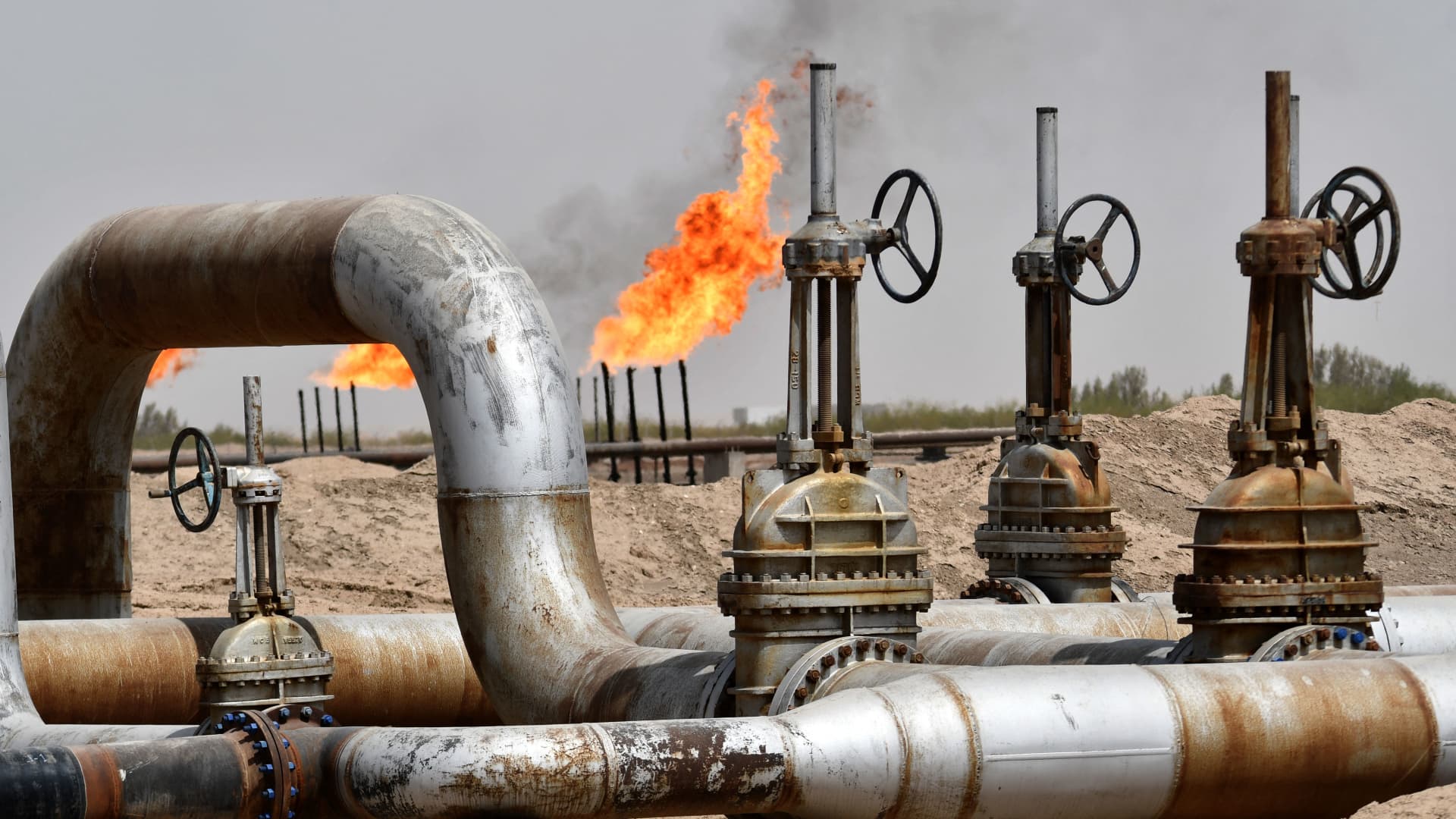
Middle East producers are advancing pipeline projects intended to reduce reliance on the Strait of Hormuz as Iran’s attacks on tanker traffic disrupt Gulf crude flows, CNBC reported. Goldman Sachs analysts said regional bypass capacity could exceed 14 million barrels per day by the end of 2028, equal to more than 60% of the seven Gulf states’ pre-war oil export volume of 23 million bpd.
The projects would give exporters more routes to ports outside Hormuz, the maritime choke point linking Gulf producers to global markets. Analysts cited by CNBC said the build-out would not remove Iran’s leverage over energy exports because pipelines, pumping stations, terminals and storage facilities can also be attacked at relatively low cost.
A State Department official told CNBC on Thursday that the United States is backing Iraq’s effort to rebuild a crude pipeline from Kirkuk in northern Iraq through Syria to the Mediterranean Sea. U.S. companies are expected to participate in construction, the official said.
Iraq has been especially exposed because most of its exports move through Basra in the south, with few alternative routes. CNBC reported that Iraq, OPEC’s second-largest producer, saw output fall by more than half to 1.9 million bpd in June from 4.2 million bpd in February, before the U.S. and Israel launched the war against Iran.
Bypass routes offer relief, not immunity
The United Arab Emirates plans to double its export capacity outside Hormuz by completing a second pipeline to Fujairah on the Gulf of Oman, CNBC reported. Saudi Arabia is considering adding 2 million bpd of capacity to its pipeline to the Red Sea, Reuters reported last week, citing people close to the matter.
Goldman Sachs analysts said in a Sunday note that those plans are among seven Middle East pipeline projects either being built or considered. Such lines move crude overland to export terminals beyond Hormuz, allowing producers to keep some seaborne flows moving when tanker traffic in the strait is disrupted.
Jennifer Li, a geopolitical analyst at Rystad Energy, told CNBC the pipelines are better viewed as a hedge against disruption than as a substitute for the strait. Existing routes have already helped absorb some market pressure: the UAE and Saudi Arabia have increased use of their lines to the Gulf of Oman and the Red Sea, diverting millions of barrels per day away from Hormuz, according to CNBC.
That protection has limits. CNBC reported that Iran struck a pumping station on Saudi Arabia’s Red Sea pipeline in April, cutting throughput by 700,000 bpd. Bob McNally, founder of Rapidan Energy, told CNBC’s “Power Lunch” that Iran can target loading facilities, pump stations, terminal endpoints and storage assets linked to pipeline systems.
Red Sea risk adds another constraint
The Red Sea route is also under pressure. Mohammed al-Farah, a senior political official in Yemen’s Houthi movement, said the group was prepared to close the Bab el-Mandeb Strait in coordination with Iran, according to Iranian state media.
Reuters reported Thursday, citing sources, that Tehran has asked the Houthis to close the strait if the United States bombs Iran’s power infrastructure. The Bab el-Mandeb links the Red Sea with the Gulf of Aden and wider global markets.
A closure would trap millions of barrels per day that Saudi Arabia has redirected through its Red Sea pipeline to the Yanbu export terminal, CNBC reported. Michelle Wiese Bockmann, senior maritime intelligence analyst at Windward, told CNBC that Yanbu’s role for Saudi Arabia and the global oil market is substantial.
This story draws on original reporting from CNBC.


