Iran-U.S. Hormuz talks remain indirect as Houthis claim Jazan drone strike
Iran says messages pass through intermediaries, while Saudi authorities report an extinguished Jazan refinery fire without naming a cause.
By Sarah Jenkins · Chief Macro Economics Correspondent
· 3 min read
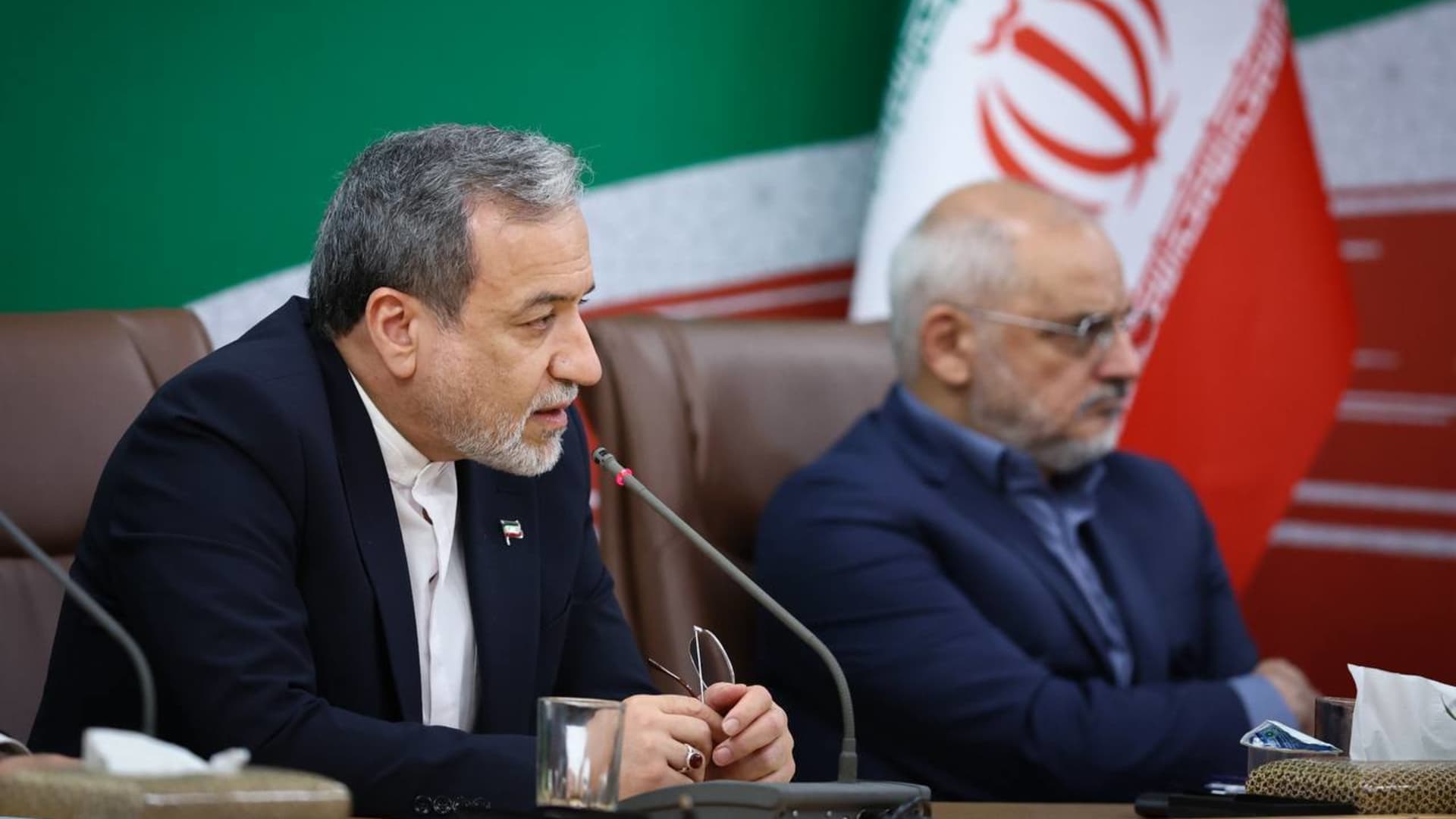
Iran-U.S. Hormuz talks remain indirect, Tehran’s foreign minister said, countering Washington’s public suggestion that negotiations are under way over reopening the Strait of Hormuz. The diplomatic uncertainty coincided with a fire at Saudi Aramco’s Jazan refinery that Saudi authorities said was extinguished without injuries, while Yemen’s Houthi group claimed it had launched a drone strike on the site.
Foreign Minister Abbas Araghchi said Iran was not in talks with the United States, though messages were being passed through intermediaries, according to Mehr news agency as reported by CNBC. His comments drew a distinction between indirect contact and formal bilateral negotiations.
President Donald Trump gave a different account of the diplomatic position in an Axios interview, saying Washington was “low-keying” discussions and was “semi-negotiating” with Iran. CNN reported that Tehran has said direct talks cannot begin until the United States honours agreements from the interim deal signed in June. The differing public descriptions leave the status of negotiations unclear.
Are Iran and the U.S. negotiating to reopen the Strait of Hormuz?
Iran has acknowledged indirect exchanges but denied direct talks. Araghchi also said that discussions with Oman on a transit route through the waterway would not, by themselves, reopen the strait. Reopening, he said, depended on other conditions communicated through intermediaries.
Oman, which borders the waterway, said the discussions were continuing in a “positive and constructive atmosphere”, according to the Guardian. A route-management arrangement would set out how ships pass through the strait; it is separate from a political agreement on the conditions under which Iran would permit broader navigation.
Mohammad Bagher Zolghadr, secretary of Iran’s Supreme National Security Council, reportedly set out conditions focused on U.S. actions. They included ending the naval blockade, lifting sanctions, withdrawing U.S. forces from the region, compensating Iran for war damage and releasing frozen Iranian assets. CNBC said it had not independently verified the reported demands.
The Strait of Hormuz links the Persian Gulf with the Sea of Oman and is a route for about one-fifth of global energy supplies, CNBC reported. That makes the distinction between an agreed transit corridor and a reopening significant for oil exporters, shipping companies and energy-consuming economies.
A memorandum of understanding reported in June set out a 60-day period for the United States and Iran to pursue a final agreement. The reported text said Iran would use its best efforts to arrange safe, free commercial passage for 60 days and would hold dialogue with Oman on the future administration and maritime services of the strait. It also said the United States would begin removing its naval blockade when the memorandum was signed.
What is known about the Jazan refinery fire?
Saudi Arabia’s energy ministry said a fire broke out early Sunday at Aramco’s Jazan refinery and was later put out, with no injuries reported. The ministry did not identify a cause, the Guardian reported.
Yahya Saree, a military spokesperson for the Iran-aligned Houthi group, said in a post on X that the group had targeted the refinery with a drone. That claim has not been independently established by the Saudi authorities’ account. The Jazan refinery processes 400,000 barrels of crude oil a day, according to the Guardian.
This story draws on original reporting from CNBC.


