Kospi enters bear market as AI concentration cuts both ways
South Korea’s benchmark dropped more than 5% Wednesday, taking it 20% below its June peak despite strong chip-sector earnings signals.
By Marcus V. Thorne · Markets Editor
· 3 min read
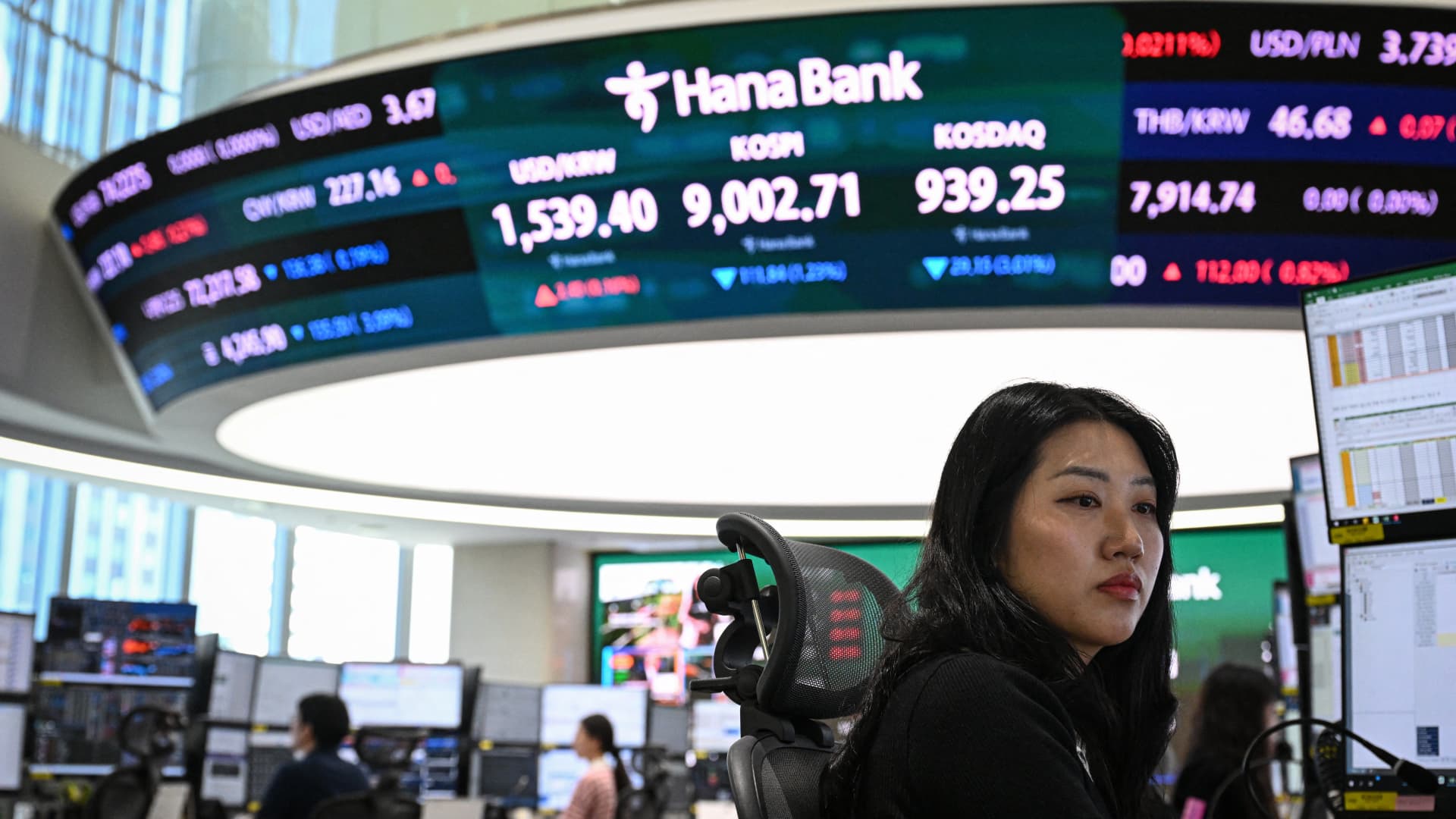
South Korea’s Kospi has fallen into bear-market territory after a drop of more than 5% on Wednesday left the benchmark about 20% below its June 19 record, according to LSEG data. The move shows how a rally built heavily around artificial intelligence and memory chips can reverse quickly when global risk appetite weakens.
The index closed slightly higher on Thursday after volatile trading. Even after the sell-off, the Kospi remains up more than 70% this year, following a gain of more than 75% last year.
Market specialists cited the index’s narrow leadership as a central factor. Samsung Electronics and SK Hynix made up more than half of the Kospi’s weight as of June, according to data provided by Emmer Capital. That concentration amplified gains while investors were buying AI-related semiconductor exposure, and it has magnified losses as sentiment toward the trade has cooled.
Manishi Raychaudhuri, chief executive of Emmer Capital, said the recent decline reflected “heightened AI skepticism” among global investors and “extreme market concentration.”
Jung In Yun, founder of Fibonacci Asset Management Global, said the fall appeared to be linked more to investor positioning than to weaker business fundamentals. Korean equities had become “one of the most crowded AI trades globally” after their sharp advance, he said, leaving the market vulnerable to profit-taking.
Chip fundamentals versus valuation pressure
The sell-off has come even as the leading companies in the index continue to report firm operating trends. Samsung on Tuesday reported what CNBC described as blockbuster profit, while memory pricing has continued to strengthen.
Jung said investors were reassessing the speed of earnings growth rather than the durability of AI demand. He described the move as a valuation adjustment, rather than evidence that the AI cycle had ended.
Rolf Bulk, head of semiconductors and infrastructure at Futurum Group, said memory prices increased by 50% to 80% sequentially in the second quarter, with additional increases expected later this year. He said the backdrop for memory manufacturers remained supported by a multi-year supply shortage and long-term contracts with hyperscale customers.
Peter Kim, head of research at KB Securities, linked the size of recent market swings to a wider change in trading behaviour. He said retail flows, leveraged exchange-traded funds and concentration in AI-related shares have contributed to moves of 5% to 10% becoming more common. The Kospi volatility index has risen more than 200% since the start of the year.
Kim said the recent turbulence has been driven less by company fundamentals and more by news flow and market themes, adding that earnings visibility remains an important support for investors able to tolerate short-term volatility.
Recovery path depends on global risk appetite
Analysts said the timing of a sustained rebound in Korean equities remains uncertain and will depend partly on broader global market conditions. Jung said volatility may continue in the near term, but he viewed the medium-term outlook as constructive if global risk sentiment stabilizes and foreign investors reassess Korea’s role in the AI supply chain.
Bulk said SK Hynix’s U.S. listing on Friday could offer a near-term catalyst for memory stocks. He also said second-quarter earnings disclosures from SK Hynix and Samsung Electronics later this month could support the sector and the wider market if management teams signal confidence in the memory cycle through the second half of 2026.
This story draws on original reporting from CNBC.