LeBron James urges Nike to rebuild street-level appeal as shares slide
Nike’s longtime signature athlete said the company should reconnect with communities as its stock remains sharply below its 2021 peak.
By Sarah Jenkins · Chief Macro Economics Correspondent
· 4 min read
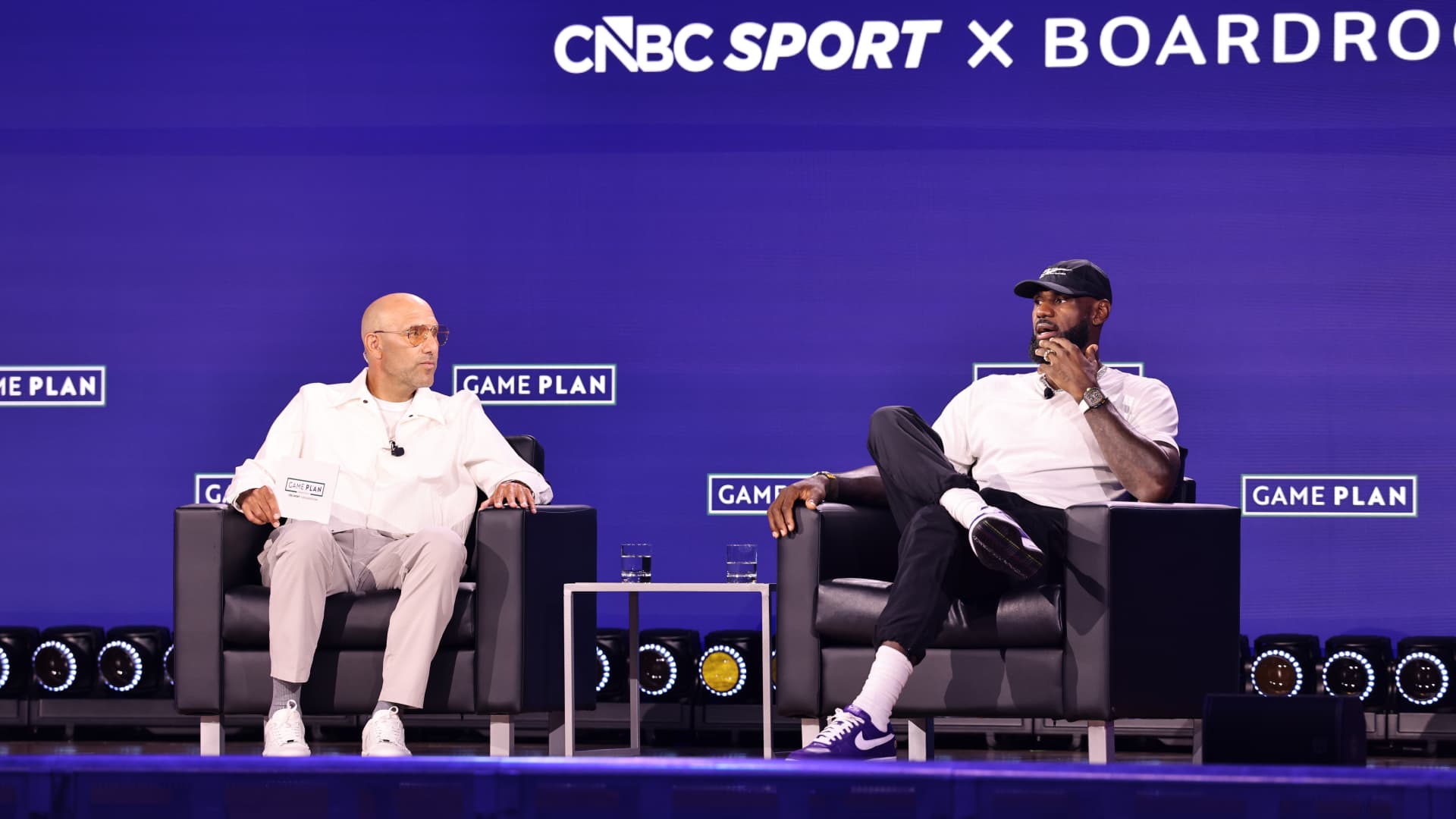
LeBron James said Nike needs to return to its community roots to restore the brand appeal that shaped his own decision to sign with the company, as the sportswear group contends with weak share performance and uneven sales. Nike’s stock is down 30% in 2026 and more than 70% below its November 2021 high, according to CNBC.
Speaking at the CNBC Sport x Boardroom Game Plan Summit in New York, James told Boardroom’s Rich Kleiman that Nike should spend more time in inner-city communities listening to consumers. He said that, when he was growing up, Nike had people in neighborhoods asking what residents liked, disliked and wanted from the brand.
James is one of Nike’s most important athlete partners. ESPN reported that he signed a seven-year, $90 million endorsement contract with Nike in 2003 before entering the NBA, a deal CNBC described as still the largest rookie shoe contract in basketball history. ESPN also reported that James agreed to a lifetime Nike deal in 2015, described by CNBC as reportedly the largest single-athlete guarantee in Nike’s history.
Nike also named a major research facility for him. In 2021, the company opened the LeBron James Innovation Center at its Beaverton, Oregon, headquarters, a 700,000-square-foot site focused on sports science.
Nike’s strategic reset
Nike’s recent difficulties followed a pandemic-era strategy under former chief executive John Donahoe that placed greater emphasis on direct sales and e-commerce, according to CNBC. The shift reduced reliance on wholesale partners, while competitors including Hoka and On Running gained share.
Donahoe also oversaw a restructuring plan intended to cut costs and reduce headcount so Nike could invest in growth areas. CNBC reported that the approach did not deliver the expected results.
Elliott Hill, a Nike veteran of more than three decades, came out of retirement in October 2024 to become chief executive. His plan has focused on product innovation and rebuilding credibility with consumers and athletes. In an October 2025 interview with CNBC, Hill said his first slide on the job described Nike as both “a sport company” and “a growth company.”
Nike’s latest quarterly results showed progress in some areas but continued pressure elsewhere. The company beat Wall Street expectations and reported revenue growth in North America, according to its fiscal 2026 fourth-quarter results. Sales in Greater China and some other markets continued to decline.
On an analyst call, Hill said the company was not yet performing at its potential, citing particular weakness in Nike sportswear and Jordan streetwear. He said slower sell-through was affecting discounting and future order books.
Brand status under scrutiny
James framed Nike’s challenge partly as a cultural issue. He said Nike athletes carry a responsibility to help the company remain dominant because the brand has long been associated with desirability in sport and fashion.
Fanatics founder and chief executive Michael Rubin, speaking in a separate session at the same summit, said building what Nike has built is “nearly impossible,” according to CNBC. Rubin said Nike wants to be both large and culturally relevant, a combination he described as difficult. He also criticized earlier decisions that he said opened the market to more competition.
Analysts have raised similar questions. In an April note, UBS analyst Jay Sole asked whether Nike had lost what he called its “superpower”: sustaining a premium sports image while also selling many lower-priced products. Sole wrote that basketball had helped Nike maintain that image, but said it was unclear whether the category could play the same role with U.S. consumers today.
James linked his original choice of Nike to athletes including Deion Sanders, Bo Jackson, Barry Sanders, Ken Griffey Jr. and Michael Jordan. He said Nike cannot lose its cool factor, which he described as universal.
James also addressed his own playing future at the summit. After previously telling the Los Angeles Lakers he would become a free agent, he said he would play elsewhere and told the audience he would not keep them waiting much longer, according to CNBC.
This story draws on original reporting from CNBC.


