Mitch McConnell health questions draw resignation call from Beshear
Kentucky Gov. Andy Beshear asked Sen. Mitch McConnell to prove he can serve, as his absence narrows the GOP’s Senate vote margin.
By Sarah Jenkins · Chief Macro Economics Correspondent
· 3 min read
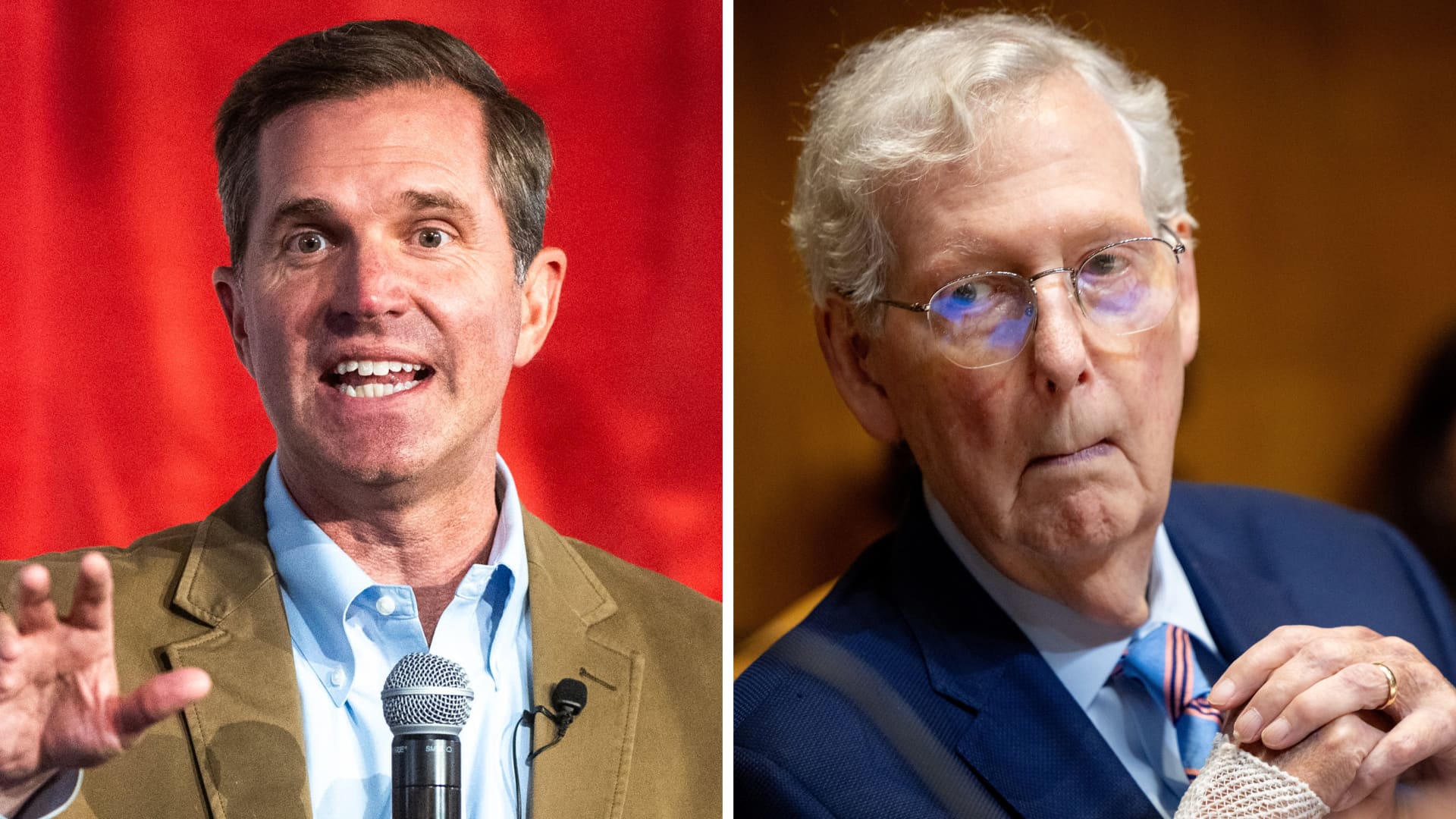
Kentucky Gov. Andy Beshear intensified scrutiny of Mitch McConnell health updates, asking the 84-year-old Republican senator to show publicly that he can perform his duties or step down. The demand comes as McConnell remains medically uncleared to leave rehabilitation and return to work, leaving Republicans with one fewer vote in their narrow Senate majority.
Beshear, a Democrat, wrote Monday that McConnell should “directly and verbally address the people of Kentucky” and provide proof that he remains able to serve, or resign. The governor said McConnell could do that through a brief video or by calling a Kentucky radio or television station.
McConnell’s office said Monday that he was receiving intensive physical therapy and released a still photograph of the senator with his wife, former Transportation Secretary Elaine Chao. It was the second photo made public since McConnell was hospitalized after a June 14 fall that briefly left him unconscious. His office has also said he later developed a mild case of pneumonia.
Beshear told reporters Monday that the public was entitled to more than written updates and photographs. “All we’re asking is just a little bit of proof,” he said, adding that candidates for high office give up some privacy when they seek public roles.
McConnell’s office did not immediately respond to CNBC’s request for comment.
Can Andy Beshear remove Mitch McConnell from office?
Beshear cannot remove McConnell from the Senate. A vacancy would arise only if McConnell resigns, dies while in office or is expelled by a two-thirds vote of the Senate, which Republicans currently control.
The governor also asked Senate Majority Leader John Thune, a South Dakota Republican, to examine McConnell’s condition if the senator does not demonstrate that he can continue serving. Beshear said the available medical statement did not answer whether McConnell could speak, reason or carry out his Senate responsibilities.
McConnell is not running for reelection, and his term ends in January. Until then, his absence matters for Senate arithmetic because Republicans lose a vote at a time when their majority is narrow. In close votes, the absence of a single senator can affect the timing or outcome of legislation, nominations and procedural motions.
What happens if McConnell’s Kentucky Senate seat becomes vacant?
Kentucky’s replacement process could become contested if McConnell’s seat opens before his term ends. The state’s Republican-controlled legislature passed a 2024 law that bars the Democratic governor from appointing a temporary senator and instead requires a special election. Under that law, the seat would stay empty until election officials certify a winner.
The process has not been tested. Legal experts have said the statute could face a challenge because the Kentucky Constitution says vacancies in statewide offices “shall be filled by appointment of the Governor.” That language could support an argument by Beshear that he retains authority to name an interim senator.
The calendar adds pressure to the dispute. Under Kentucky law, Sept. 1 is the practical deadline for holding a special election on Nov. 3.
The political stakes are unusually high because any vacancy would temporarily reduce Republican voting strength in Washington. For Kentucky, the unresolved legal question is who controls representation in the interim: the electorate through a special election alone, or the governor through a temporary appointment until voters choose a successor.
This story draws on original reporting from CNBC.