Rheinmetall gunpowder expansion targets Europe’s ammunition shortage
Rheinmetall plans to lift Bavarian gunpowder output to 4,200 tons by 2028 as Europe tries to rebuild ammunition stocks.
By Sarah Jenkins · Chief Macro Economics Correspondent
· 3 min read
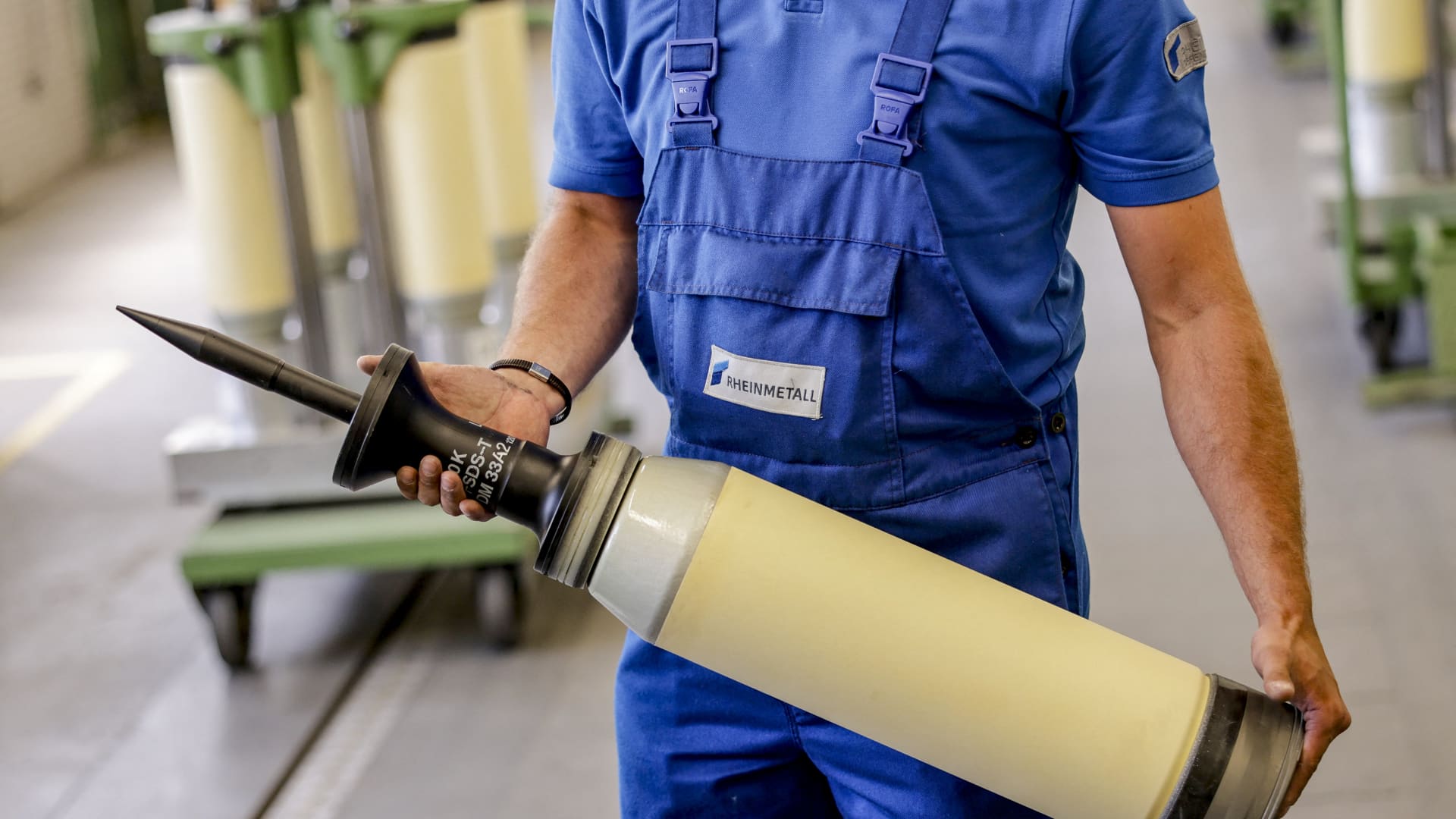
Rheinmetall is pressing ahead with a gunpowder expansion in Bavaria that it says will more than double output at its Aschau am Inn site to 4,200 metric tons a year by 2028, according to CNBC. The buildout comes as European governments raise defense spending after Russia’s invasion of Ukraine, while Rheinmetall shares have fallen 35% year-to-date, even after several strong years for defense stocks.
The German defense contractor is enlarging a roughly 90-hectare industrial complex near Munich under a program known as “Project Firepower.” CNBC reported that the site, set among forests and farmland below the Bavarian Alps, is being turned into one of Europe’s largest gunpowder plants.
Chief Executive Armin Papperger told CNBC at the facility that ammunition supply depends on the availability of propellant. “Without gunpowder, it’s impossible to protect our people because at the end of the day, you need gunpowder for ammunition,” he said. “Without gunpowder, no warhead will go out of the barrel.”
Why is Rheinmetall expanding gunpowder production?
European ammunition inventories have been drawn down by the war in Ukraine, and gunpowder prices have risen as demand has increased, according to CNBC. Rheinmetall’s investment is aimed at addressing a production constraint that affects artillery shells, tank rounds, small- and large-caliber ammunition and some weapons used with drones, Papperger said.
Gunpowder in this context refers to ammunition propellant, the material that burns rapidly inside a weapon to generate gas pressure and drive a projectile forward. Modern smokeless propellants can use nitrocellulose, also known as guncotton, which stores more energy in the confined space of a shell than traditional black powder, Papperger told CNBC.
Europe has depended heavily on China for cotton linters, the short fibers left on cotton seeds after longer textile fibers are removed, CNBC reported. Those fibers can be chemically processed into nitrocellulose, a key input for military propellant, but exports have slowed in recent years.
Papperger said Rheinmetall no longer faces a shortage of nitrocellulose because it has secured supply and built reserves. “At the moment, we have reserves for the next four years,” he told CNBC.
How Rheinmetall is securing the supply chain
The Bavarian expansion will include a research and development center for advanced gunpowder, including high-energy smokeless propellants made with guncotton, according to CNBC. Papperger said Rheinmetall is also working to qualify cellulose derived from wood as an alternative to cotton linters.
Rheinmetall is among the world’s largest ammunition producers and one of the few companies spanning the chain from propellant to cartridge casing, CNBC reported. In addition to the German project, the company has put millions into gunpowder facilities in Spain and Switzerland.
The company has benefited from Europe’s rearmament push, particularly in ammunition, where Ukraine-related demand has exposed the limits of existing capacity. Papperger told CNBC he expects Rheinmetall’s order book to exceed 100 billion euros by the end of the year.
Investors have also reassessed parts of the defense sector as attention shifts toward drones, cyber capabilities and artificial intelligence-enabled weapons. Papperger told CNBC he sees drones as additional demand rather than a replacement for ammunition, saying militaries need a mix that includes artillery and tank rounds.
For European governments, the project reflects a broader shift from budget commitments to industrial execution. Papperger said the United States is rebuilding its own stocks and that Europe cannot depend on U.S. ammunition production, adding that American inventories are at “maybe 20% to 30%” of needed levels.
This story draws on original reporting from CNBC.