Rutte’s Trump diplomacy draws scrutiny after tense NATO summit
NATO’s secretary general credited Trump for a $1.2tn defence spending push, even as allies faced new pressure from Washington.
By Marcus V. Thorne · Markets Editor
· 4 min read
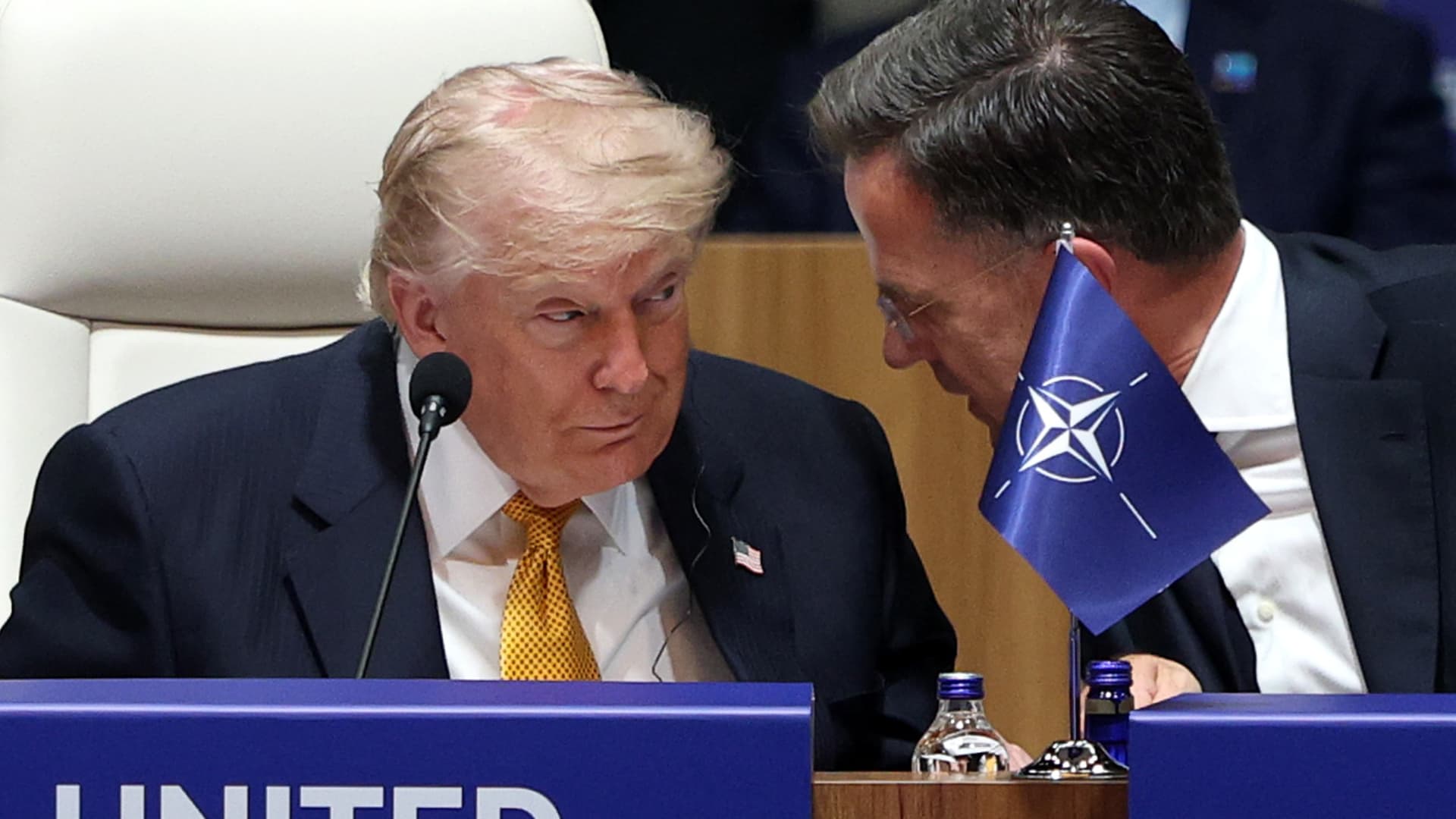
NATO Secretary General Mark Rutte used a contentious summit in Ankara to publicly credit U.S. President Donald Trump with driving a $1.2 trillion increase in allied defence spending, a message aimed at preserving U.S. commitment to the alliance. The praise came as Trump threatened trade action against Spain, revived demands over Greenland and criticised NATO’s response to the U.S. war with Iran, raising questions among analysts and some officials over whether Rutte’s personal approach has strengthened the 32-member bloc.
During a bilateral meeting on Wednesday, Rutte said Canada and European members had committed an additional $1.2 trillion to defence during Trump’s two terms in office, calling the sum the “Trump trillion.” He had used the same phrase during a White House visit late last month, where he showed Trump charts on increased NATO spending.
Trump responded positively to Rutte, describing the former Dutch prime minister as a “great leader” and NATO’s “biggest asset.” When Trump criticised previous U.S. presidents for failing to push allies to raise defence commitments, Rutte told him: “You were the first one. It’s your win.” Trump replied: “That’s why I like him.”
The exchange reflected the style Rutte has adopted since taking over as NATO chief in late 2024. As secretary general, his role is to build consensus among members and keep the trans-Atlantic alliance aligned, rather than to command national governments. Defence spending pledges work through national budgets: each member commits to targets, while NATO tracks contributions and capability goals across the alliance.
Pressure on allies
The Ankara summit exposed several points of tension between Washington and other NATO members. Trump threatened to cut trade with Spain over defence spending, said he was very disappointed with NATO’s reaction to the U.S. war with Iran and again raised his push for U.S. control of Greenland, a self-governing territory within the Kingdom of Denmark.
Marion Messmer, program director for international security at Chatham House, told CNBC by email that no single leader can manage Trump over the long term and that Europe would be better served by strengthening its own security capacity. She said Rutte had kept a good relationship with Trump through “flattery and submissiveness,” while other NATO leaders were becoming irritated by conduct they viewed as inappropriate.
Messmer added that Rutte had not turned his personal rapport with Trump into a clear advantage for NATO, given Trump’s continued dissatisfaction with the alliance. She said there was concern that the approach could signal to Russia that European states feel weak without the United States and are prepared to hold Washington close at almost any cost. A NATO spokesperson declined to comment to CNBC.
Different tones from Europe
Other leaders took a more direct line. Danish Prime Minister Mette Frederiksen, asked by CNBC whether Denmark would defend Greenland militarily in the event of an attack, said: “We are ready to defend every inch of NATO, including our own territory.”
Finnish President Alexander Stubb sought to lower the temperature over Greenland. Speaking to CNBC, he said Arctic security involved seven Arctic countries within the alliance and noted that Finland had trained 1 million soldiers in Arctic conditions.
Latvian President Edgars Rinkēvičs defended Rutte’s handling of Trump. He told CNBC that Rutte’s job was to keep NATO functioning and the trans-Atlantic relationship intact, adding that the secretary general was doing “a great job.”
Rutte also defended his own approach at a news conference after a reporter questioned his “self-respect” and suggested he had failed to defend allies targeted by Trump. Rutte said he wanted to acknowledge “when praise is due” and argued that Trump had helped make NATO stronger. He added that higher European defence spending made Europe more relevant to the United States as a strategic partner.
The debate follows last year’s NATO summit in the Netherlands, where members agreed to raise defence spending to 5% of gross domestic product by 2035. That pledge remains central to the alliance’s effort to balance the burden between the United States and Europe while sustaining support for Ukraine and expanding defence industrial production.
This story draws on original reporting from CNBC.


