SK Hynix to start Nasdaq trading after AI memory surge
The South Korean chipmaker plans a U.S. market debut as AI demand lifts its valuation to about $1 trillion and supports major factory spending.
By Sarah Jenkins · Chief Macro Economics Correspondent
· 3 min read
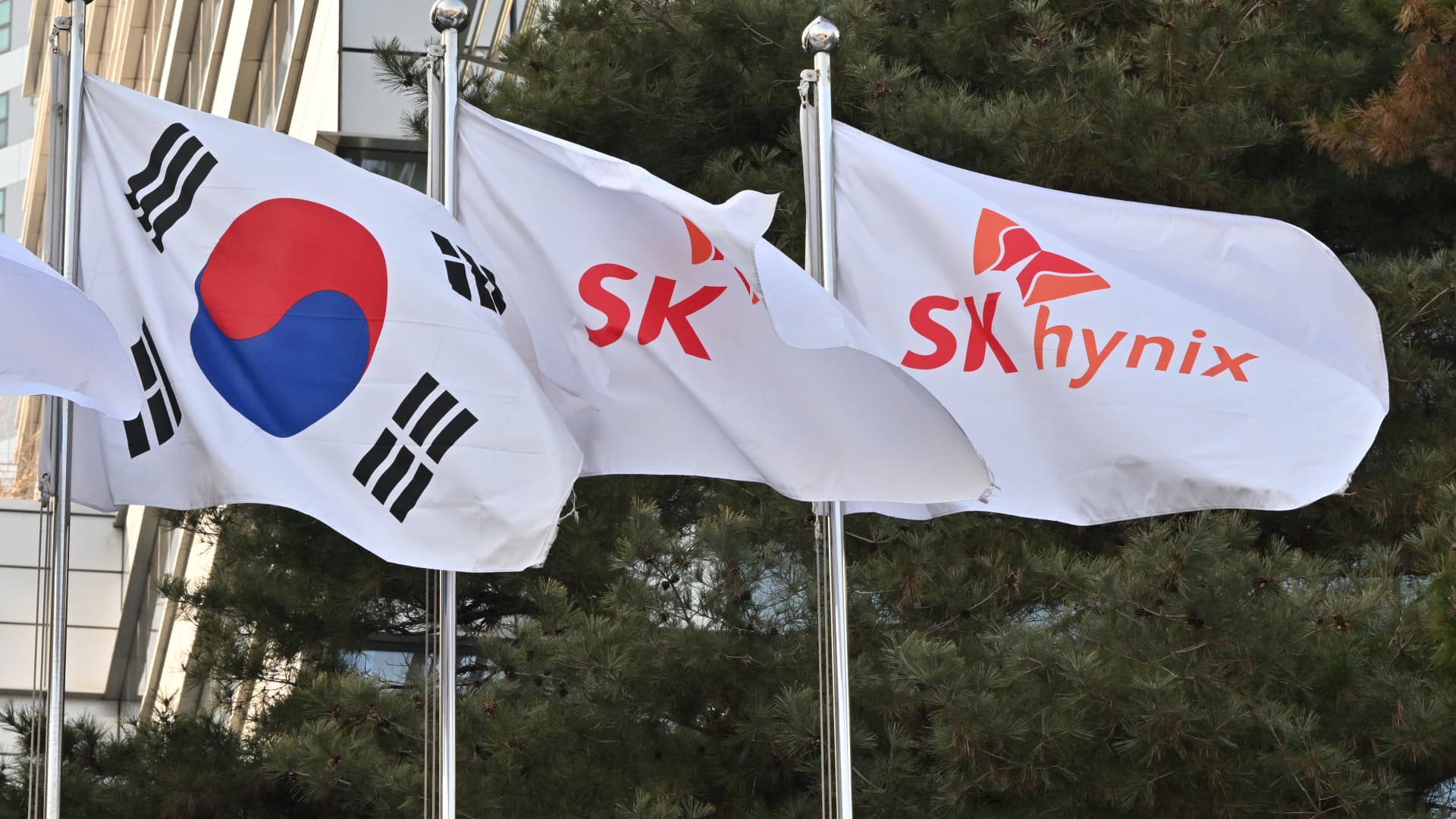
SK Hynix is set to begin trading on Nasdaq on Friday, giving U.S. investors direct access to one of the main suppliers behind the artificial intelligence memory boom. CNBC reported that the South Korean group’s market value is near $1 trillion after its shares rose more than sevenfold over the past year.
The company, South Korea’s second most valuable listed business after Samsung, will trade under the symbol SKHY, initially SKHYV. According to a regulatory filing, SK Hynix plans to raise about $29 billion through American depositary receipts, a structure that lets U.S. investors buy exchange-traded instruments linked to a foreign company’s shares.
The listing comes as memory chips have become a constraint across the technology supply chain. SK Hynix, Samsung and Micron are the three main producers of memory used in computers and phones, including devices sold by companies such as Apple and Dell. Demand from AI systems has tightened supply and pushed prices higher, CNBC reported.
HBM drives the company’s AI exposure
SK Hynix has become a leading supplier of high-bandwidth memory, or HBM, used with Nvidia’s AI chips. HBM stacks multiple layers of conventional memory to move data faster between processors and storage, a requirement for advanced AI workloads. TrendForce analyst Ellie Wang said SK Hynix’s position in HBM has made it one of the main beneficiaries of AI infrastructure spending.
Nvidia Chief Executive Jensen Huang visited SK Hynix in Seoul in June as the companies announced a multiyear partnership. Nvidia is the largest buyer of HBM, according to CNBC. Analysts cited by CNBC project SK Hynix will account for more than half of the HBM market this year.
The company’s broader memory business is also benefiting from tight supply. More than three-quarters of SK Hynix’s revenue comes from RAM, including HBM, while its NAND flash business held a 19% market share in the first quarter, according to IDC. Annual revenue nearly tripled between 2023 and 2025 to about $65 billion, and analysts polled by LSEG expect sales of roughly $235 billion in 2026.
U.S. expansion and Korean capacity plans
SK Hynix is building its first U.S. production site in West Lafayette, Indiana, a $4 billion facility scheduled for completion in 2028. The plant will focus on advanced packaging, the step that connects and stacks chips into larger systems used in computing hardware. The company expects as much as $458 million in CHIPS and Science Act funding and could receive up to $570 million in loans from the U.S. Commerce Department.
The company is also expanding Solidigm, the NAND flash business it acquired from Intel in 2021 for $9 billion. Solidigm is based in Rancho Cordova, California, near Sacramento, and develops products including solid-state drives.
Most of SK Hynix’s capital expansion remains in South Korea. The company has said it plans to spend up to $720 billion on facilities to meet AI-related memory demand, including a $390 billion fabrication cluster in Yongin. Four fabs there are now scheduled for completion by 2033, more than a decade earlier than previously planned, according to CNBC.
That buildout requires costly equipment. SK Hynix plans to spend about $7.8 billion on extreme ultraviolet lithography machines by the end of 2027, according to its SEC filing. The machines, made only by ASML in the Netherlands, can cost up to $400 million each and are used to etch advanced chip circuitry.
Memory remains a cyclical business. Daniel Newman of Futurum Group told CNBC that past memory upswings have often been followed by sharp downturns. Wang of TrendForce said longer-term customer contracts are giving suppliers more visibility on demand, a shift from the shorter quarterly or annual sales patterns that previously dominated the industry.
This story draws on original reporting from CNBC.