SpaceX falls below IPO price for first time
Shares of SpaceX declined for a fourth straight session Wednesday, slipping under the $135 level set in the company’s June IPO.
By Marcus V. Thorne · Markets Editor
· 2 min read
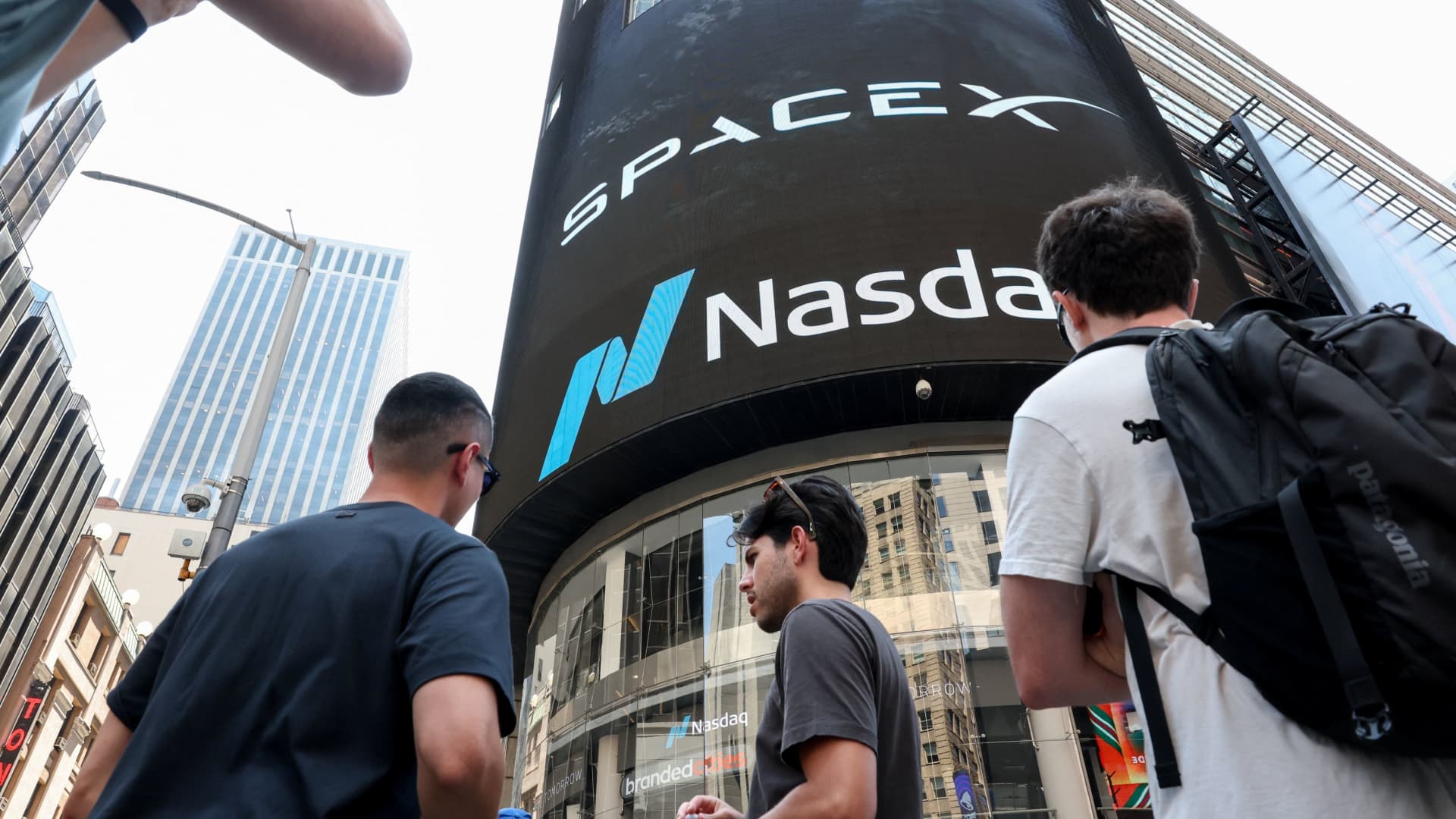
SpaceX shares fell below their $135 initial public offering price on Wednesday for the first time since the company’s market debut, CNBC reported. CNBC market data for ticker SPCX showed the stock down 2.85, or 2.09%, as the decline extended to a fourth consecutive trading session.
The move puts the shares beneath the price paid by investors in the company’s IPO. An IPO price is the level at which a company and its underwriters sell stock to public-market investors before trading begins on an exchange. Once trading starts, the market price can move above or below that level as buyers and sellers reassess valuation, liquidity and near-term demand for the stock.
SpaceX went public on June 12, 2026, according to a Reuters caption accompanying an image from the day, which showed people gathered near a SpaceX advertisement outside the Nasdaq MarketSite in New York City. The latest drop marks the first time the stock has traded below the $135 offering level, according to CNBC.
CNBC described the development as breaking news and did not report a specific catalyst for Wednesday’s move. The available market information also did not include company comment, trading volume or broader context on sector performance.
For IPO investors, the offering price can serve as a reference point for early performance, although it is not a floor for the stock. A break below that level indicates the secondary market is valuing the shares at less than the price set in the initial sale, at least during the reported trading period.
This story draws on original reporting from CNBC.