Trump Accounts begin for children with federal seed money
The July 4 launch creates tax-advantaged investment accounts for U.S. children, with federal, family, employer and philanthropic funding channels.
By Marcus V. Thorne · Markets Editor
· 4 min read
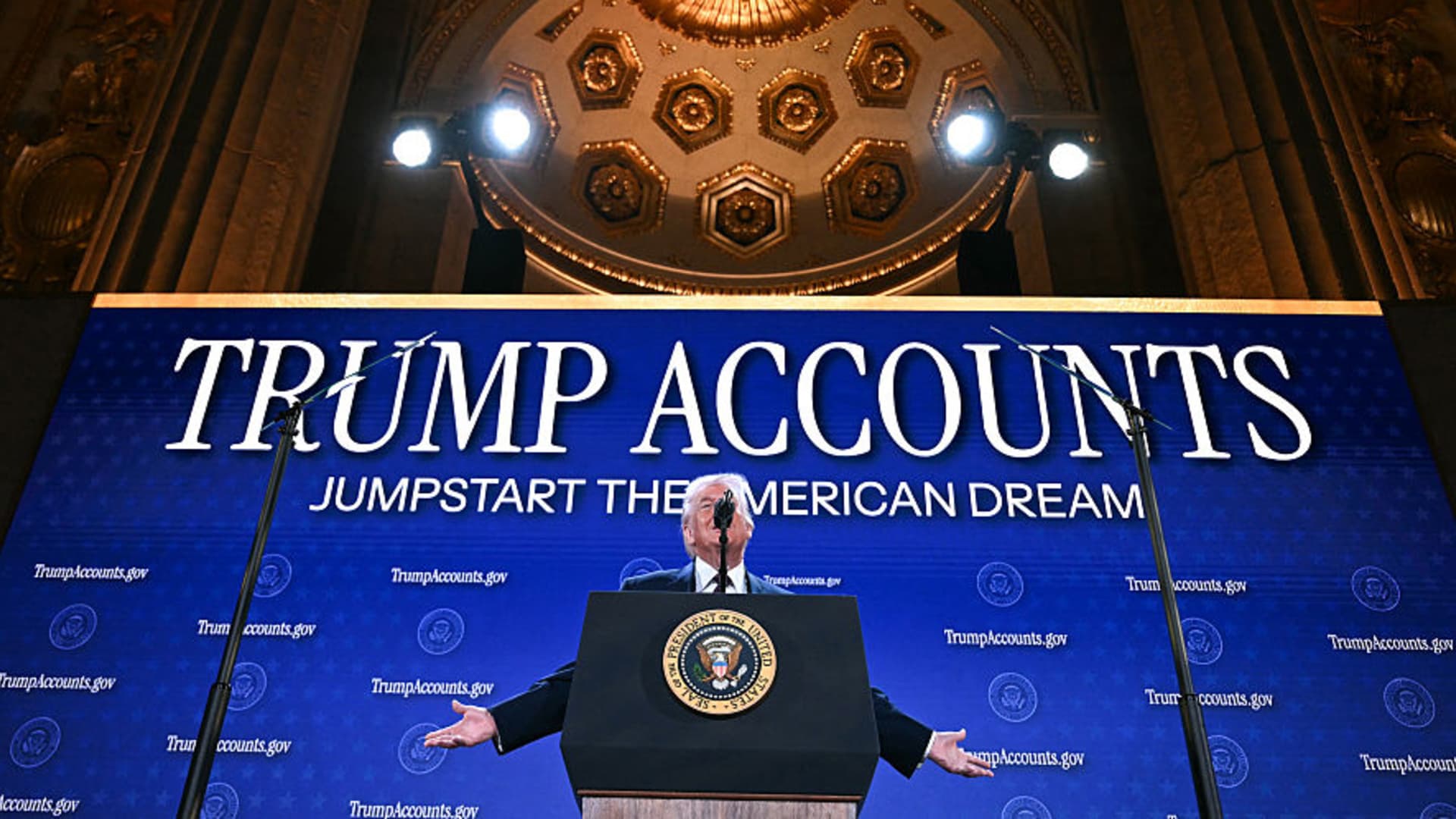
Trump Accounts opened July 4 as a new federally backed savings vehicle for U.S. children, combining a one-time government deposit for eligible newborns with annual family contributions of as much as $5,000. The accounts are designed for long-term investing rather than education spending, and generally cannot be tapped before age 18, when they shift into the traditional individual retirement account system.
The accounts, also called 530A accounts, were created under President Donald Trump’s tax and spending legislation. The Treasury Department said families had registered more than 6 million children by July 2.
Eligibility extends to U.S. children with a work-authorized Social Security number, according to Treasury materials. A parent, legal guardian, adult sibling or grandparent may open an account for a child. Enrollment must occur by the year before the child turns 18.
The largest automatic benefit applies to babies born from 2025 through 2028. Once an account is opened, those children are eligible for a $1,000 pilot-program contribution from the Treasury Department. Treasury has said those deposits would begin on or after July 4.
Some older children may qualify for private funding. The Dell Foundation said children born from 2016 through 2024 may receive $250 if they live in a ZIP code with median income of $150,000 or less, funded by a $6.25 billion pledge from Michael and Susan Dell. The foundation said those payments are expected to follow as accounts are processed.
Parents and guardians can open accounts through IRS Form 4547 with a tax return or through TrumpAccounts.gov. Families can activate and monitor the accounts through the Trump Accounts app, which was developed with Robinhood, according to Treasury-related materials. Bank of New York Mellon will manage the initial accounts, Treasury has said.
Contributions can come from several sources. Families and other individuals may collectively add up to $5,000 a year in after-tax money until the year before the beneficiary turns 18. The annual limit is scheduled to adjust for inflation after 2027. Employers may contribute as much as $2,500 per worker each year, within the $5,000 cap, and the IRS said those employer payments will not count as taxable income. Qualifying charities and state or local governments may contribute outside the $5,000 limit.
Treasury also said it will accept large philanthropic gifts of publicly traded stock to support the accounts. A growing number of employers and philanthropists have pledged additional matching or targeted contributions, and Treasury Secretary Scott Bessent has said more commitments may follow.
The accounts invest in U.S. stock funds and grow tax-deferred. TrumpAccounts.gov projects that an account receiving only the $1,000 Treasury deposit could reach $6,000 by age 18, $15,000 by age 27 and $243,000 by age 55, based on the S&P 500’s historical average annual return of more than 10%. With the $1,000 deposit plus $5,000 in annual contributions, the site projects balances of $271,000 by age 18, $742,000 by age 27 and $13 million by age 55.
Those figures depend on market returns. Douglas Boneparth, president of Bone Fide Wealth, told CNBC that reaching a balance near seven figures by a beneficiary’s late 20s would require years of maximum contributions and strong, sustained equity returns. Morningstar data provided to CNBC showed its market simulations averaging 6.3% a year for U.S. stocks over the next decade.
Withdrawals are generally restricted before age 18, with limited exceptions cited by the IRS, including certain rollovers, death distributions and excess-contribution corrections. After age 18, traditional IRA rules apply. Early withdrawals before age 59½ are generally subject to income tax and a 10% penalty, though IRS rules include exceptions for uses such as qualified higher-education expenses or a first-home purchase.
The policy has drawn competing assessments. Supporters, including Altimeter Capital Chief Executive Brad Gerstner, have argued that broad stock ownership can help children build wealth. The Urban Institute has warned that participation may be weaker among low-income families and that contribution differences by income could widen wealth gaps over time.
Treasury has cautioned families to use official channels. The department said official account messages currently come from [email protected] and warned that calls or texts about the accounts are likely scams.
This story draws on original reporting from CNBC.


