Trump leaves NATO summit without new allied pledge on Iran
European leaders played down U.S. troop withdrawal warnings after Trump faulted NATO members for not backing Washington’s Iran campaign.
By Marcus V. Thorne · Markets Editor
· 3 min read
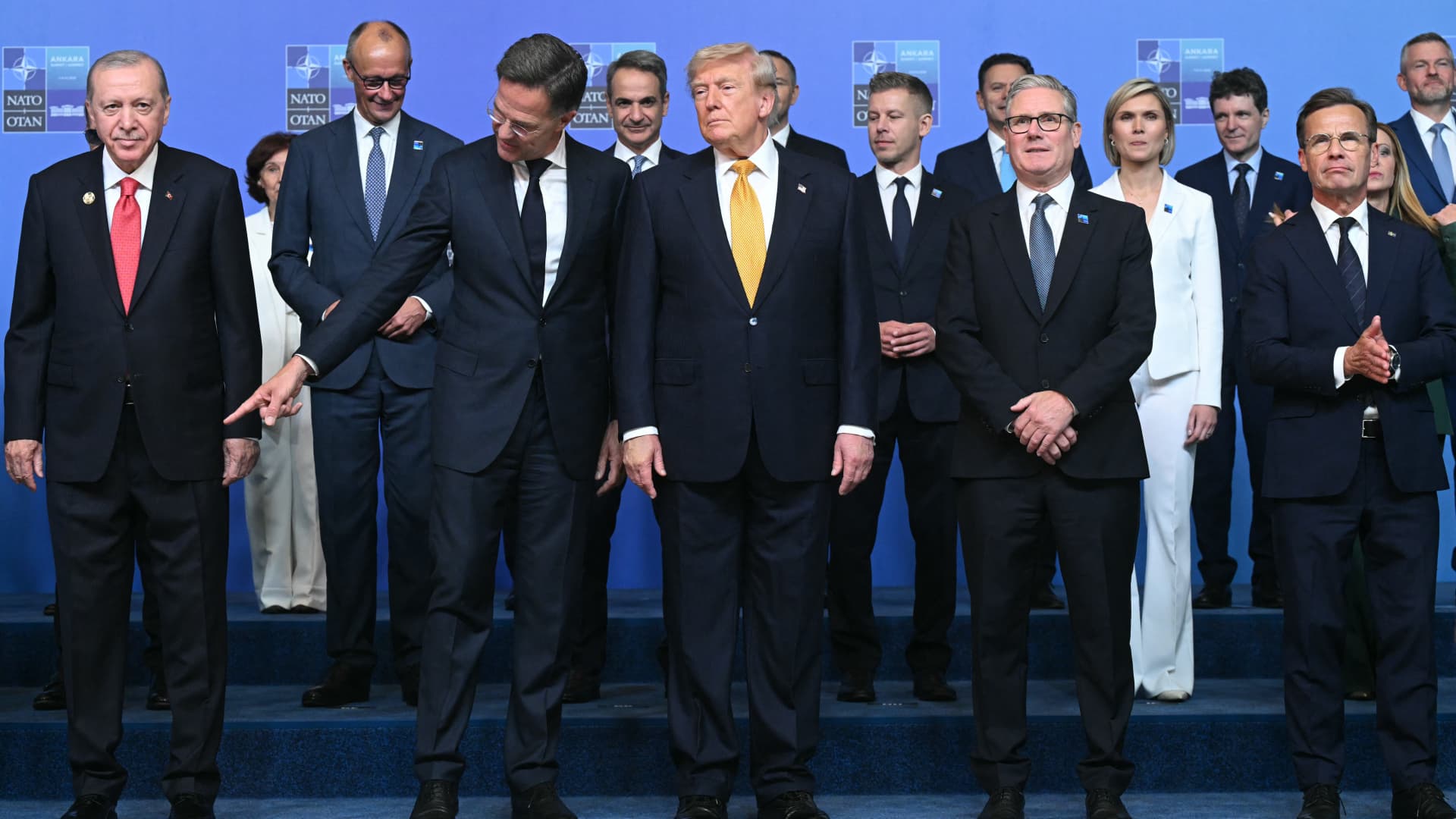
President Donald Trump ended a NATO summit in Ankara on Wednesday without announcing fresh alliance commitments to support the U.S. in its renewed conflict with Iran. The absence of a NATO-wide Iran pledge leaves Washington weighing how much allied economic and logistical support it can draw on as the war re-escalates.
Trump delivered conflicting messages over two days in Turkey, saying at one point that the alliance showed “tremendous unity” while also criticising members for declining to join the U.S. approach to Iran. Speaking alongside NATO Secretary General Mark Rutte, Trump said he was “not happy with NATO” because allies had been unwilling to help against Iran, which he called the “no. 1 state sponsor of terror.”
The White House did not immediately respond to CNBC’s request for details on any NATO agreement related to Iran during the summit.
Nicholas Burns, a Harvard University professor and former U.S. ambassador to NATO, told CNBC’s “Squawk Box” that Washington would benefit from help from Europe and Persian Gulf states aimed at damaging Iran’s economy. Such pressure would work through sanctions, trade restrictions or other measures that reduce Tehran’s financial capacity, rather than through direct military action by NATO.
Alliance strains over Iran and European security
Trump said Wednesday that he had asked NATO members for help on Iran as a test of loyalty, while also saying the U.S. did not need that help. He said he had spoken with several members, including Germany, France and the United Kingdom.
Rutte acknowledged Trump’s dissatisfaction over Iran and pointed to European support for U.S. operations. He said thousands of U.S. aircraft had departed from European airports during Trump’s military offensive against Iran, describing Europe as a broad platform for U.S. power projection.
The exchange came as Trump again raised the possibility of reducing the U.S. military presence in Europe. He said Tuesday that the U.S. “could remove all” of its soldiers from Europe while criticising European resistance to his interest in obtaining Greenland and referring to U.S. spending linked to Russia’s threat.
About 68,000 U.S. troops are based in Europe, according to Reuters figures cited by CNBC, and that total has fallen since Trump began his second term. The American presence is central to NATO’s deterrence posture, particularly because Article 5 treats an attack on one member as an attack on all.
When asked whether European countries that had clashed with Washington could still rely on U.S. support if attacked, Trump did not give a direct answer. He replied that they had not helped the U.S. and added that Washington had not needed the help.
European leaders play down withdrawal risk
Several European leaders told CNBC they did not view Trump’s troop withdrawal warning as likely to be carried out. Polish President Karol Nawrocki said he was sure American troops in Poland would remain and said Poland wanted a permanent U.S. camp. He said there were almost 10,000 American soldiers in Poland.
Norwegian Prime Minister Jonas Gahr Støre told CNBC he did not see the U.S. withdrawing all forces from Europe. Estonian Prime Minister Kristen Michal also expressed confidence in U.S. support, telling CNBC’s Steve Sedgwick that Trump had spoken firmly about protecting the Baltics and Poland when asked about Russian incidents.
Defence spending remained a central issue at the summit. Finnish President Alexander Stubb told CNBC that the U.S. message had been clear: European states must take more responsibility for defence in wartime, peacetime and planning. Lithuanian President Gitanas Nausėda said NATO should have a “5% club,” referring to the share of gross domestic product each member has committed to spend on defence.
This story draws on original reporting from CNBC.


