Trump tariffs ads target Democrats in 15 competitive House districts
The NRCC is attacking Democrats over opposition to Trump tariffs as Republicans test trade policy as a midterm campaign issue.
By Marcus V. Thorne · Markets Editor
· 4 min read
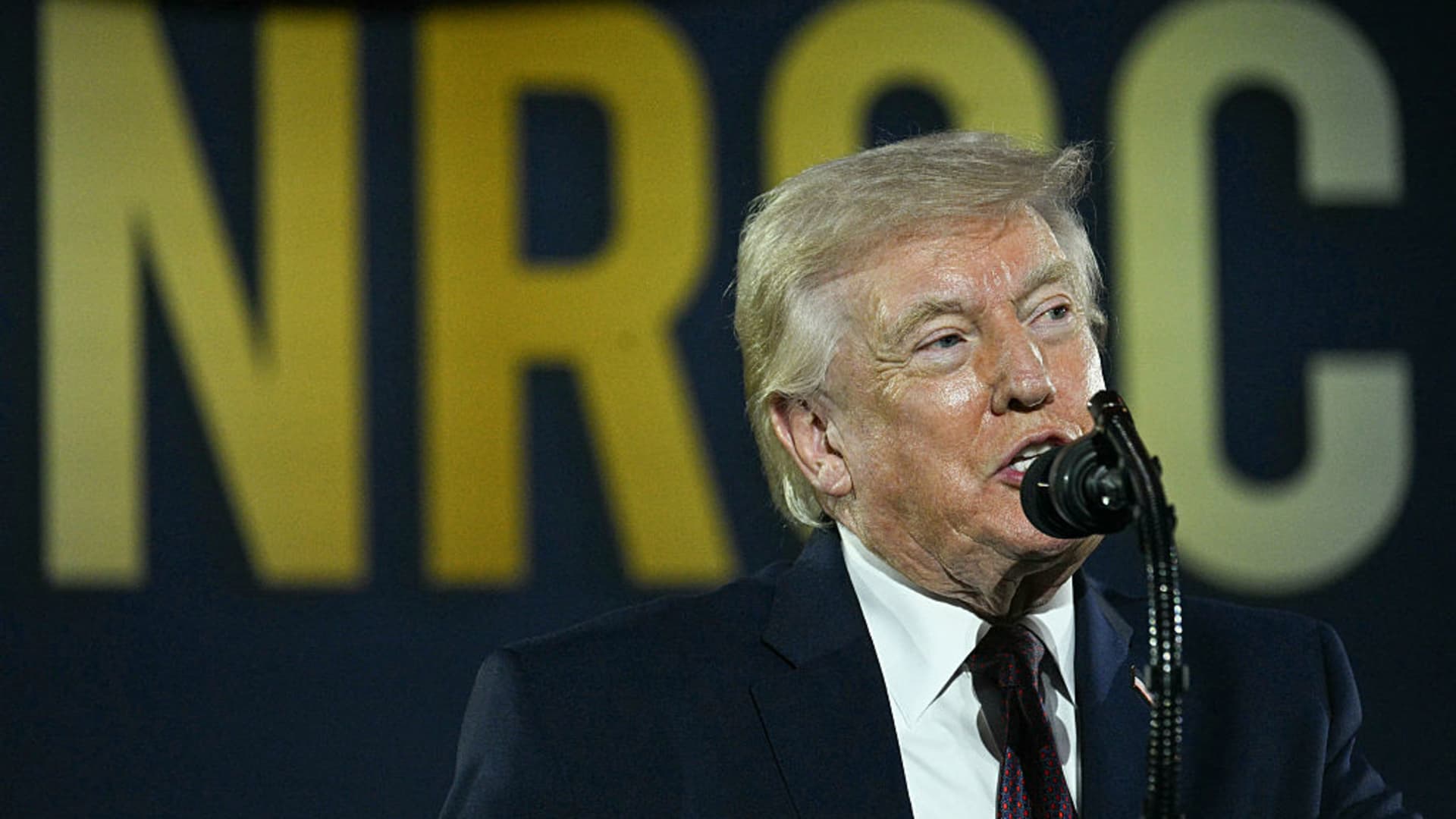
The National Republican Congressional Committee launched Trump tariffs ads on Tuesday against Democrats in 15 competitive House districts, using the president’s import duties as a campaign weapon with fewer than 100 days before the 2026 midterm elections. The digital campaign, which the NRCC described to CNBC as a modest ad buy, comes as Republicans defend a narrow House majority amid weak polling on President Donald Trump’s economic management.
The ads target vulnerable Democratic House members and Democratic candidates in California, Maine, Michigan, Missouri, Nevada, Ohio and Pennsylvania. The NRCC did not disclose how much it planned to spend.
The campaign seeks to cast Democratic opposition to Trump’s tariffs on China and other trading partners as alignment with Beijing. The ads include the phrase “China first. America last” alongside images of battleground Democrats, according to CNBC.
NRCC spokesperson Mike Marinella said in a statement that House Democrats had chosen between American workers and China, and that “they chose China.” Democrats targeted by the campaign have generally argued that the tariffs raise costs for U.S. households, pressure farmers and strain relations with allies.
Why are Republicans running ads on Trump tariffs?
The ads signal that Republican campaign officials believe tariffs can be used to put Democrats on the defensive in industrial and agricultural districts, despite mixed voter views on Trump’s trade policy. A tariff is an import duty applied to goods entering the country; Trump has presented tariffs as a way to raise revenue and protect U.S. companies, while critics say they can be passed through into higher prices.
Trump has placed tariffs near the center of his second-term economic program. CNBC reported that the White House on Friday announced new import duties on 60 trade partners, including China, with rates ranging from 10% to 12.5%, citing alleged labor violations.
The new duties followed a setback for the administration earlier this year, when the Supreme Court struck down many levies that had already been in place. Trump later reimposed new tariffs on dozens of countries and the European Union, according to CNBC.
Polling has made the issue politically complicated for Republicans. CNBC’s All America Economic Survey of 1,000 registered voters in July found that 60% disapproved of Trump’s handling of the economy, while 73% rated the economy as only fair or poor. A Harris poll conducted in late February for The Guardian found that seven in 10 Americans said Trump’s tariffs had contributed to higher prices.
Some Republicans have also opposed parts of Trump’s tariff agenda, including votes against certain Canada tariffs. Even so, business groups favoring more protection from foreign competition have backed the administration. Jon Toomey, president of the Coalition for a Prosperous America, said after the latest tariff announcement that the action showed “the unlimited duty-free tariff era is over.”
Which Democrats are being targeted?
The NRCC campaign includes Democrats who have voted against or criticized Trump’s tariffs. Reps. Emanuel Cleaver of Missouri, Dina Titus of Nevada and Emilia Sykes of Ohio were among lawmakers who voted to overturn Trump’s Canada tariffs, according to CNBC.
Cleaver has said China tariffs have hurt farmers, given China’s role as a major buyer of U.S. agricultural products. Titus and Rep. Susie Lee, Democrat of Nevada, have criticized the broad use of tariffs while arguing that U.S. trade policy should still be used against adversaries such as China.
The ads also target Democratic candidates including Paige Cognetti and Janelle Stelson in Pennsylvania, both running against Republican incumbents. They have argued that Americans, rather than foreign countries such as China, bear the cost of tariffs.
Eric Chung, a Democratic candidate in Michigan’s 10th congressional district, is also targeted. Chung says on his campaign website that tariffs can be “useful tools,” but argues they have been applied ineffectively and should be paired with other economic incentives to bring industry back.
Democrats have campaigned on rolling back Trump’s tariffs if they win control of Congress. Republicans, facing an electorate concerned about prices and economic conditions, are testing whether support for tariffs can be framed as support for domestic workers in the final stretch of the House campaign.
This story draws on original reporting from CNBC.


