Brent crude falls back below prewar levels as Hormuz traffic resumes
Brent dropped below $72 a barrel after peaking at $118 during the Iran war, as tanker movements through the Strait of Hormuz recovered.
By Amanda Ross · Deals Correspondent
· 3 min read
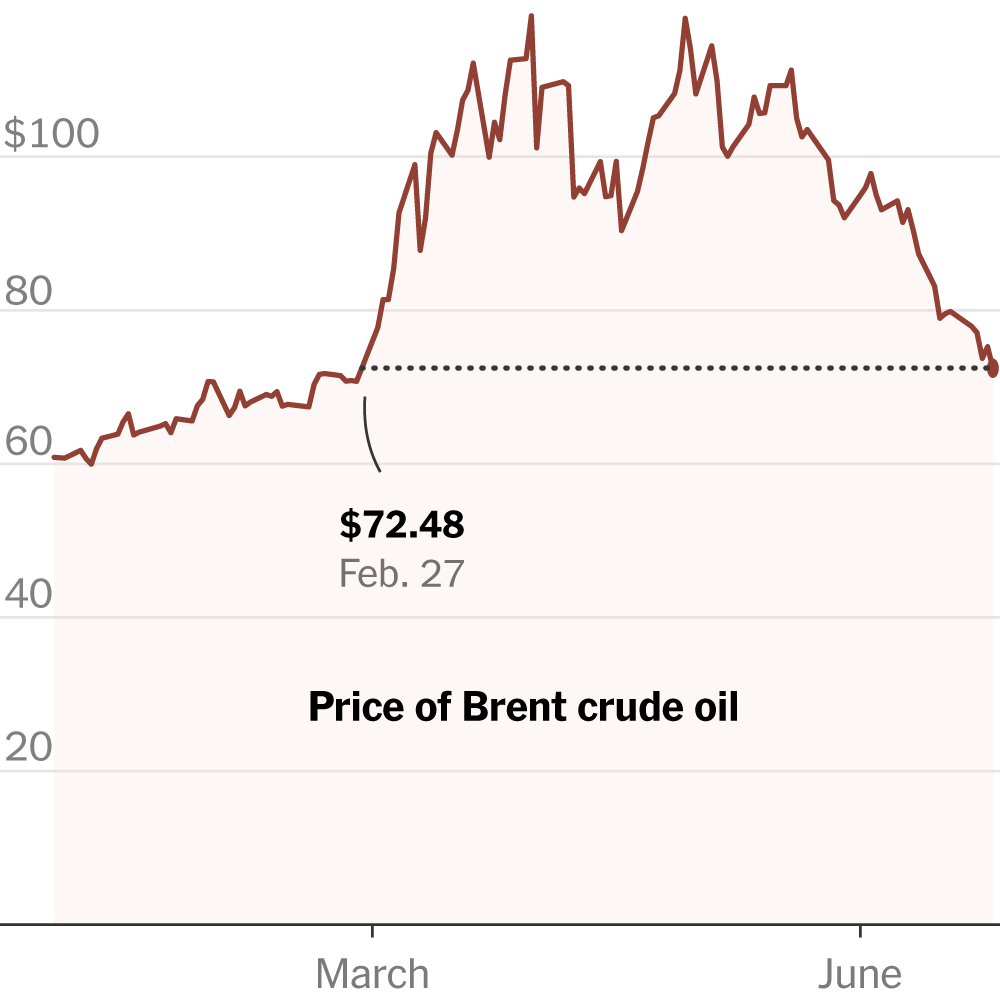
Brent crude fell below $72 a barrel on Friday, returning to levels last seen before the war in Iran and easing pressure on consumers, companies and governments exposed to fuel costs. The international benchmark had reached $118 a barrel early in the conflict after Iran curtailed shipping through the Strait of Hormuz, a route used for about one-fifth of global oil supply, according to The New York Times.
The retreat marks a shift in how energy markets are pricing the disruption risk that followed the outbreak of fighting. Brent serves as a reference price for international crude transactions, so moves in the contract can filter through to fuel, freight and input costs across economies, although the scale and timing vary by market.
Prices began to decline as diplomatic efforts advanced and vessels trapped in the Persian Gulf were moved out, The Times reported. American and Iranian officials reached an agreement in mid-June to reopen the strait, reducing the immediate risk that large volumes of crude would remain cut off from global markets.
The Strait of Hormuz is a narrow maritime passage linking the Persian Gulf with the Gulf of Oman and global shipping lanes. When access is restricted, cargoes can be delayed or rerouted, and traders may pay more for crude to reflect the risk of supply interruptions. When traffic resumes, that risk premium can narrow, even if vessel operators remain cautious.
Shipping activity has increased in recent days, according to Kpler, the maritime data firm cited by The Times. More than 330 vessels have transited the strait since the United States lifted its naval blockade last week, Kpler said.
That recovery remains incomplete. During the most intense phase of the conflict, only a small number of ships used the passage each day, The Times reported. Recent flows have improved but have reached no more than about half of normal daily volumes seen before the war, according to the same report.
Security concerns have not disappeared. Iran’s military struck a container ship in the strait on Thursday, according to The Times, and the United States carried out retaliatory strikes against Iran on Friday. The report said it was unclear how oil traders would respond when markets reopen on Sunday.
Shipowners also face continued uncertainty over operating conditions in the gulf. The Times reported that Iran has periodically demanded that vessels use its preferred route and may pay charges for passage. President Trump has said ships moving through the strait would not face tolls, insurance costs or other charges, according to the report.
For energy markets, the central issue is whether the reopening of the waterway can be sustained at volumes close to prewar levels. For now, the fall in Brent suggests traders have marked down the immediate supply shock from the Hormuz disruption, while still watching military developments and shipping data for signs of renewed strain.
This story draws on original reporting from NYT DealBook.