ECB raises rates to 2.25% as energy shock lifts euro zone inflation
The European Central Bank lifted borrowing costs for the first time since 2023 and cut its growth outlook as the Iran war pushed up energy prices.
By Ingrid Halvorsen · Venture Capital Reporter
· 3 min read
The European Central Bank raised its key interest rate by 25 basis points to 2.25% on Thursday, responding to inflation pressure tied to the U.S.-Iran war and higher energy costs. The move, its first increase since 2023, came after markets had priced in an almost certain quarter-point rise before the June Governing Council meeting, according to LSEG data cited by CNBC.
The ECB said in its policy statement that the war in the Middle East was adding to inflation risks and that the rate increase was justified across several scenarios for how the shock could affect the euro area over the medium term. Higher policy rates work by making credit more expensive for households, companies and banks, which can cool demand and reduce the risk that temporary price shocks become embedded in wages and broader pricing.
The central bank also lifted its inflation projections. It now expects euro zone headline inflation to average 3% in 2026, before easing to 2.3% in 2027 and returning to 2% in 2028, according to the ECB. The change reflects expectations that more expensive energy will pass through into food, goods and services prices.
Growth forecasts moved in the opposite direction. The ECB said it expects the euro area economy to expand by 0.8% in 2026, 1.2% in 2027 and 1.5% in 2028. It attributed the downgrade to a stronger impact from the war on commodity markets, household purchasing power and confidence.
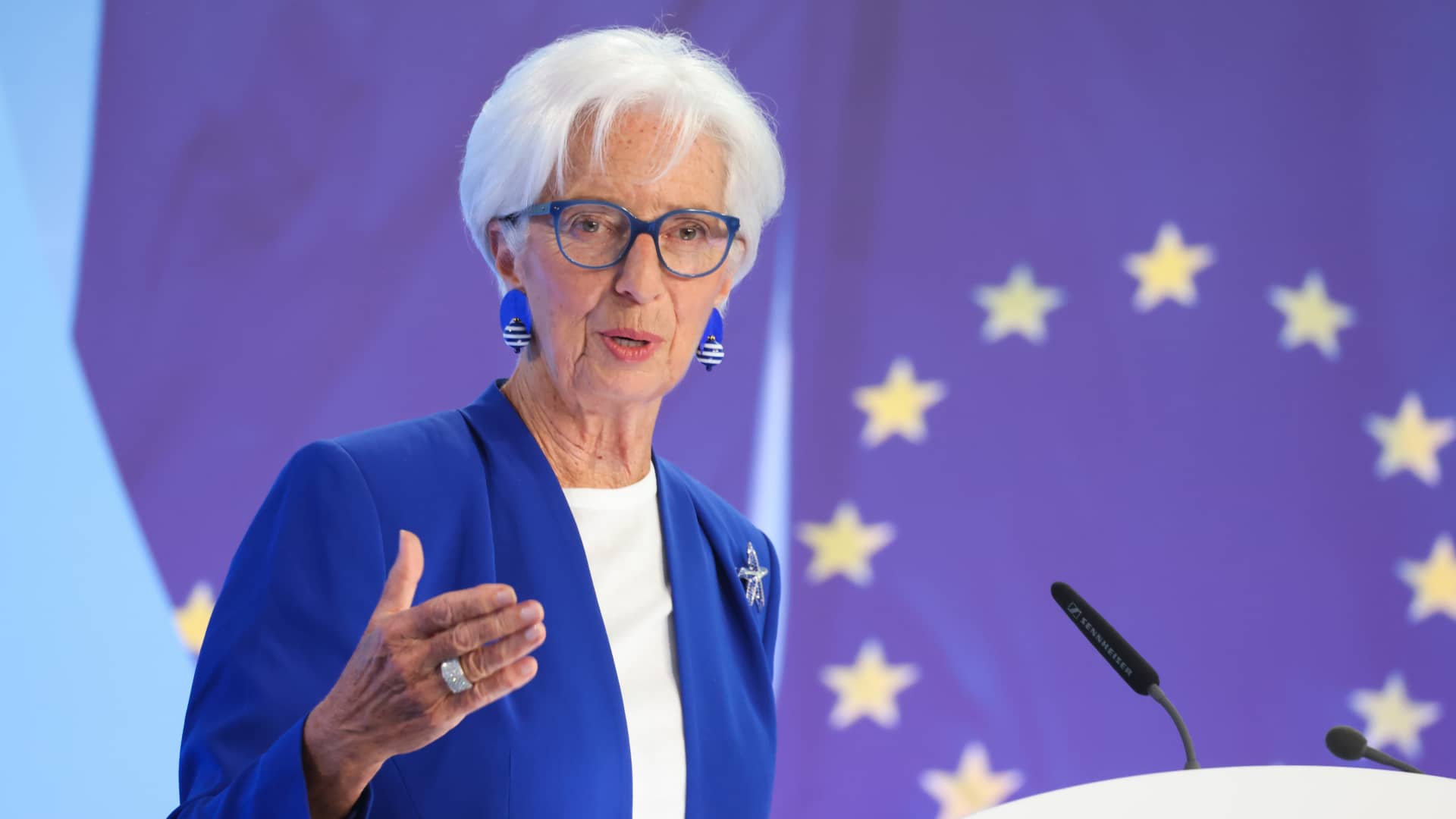
ECB President Christine Lagarde told reporters that the outlook was uncertain, with inflation risks tilted upward and growth risks tilted downward. She said policymakers were not committing in advance to a specific sequence of rate moves and that the economic effects of the war would depend on the duration and severity of the energy shock, as well as any indirect and second-round effects.
The conflict has passed the 100-day mark, according to CNBC. The closure of the Strait of Hormuz and damage to energy production facilities in the Middle East have created severe supply constraints, while a fragile ceasefire remains in place. CNBC reported that tensions between Washington and Tehran had risen in recent days.
Recent data had already shown the ECB’s inflation challenge. Euro zone inflation rose to 3.2% in May, according to flash data cited by CNBC, moving further above the central bank’s 2% target as energy prices increased. The euro area economy grew by 0.1% in the first quarter, CNBC reported.
Mark Wall, chief European economist at Deutsche Bank, described the decision in a note as “a significant moment,” saying it was the first increase by the ECB since 2023 and the first hike by a major global central bank in response to the energy shock. Wall said Deutsche Bank expected limited further tightening, citing upside inflation risk and downside growth risk.
Neil Birrell, chief investment officer at Premier Miton, said in a note that the decision was not surprising given the inflation backdrop. He said further increases could follow this year depending on the data, while noting that growth expectations were already subdued.
Market moves were contained after the announcement. The yield on the 10-year German bund, a euro zone benchmark, was 2 basis points lower by 2:50 p.m. in Frankfurt, according to CNBC. The euro was little changed against both the dollar and sterling.
This story draws on original reporting from CNBC.