China factory PMI July 2026 falls into contraction as orders weaken
China’s factory PMI fell to 49.2 in July, as new orders, services and construction weakened and policymakers faced renewed pressure on demand.
By Sarah Jenkins · Chief Macro Economics Correspondent
· 2 min read
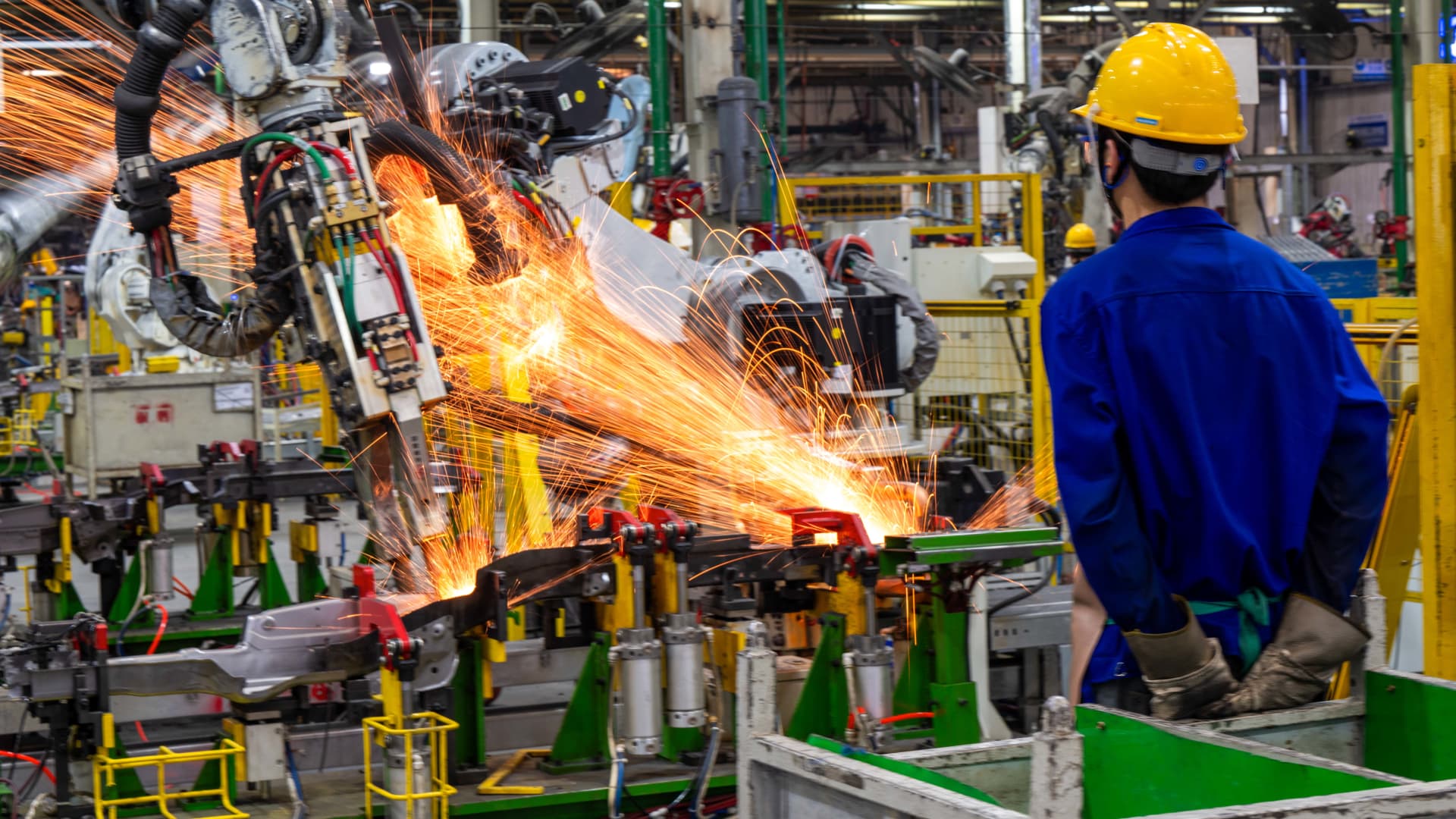
China factory PMI July 2026 data showed an unexpected contraction in industrial activity, with the official manufacturing index falling to 49.2 from 50.3 in June, according to the National Bureau of Statistics figures reported by Reuters. The result missed the 50.0 median forecast in a Reuters poll and marked the first contraction in five months, adding to signs that growth lost momentum at the start of the second half.
A purchasing managers’ index is based on surveys of factory managers. A reading above 50 indicates that activity is expanding from the previous month, while a reading below 50 signals contraction. July’s 49.2 reading was a five-month low.
What does China’s July factory PMI show?
The deterioration was most apparent in demand. The new-orders subindex fell to 48.5 in July from 51.2 in June, while the production measure slipped to 49.9 from 51.4, Reuters reported. New export orders also moved below the expansion threshold, declining to 49.6 from 50.1.
The gap between the production and new-orders readings indicates that demand weakened more sharply than output. Zhang Liqun of the China Federation of Logistics & Purchasing said weak domestic demand had become a prominent constraint on companies’ ability to release production capacity, according to Reuters.
Capital Economics attributed part of the decline to weak domestic demand for goods, including reduced building activity, according to ABC News. A National Bureau of Statistics spokesperson said recent typhoons had halted work on many projects, CNBC reported. Reuters said the statistics bureau also pointed to a high comparison base and a seasonal off-season for some industries.
Weakness extended beyond factories
July’s slowdown was not confined to manufacturing. The official non-manufacturing PMI, which includes services and construction, fell to 49.0 from 50.2 in June, its weakest reading since December 2022, Reuters reported. The composite PMI, covering manufacturing and non-manufacturing activity, dropped to 49.3 from 50.6.
Reuters reported that equipment and high-technology manufacturing remained in expansion, while consumer-goods and energy-intensive industries contracted. That pattern points to uneven activity across the industrial sector rather than a uniform decline.
Why does the reading matter for China’s economy?
The surveys arrive after China’s economy grew 4.3% from a year earlier in the second quarter, slowing from 5.0% in the first quarter, Reuters reported. The reported pace was below the government’s stated 4.5% to 5% full-year target range.
China’s Politburo said at its July meeting that it would place priority on expanding domestic demand, use existing policies and introduce further measures when appropriate, Reuters reported. The meeting did not announce specific new steps. The July PMI data therefore strengthen the case for policy attention to consumption and investment, while leaving the timing and scale of any response uncertain.
This story draws on original reporting from CNBC.