Trump renews call for lower Fed interest rates
President Trump urged the Fed to cut rates, even as July minutes showed many officials saw a case for higher rates without more inflation progress.
By Sarah Jenkins · Chief Macro Economics Correspondent
· 3 min read
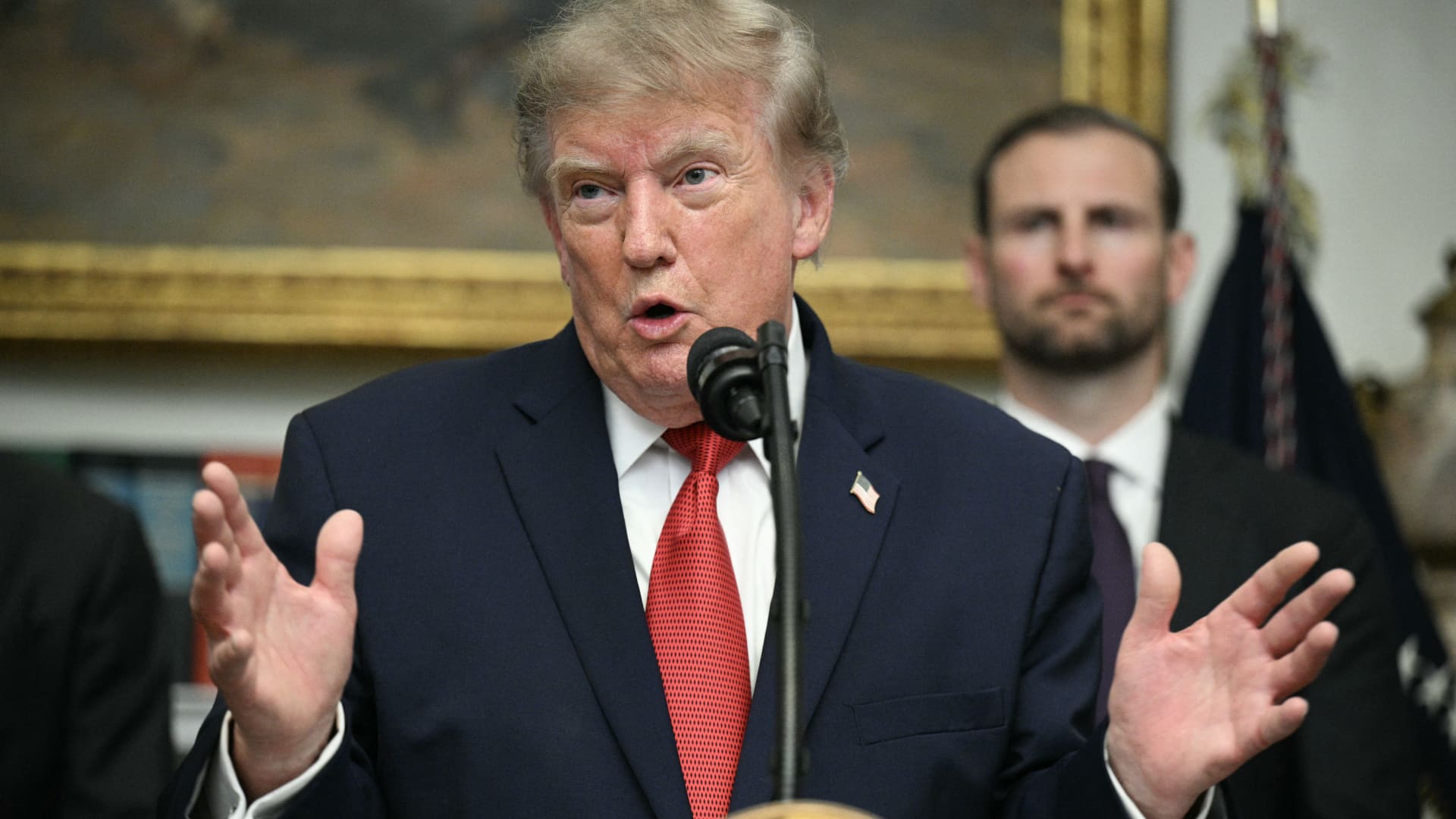
President Donald Trump renewed his demand for lower Federal Reserve borrowing costs on August 19, arguing that strong economic results should support easier policy rather than prompt concern about higher rates. The intervention came as July meeting minutes showed that many Federal Open Market Committee officials believed further rate increases could be needed if inflation did not make more progress, CNBC reported.
Trump praised Fed Chair Kevin Warsh as doing a “great job” but accused other members of the Fed board of acting politically. He did not offer evidence for that assertion. The president said the United States should be paying substantially less in interest costs than it does.
Trump argued that, in an earlier period, favourable economic reports led to lower interest rates because they reflected a stronger country. He said good data now have the opposite effect on rate expectations. He has also said that lower rates would support growth and reduce the financing burden associated with federal debt nearing $40 trillion, according to CNBC.
The Fed has not voted to increase its benchmark rate for more than three years, despite Trump’s reference to board members voting to raise rates. CNBC reported that the FOMC made three reductions late in 2025, after three cuts in the preceding year.
Why does Trump want the Fed to lower interest rates?
Lower policy rates can reduce borrowing costs across parts of the economy over time, including for businesses, households and the federal government, though the effect varies by type of loan and market conditions. The FOMC, rather than the chair acting alone, sets the Fed’s rate target; the Fed’s rate-setting process also explains how that target reaches broader financial conditions.
Trump compared the US with Switzerland, saying Switzerland’s benchmark rate was around 0.5% while the US paid 3.5%. CNBC said the comparison involves different economic conditions: Switzerland has faced very low inflation and an unusually strong safe-haven currency. Those factors can shape a central bank’s policy choices, so the two rates are not a direct measure of equivalent policy settings.
The immediate US backdrop remains mixed. CNBC reported that annual inflation was still well above the Fed’s 2% objective, although inflation readings since the July meeting had generally been positive. Real gross domestic product expanded at a 1.5% annualised pace in the second quarter, down from 2.1% in the first quarter.
The remarks extend a sustained public campaign. On July 27, Trump said the United States should have the world’s lowest interest rate, according to Reuters and C-SPAN. In June, he also criticised the prospect of rate increases while saying Warsh should make his own decisions, NBC News reported.
This story draws on original reporting from CNBC.