US hiring slows to 50,000 jobs in December as revisions cut prior months
The unemployment rate edged down to 4.4%, but revised payroll data pointed to a weaker late-year labor market.
By Sarah Jenkins · Chief Macro Economics Correspondent
· 2 min read
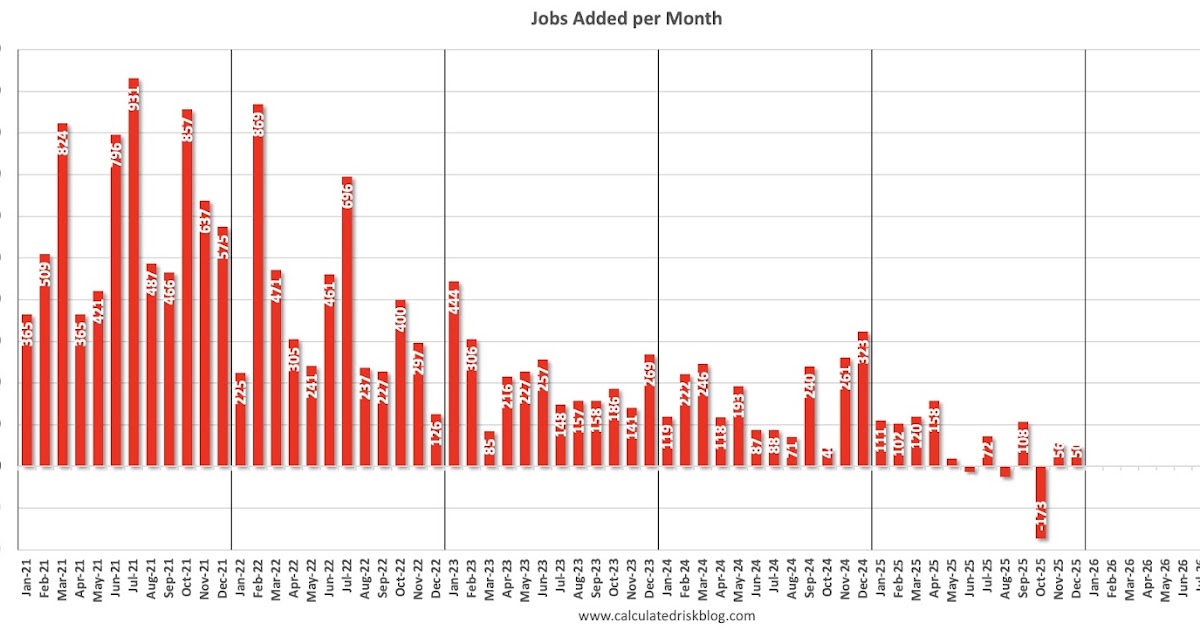
U.S. employers added 50,000 jobs in December, while the unemployment rate declined to 4.4%, the U.S. Bureau of Labor Statistics reported Friday. Downward revisions to October and November payrolls reduced previously reported employment by a combined 76,000 jobs, reinforcing evidence of a slower labor market at year-end.
The BLS said total nonfarm payroll employment showed little movement in December. Nonfarm payrolls count jobs on employer payrolls across the economy, excluding farm work and several other categories, and are a central gauge for investors and policymakers assessing labor demand.
Private employers added 37,000 jobs in December, according to Calculated Risk’s analysis of the BLS data. Government payrolls rose by 13,000, bringing the headline gain to 50,000.
Sector detail in the BLS report showed continued hiring momentum in food services and drinking places, health care, and social assistance. Retail trade shed jobs during the month, according to the agency.
Revisions weaken the recent trend
The revisions were concentrated in October. The BLS now estimates that payrolls fell by 173,000 that month, compared with an earlier estimate of a 105,000 decline. November’s job gain was revised to 56,000 from 64,000.
Together, those adjustments lowered employment for October and November by 76,000 compared with prior estimates. Calculated Risk said the economy has added only 93,000 jobs since April, an eight-month span that underscores the slowdown in job creation.
Measured from a year earlier, total nonfarm employment was up by 0.594 million jobs in December, according to Calculated Risk. The site said year-over-year employment growth has slowed sharply.
Labor force measures send mixed signals
The unemployment rate slipped to 4.4% in December from 4.5% in November, according to the BLS figures cited by Calculated Risk. The unemployment rate measures the share of people in the labor force who are without a job and looking for work.
The labor force participation rate declined to 62.4% from 62.5% in November. Calculated Risk described the measure as the share of the working-age population that is either employed or actively participating in the labor force.
The employment-population ratio moved in the opposite direction, rising to 59.7% from 59.6% in November. That measure compares the number of employed people with the broader working-age population.
Calculated Risk characterized the December report as weak and said the headline result was slightly below consensus expectations, while also noting the substantial downward revisions to the prior two months. The BLS said both payroll employment and the unemployment rate changed little in December.
This story draws on original reporting from Calculated Risk.