Warsh’s repeated Fed phrases draw scrutiny from policy watchers
CNBC reported that the new Fed chair has leaned on three recurring formulations as analysts parse what they signal for policy.
By Sarah Jenkins · Chief Macro Economics Correspondent
· 4 min read
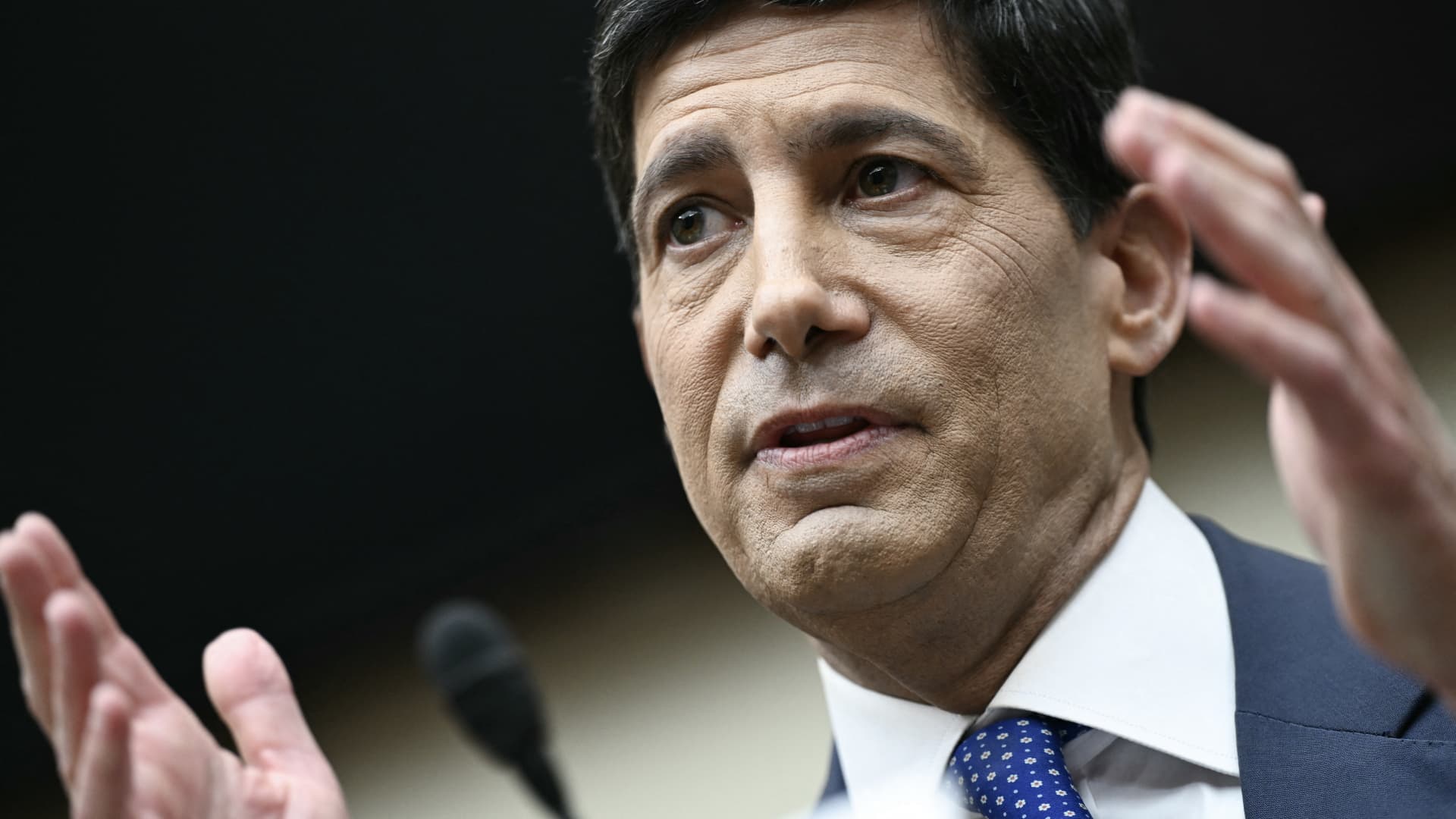
Federal Reserve Chair Kevin Warsh has repeatedly used three phrases in early public appearances, giving investors and policy analysts a narrow set of signals to interpret as he adopts a more restrained communication style. CNBC reported that across five appearances since his April nomination hearing, Warsh used “family fight” 13 times, referred to “first principles” 11 times and said “inflation is a choice” for the Fed six times.
The remarks came during his nomination hearing, first press conference, a roundtable in Portugal and two congressional testimonies, according to CNBC. The repetition has drawn attention because central-bank language can influence how markets assess the path of interest rates, the Fed’s reaction function and the balance between inflation and employment risks.
Debate inside the committee
On Warsh’s “family fight” formulation, Fed watchers told CNBC it points to his preference for more internal argument at the Federal Open Market Committee, which sets monetary policy. Dan Greenhaus, strategist at Solus Alternative Asset Management, said a more open setting for challenging assumptions could improve the quality of policy decisions over time.
Loretta Mester, the former Cleveland Fed president, said the FOMC already allowed participants to present differing arguments when she served on it. She noted that a 19-person policy discussion still requires structure so the discussion does not privilege the loudest voices.
Claudia Sahm, chief economist at New Century Advisors, told CNBC that FOMC meetings are often highly scripted, with prepared remarks and limited exchange. She said Warsh appears to want a more animated discussion, though she doubted the format would alter the policy outcome.
Mark Spindel, Fed author and chief investment officer at Potomac River Capital, viewed the phrase as Warsh’s way of describing natural disagreement inside the Fed. He also said it may imply that disagreements should remain less visible to the public, an approach he said could frustrate colleagues and market participants. Michael Feroli, chief U.S. economist at JPMorgan, said the idea did not break with the post-Ben Bernanke tradition of publicly accepting dissenting views.
Reconsidering the Fed’s methods
Warsh’s references to “first principles” drew broader interpretations. Spindel told CNBC the phrase appears connected to Warsh’s interest in reconsidering the structure of monetary policymaking, including his emphasis on monetary aggregates and criticism of past inflation misses.
Sahm said the phrase suggests a willingness to question existing assumptions, consistent with Warsh’s call for “regime change” at the Fed. She said finding flaws in existing methods is different from replacing them with better ones, and expected incremental improvements rather than a wholesale rewrite.
Mester framed “first principles” as a reassessment of how the Fed pursues its dual mandate of price stability and maximum employment, including communications, inflation and labor-market analysis, the balance sheet, the operating framework and data sources. Greenhaus said the phrase could point to a narrower view of the Fed’s role beyond monetary policy, including more skepticism about regulatory and climate-related work.
Responsibility for inflation
The phrase “inflation is a choice” was widely linked by analysts to Milton Friedman’s view that sustained inflation is a monetary phenomenon. Mester told CNBC that, over the long run, the Fed must keep aggregate demand from running persistently above aggregate supply. She added that short-lived supply disruptions can raise some prices, while longer-lasting disruptions may require sufficiently restrictive policy to prevent sustained inflation.
Sahm said Warsh’s wording resembles the Fed’s existing framework, which says long-run inflation is primarily determined by monetary policy, but she warned that leaving out the time horizon could blur what the central bank can do about short-run shocks such as energy disruptions or tariffs.
Greenhaus said Warsh’s message implies less tolerance for attributing prolonged inflation overshoots mainly to tariffs, fiscal stimulus or supply shocks. Feroli said the long-run claim is a standard part of modern monetary economics, while questions remain over the short-run trade-off between growth and inflation. Spindel said the phrase aligns with Warsh’s stated commitment that the committee will deliver price stability, adding that if money is too cheap, the Fed has to act.
This story draws on original reporting from CNBC.