AI financial fraud: House Republicans call for wider detection tools
A House Financial Services GOP report says AI is scaling scams and urges banks, regulators and agencies to use the technology defensively.
By Rafael Ortiz · Fintech Correspondent
· 3 min read
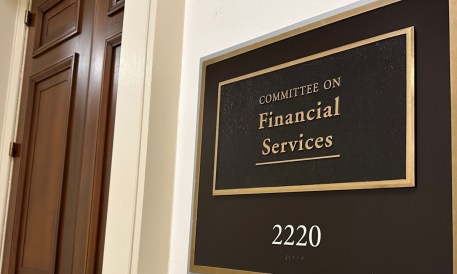
House Republicans said AI financial fraud is becoming a larger threat to consumers and companies, and urged broader use of artificial intelligence by banks, regulators and law enforcement to detect scams earlier. A report released last week by Republicans on the House Financial Services Committee cited Federal Trade Commission data showing U.S. consumers reported more than $15.9 billion in fraud losses in 2025.
The report followed a year-long committee investigation that included several hearings on financial fraud. It argues that artificial intelligence is expanding the capacity of criminal groups to create convincing scams at scale, while also giving financial institutions and government agencies stronger tools to spot suspicious behavior.
Committee Chairman French Hill, Republican of Arkansas, said in a statement that anti-fraud systems need to keep pace with more advanced criminal methods. “As fraudsters become more sophisticated, we must ensure law enforcement, regulators, and financial institutions have the tools they need to stay ahead of these evolving threats,” Hill said.
According to NextGov/FCW, the final report appeared to be issued without input from Democrats on the committee.
How is AI being used in financial fraud?
The committee said artificial intelligence allows criminals to produce tailored messages that are more polished and persuasive than older scam attempts. It also cited voice-cloning tools used in impersonation schemes and realistic deepfake videos that can be used to approve fraudulent wire transfers inside corporate finance operations.
AI-based fraud detection systems work by scanning large volumes of transactions, account behavior or communications for patterns that differ from expected activity. In financial services, that can mean flagging unusual transfers, suspected identity abuse or coordinated activity across accounts before losses spread.
The report said public and private institutions should not treat artificial intelligence only as a risk to be contained. It said the response should include giving legitimate anti-fraud actors access to similar technologies used by criminals.
The committee pointed to existing federal use cases as evidence that the technology can reduce improper payments. It cited the Centers for Medicare and Medicaid Services, whose officials have previously said AI tools helped prevent more than $2 billion in improper payments tied to waste, fraud and abuse.
The report also called for more oversight of how such systems perform. It recommended that Congress and federal regulators assess which AI fraud-detection deployments are effective, where adoption has lagged, and whether regulatory or operational barriers are limiting use by financial institutions.
Which bills did the report endorse?
The committee backed the Bank Fraud Technology Advancement Act, introduced by Rep. Mike Flood, Republican of Nebraska. The bill would require federal banking agencies to study advanced technology for detecting and preventing fraud, with attention to community financial institutions. It would also create a pilot program to help eligible community banks obtain more advanced fraud-detection tools.
The report also endorsed the Artificial Intelligence Practices, Logistics, Actions and Necessities Act, known as the AI PLAN Act, sponsored by Rep. Zach Nunn, Republican of Iowa. That legislation would direct the Departments of Homeland Security, Commerce and Treasury to develop a coordinated federal strategy for addressing malicious uses of AI, including AI-enabled financial fraud.
Together, the recommendations set out a Republican policy approach that favors wider defensive use of artificial intelligence in financial services, combined with federal coordination and evaluation. The report framed AI as both a tool used by fraudsters and a technology that government agencies and financial firms may use to reduce losses.
This story draws on original reporting from PYMNTS.