Blue-collar AI adoption rises through photo diagnostics, Google says
Google says manual trades are using image-based AI at twice the average rate, extending workplace AI beyond office tasks.
By Rafael Ortiz · Fintech Correspondent
· 3 min read
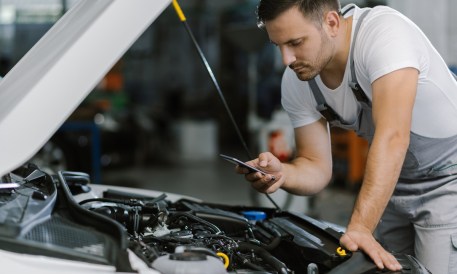
Blue-collar AI adoption is emerging in garages, factories and field repairs as workers use image-based tools for diagnostics and troubleshooting, according to Google. In its first AI & Economy ATLAS report, discussed in a Thursday company blog post, Google said workplace AI now reaches 68% of occupations and 90% of U.S. employment.
The report found that within a given job, AI is used for about 21% of tasks on average. The figures point to a broad but partial integration of AI into work, with many occupations using the technology for specific tasks rather than across an entire role.
Google said workers in predominantly physical and manual jobs, including automotive technicians and industrial mechanics, are treating conversational AI as a tool for real-time diagnosis, problem-solving and learning on the job. In examples described by the company, workers can photograph a diagnostic code, a damaged component or a hot-running bearing and ask an AI system to interpret what it sees before beginning a repair.
How are blue-collar workers using AI?
Manual and technical workers are using multimodal AI, systems that can process images and video as well as text, to analyze physical equipment and job-site conditions. That matters because many repair and maintenance problems are easier to show than to describe in writing, such as a wiring panel, worn part or visible fault code.
Scott Strand, Google’s head of strategic operations and special projects for technology and society, told Axios that blue-collar workers are using “a lot” of multimodal AI, which he described as AI involving images and video. Google’s blog post said manual and technical trade workers are twice as likely as the average workplace AI user to rely on those multimodal tools.
The pattern differs from much office use of AI, where drafting, summarizing and searching through text remain common applications. In physical trades, the model can function as a visual reference tool, taking in a photo or video and returning a possible explanation, next step or learning prompt. Google characterized that use as a live collaborator for workers who need answers while a machine, vehicle or system is in front of them.
The adoption is occurring alongside stronger pay growth in some trades. Wages in construction and mechanical trades have risen 30% to 40% since 2020, according to U.S. Bureau of Labor Statistics data cited by The Blue Collar Recruiter. The same discussion noted that plumbing, electrical repair and similar skilled trades still require human presence, judgment and physical work.
Google’s report also found that AI usage remains correlated with higher earnings across occupations. A 1% increase in an occupation’s median earnings is associated with more than a 2.5% increase in AI usage intensity, according to the report. Google said the median salary of observed AI users is about $83,000, roughly $20,000 above the national employment-weighted median.
Where are companies embedding AI into operations?
Separate enterprise data from PYMNTS Intelligence suggests that wholesale companies are among the most advanced in applying AI across corporate functions. Its July Enterprise AI Benchmark Report, based on a May survey of 60 senior technology executives at U.S. companies with at least $1 billion in revenue, found that the average wholesale firm uses AI across 35 of 75 tracked enterprise tasks.
PYMNTS said three-quarters of wholesale firms have majority adoption in contract generation and security monitoring, and that majority adoption now extends across six of the report’s eight business functions. The report also found that 65% of wholesale and retail firms plan to increase AI budgets over the next year, while 70% expect returns to take five years or longer.
Together, the Google and PYMNTS findings show two channels for workplace AI: individual workers using tools at the point of need, and large companies building AI into recurring business processes. In the trades, Google’s findings suggest the camera may be as important as the keyboard in how workers bring AI into daily tasks.
This story draws on original reporting from PYMNTS.