Credit card delinquencies in June edge up as charge-offs fall
Seeking Alpha’s Credit Pulse showed a modest rise in June card delinquencies while banks’ average net charge-off rate declined.
By Rafael Ortiz · Fintech Correspondent
· 3 min read
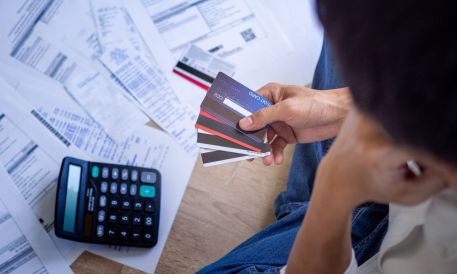
Credit card delinquencies June data showed a small deterioration in missed payments, even as major card issuers reported a lower rate of losses on accounts they no longer expect to collect. Seeking Alpha’s Credit Pulse, published Friday, July 24, said the average delinquency rate across seven large issuers rose to 2.48% in June from 2.47% in May.
The move was modest and left delinquencies below the recent trend. Seeking Alpha said the June figure was under the three-month average of 2.50%, and also below both last June’s 2.67% rate and the 2.68% level recorded before the pandemic.
The report tracks monthly delinquency and charge-off rates at American Express, Synchrony, Bread Financial, Capital One, Citigroup, JPMorgan Chase and Bank of America.
Loss rates moved in the opposite direction. The average net charge-off rate fell to 3.42% in June from 3.63% in May, according to Seeking Alpha. That compared with a three-month moving average of 3.58%, a pre-pandemic rate of 3.59% and a June 2025 rate of 3.85%.
Why are credit card delinquencies rising?
A delinquency rate measures accounts that are behind on payment, while a net charge-off rate reflects balances banks have written off as losses after recoveries. Delinquencies can signal pressure earlier in the credit cycle, while charge-offs tend to show how much of that stress has turned into realized losses for lenders.
Elizabeth Renter, senior economist at NerdWallet, said many consumers eliminated card balances during the pandemic, but that borrowing has since climbed beyond pre-pandemic levels. She attributed part of the reliance on cards to elevated inflation, saying some households may be using credit to support spending they cannot comfortably fund from income.
Renter also said card use should not be read only as discretionary consumption. Some consumers may be using credit as a reserve for essentials when cash is constrained, she said, adding that high card interest rates and depleted savings can make payment obligations harder to meet.
Broader confidence data also pointed to strain in household perceptions. Seeking Alpha cited The Conference Board, which said U.S. consumer confidence rose by less than expected in June.
Dana Peterson, chief economist at The Conference Board, said consumers viewed current business conditions somewhat more favorably than in the prior month, while their assessment of the labor market weakened. The share of respondents saying jobs were hard to get rose to 22.5%, the highest reading since January 2021, when it stood at 22.8%, according to Peterson.
PYMNTS Intelligence research separately found that consumers have become less upbeat about their current finances and their ability to manage debt since December. At the same time, PYMNTS research said caution has not pushed consumers away from cards: 66% of millennials reported using credit cards for retail purchases in the past 12 months, compared with 70% who used debit cards.
PYMNTS has said the pattern indicates consumers distinguish between spending more and increasing the number of payment tools available to them. Credit cards can expand purchasing capacity and, for cardholders who pay balances in full, can also delay when cash leaves a bank account without creating revolving interest.
This story draws on original reporting from PYMNTS.