Gas prices lead labor economy workers to miss shifts, PYMNTS finds
PYMNTS Intelligence says 17% of affected lower-paid workers missed work as transport costs strained already limited cash buffers.
By Rafael Ortiz · Fintech Correspondent
· 3 min read
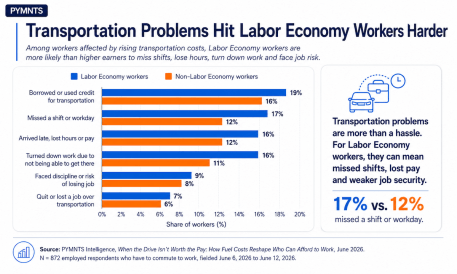
Higher gas prices are disrupting labor economy workers’ ability to get to work, with 17% of affected workers missing a shift or workday, according to PYMNTS Intelligence research produced with WorkWhile. The report points to a direct labor-market effect from commuting costs: some lower-paid workers are losing hours, declining jobs or using credit before they can earn wages.
The findings come from PYMNTS Intelligence’s Wage to Wallet Index report, “When the Drive Isn’t Worth the Pay: How Fuel Costs Reshape Who Can Afford to Work”, produced in collaboration with WorkWhile. The report defines Labor Economy workers as hourly, gig, seasonal and shift-based employees who make no more than $25 an hour and generally earn less than $50,000 a year.
PYMNTS Intelligence found that transportation takes 3.6% of monthly pretax income for these workers, only slightly above the 3.3% share for higher earners. The report said the larger strain comes from weaker savings cushions among lower-paid workers, which leaves less room to absorb fuel and commuting costs without disrupting work attendance.
Why are gas prices making workers miss shifts?
Commuting is a cost workers must pay before they receive wages, so a higher fuel bill can make a shift less viable for someone with limited cash on hand. PYMNTS Intelligence said transport problems can also affect future earnings when missed shifts, late arrivals or rejected assignments alter how employers and labor platforms assess reliability.
The report said 17% of affected Labor Economy workers missed a workday or shift because of transportation problems, compared with 12% of higher earners. It also found that 16% arrived late and lost hours or pay, while another 16% turned down work because they could not reliably reach the job.
Some workers used borrowing to cover the gap. PYMNTS Intelligence said 19% of affected Labor Economy workers borrowed money or used credit for transportation expenses, compared with 16% of non-Labor Economy workers.
What are the employment consequences?
Repeated transport disruptions can extend beyond one missed paycheck, according to the report. PYMNTS Intelligence found that 9% of affected Labor Economy workers were disciplined or faced the risk of losing a job, while 7% quit or lost work because of transportation issues.
The report also said employers and labor platforms may respond to repeated lateness or declined assignments by offering fewer shifts later. For workers paid by the hour or by assignment, that can turn a commuting cost increase into a longer-term income constraint.
What solutions did the report identify?
PYMNTS Intelligence pointed to several tools that financial providers and workforce platforms could use to reduce the strain. Banks, FinTechs and payments companies could offer low-fee instant pay, fuel rewards, savings tools and cash-flow alerts, according to the report.
Workforce platforms could also help by matching workers with jobs closer to home and showing estimated take-home pay after commuting costs, PYMNTS Intelligence said. The report framed those tools as a way to help employers fill shifts while giving workers a clearer view of whether a job’s travel costs leave enough net income.
This story draws on original reporting from PYMNTS.