Humanoid reaches unicorn status after $152mn Series A
The UK robotics startup said the funding will support mass production, AI development and commercial deployments in logistics, manufacturing and retail.
By Rafael Ortiz · Fintech Correspondent
· 3 min read
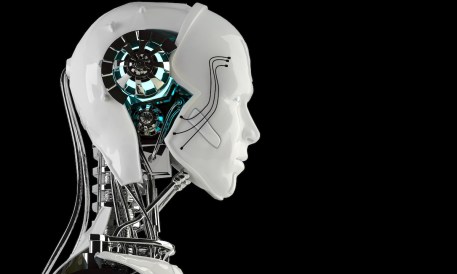
UK robotics company Humanoid said it has raised $152mn in a Series A financing, lifting the startup to unicorn status as European companies seek a larger role in humanoid automation. The company said the round makes it Europe’s first pure-play humanoid robotics unicorn.
Humanoid announced the financing on Tuesday and said the capital will be used to develop and launch its humanoid robotics platform. The company also plans to fund longer-term commercial deployments with customers in logistics, manufacturing and retail, sectors where automation is being used to address repetitive, physical and precision-oriented work.
The funding will also support the start of mass manufacturing for wheel-based humanoid robots, according to the company. Humanoid said part of the proceeds will go into KinetIQ, its proprietary AI brain, which is designed to support the machines’ ability to operate in commercial and industrial settings.
A Series A round is typically an equity financing used to move a company from early product development toward wider commercialization. For Humanoid, the new funds are intended to bridge platform development, production capacity and customer deployment rather than finance a single product launch.
Humanoid framed the investment as a marker for Europe’s robotics sector, saying in its announcement that momentum in “physical AI” has largely been concentrated in the United States and China. The company said the financing shows that the UK and continental Europe can build humanoid robotics businesses able to compete globally.
The round was led by Prime Movers Lab. Zia Huque, a general partner at the firm, said humanoid robotics would be “one of the defining technologies of the next decade” and said he expected the sector to consolidate around a small number of leading companies across the US, Europe and China.
Humanoid said it has secured partnerships with companies including SAP, Nvidia, Bosch and Siemens. The company also said it recently signed what it described as the largest publicly announced commercial agreement in the industry with Schaeffler, covering the deployment of thousands of humanoid robots for manufacturing.
The commercial case for humanoid and collaborative robots depends on more than hardware performance. A recent PYMNTS report on collaborative robots, or cobots, said these systems are designed to assist workers with repetitive, physically demanding or precision-focused tasks while people retain work that requires judgment.
The same report said wider adoption raises safety and reliability questions for autonomous systems operating near humans. In traditional industrial automation, separation often provides safety; in collaborative settings, machines must detect people, understand movement and respond predictably when conditions change.
Those operating requirements are central to the industrial deployment model Humanoid is pursuing. The company has identified logistics, manufacturing and retail as target markets, and its financing gives it additional resources to move from platform development toward production and customer rollouts.
This story draws on original reporting from PYMNTS.