OpenAI merch store opens to public as AI swag gains status value
OpenAI has put employee apparel on public sale, joining tech firms using scarce branded goods to build customer and developer affinity.
By Rafael Ortiz · Fintech Correspondent
· 3 min read
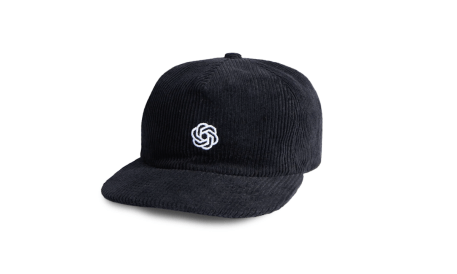
The OpenAI merch store is now open to the public on an ongoing basis, giving customers access to apparel and accessories that had previously been limited to employees. The move adds OpenAI to a wider group of technology companies using branded goods to cultivate loyalty among developers, customers and fans.
Business Insider reported that OpenAI briefly opened the store to outside buyers in December for its 10th anniversary. The current public launch marks the first time the company has made the employee-style merchandise continuously available beyond its staff.
What is OpenAI selling in its merch store?
OpenAI’s Supply Co. line includes $15 ChatGPT socks, $40 T-shirts and baseball caps, a $175 quarter-zip and a $70 ChatGPT-branded basketball. Some products use language associated with the company’s founding charter, including “AGI that benefits all of humanity.”
Demand appeared to outpace supply for some items shortly after launch. A T-shirt printed with “Good research takes time” sold out in every size except XS within hours, while the ChatGPT basketball sold out almost immediately, Yahoo Finance reported.
The revenue opportunity is small relative to OpenAI’s core business. Reuters reported that OpenAI’s annualized revenue had exceeded $25 billion as of March, a scale that makes the sale of individual shirts, caps and accessories financially marginal. The commercial use is more closely tied to brand identity: merchandise lets buyers display affiliation with a company and its technology culture.
Why are AI companies selling branded merchandise?
Technology companies have increasingly treated merchandise as a consumer-brand tool. Inc. reported that OpenAI joins Figma, Shopify and Palantir among companies that have opened branded stores to the public. Palantir also relaunched its external merchandise store and opened a Seoul pop-up in October, where the company said Korean customers had become its second-largest international merchandise market.
Nvidia has shown how executive culture and product fandom can turn apparel into a sought-after object. At its GTC conference in March, attendees queued for a $178 sweater featuring “Toy Jensen,” a cartoon version of chief executive Jensen Huang, the Wall Street Journal reported. Hardik Nahata, a software engineer who bought one, told the Journal that Huang was “like the Taylor Swift of Silicon Valley.”
Other AI companies have used scarcity to similar effect. Business Insider reported that Anthropic held a pop-up with the Air Mail newsstand in New York and distributed “thinking” caps that ran out before the event closed. OpenAI has distributed token plaques at Dev Day, while Cursor gave “tab” keys to some of its most loyal supporters. Sunita Mohanty, who attended the Anthropic event, told Business Insider the cap was “a signal that you’re in the know” and made wearers feel part of a movement.
Secondary markets suggest that some buyers now treat AI company merchandise as collectible memorabilia. Forbes reported that a used OpenAI sweatshirt sold on eBay for almost $250 after the seller found it in a thrift store for less than $15. Boxes of OpenAI Codex swag, including a hat, hoodie and smaller items, have sold for as much as $475, while an authentic OpenAI employee T-shirt sold for $250. Anthropic items have also traded on resale platforms, including a pen that sold for $39.99 and an employee T-shirt that sold for $120.
The appetite extends beyond everyday apparel. CNBC reported that a signed Tom Ford leather jacket worn by Nvidia’s Huang at a 2023 event sold at Sotheby’s on July 17 for $960,000, far above its $40,000 to $60,000 pre-auction estimate. Tom’s Hardware reported that an Apple-1 prototype board believed to have been used by Steve Jobs and Steve Wozniak sold for $2.7 million in January, while RR Auction said an Apple check signed by both founders fetched $2.4 million.
This story draws on original reporting from PYMNTS.